
 Français
 Español
 عربى
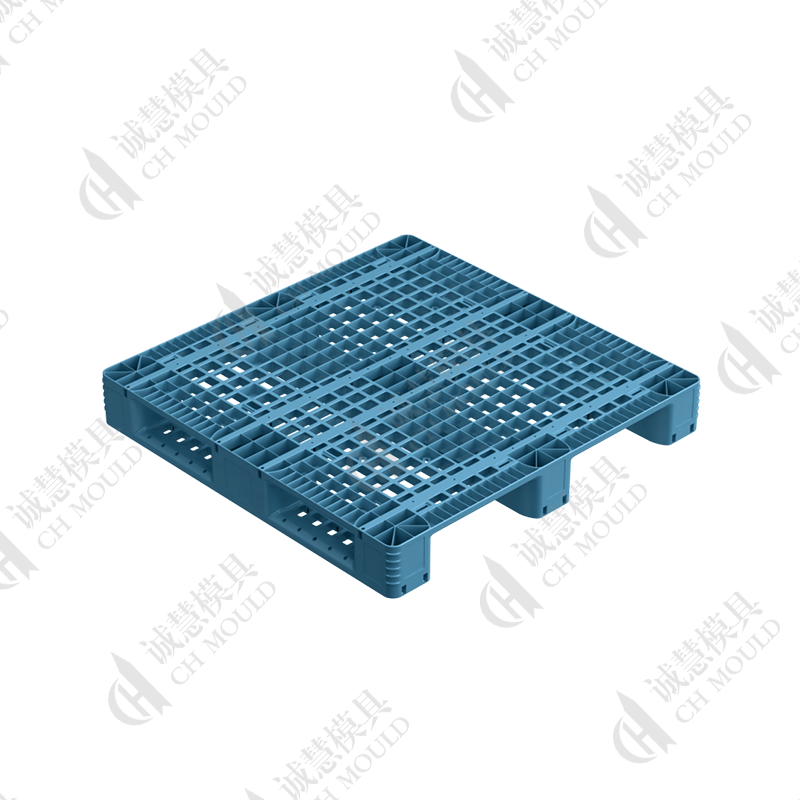
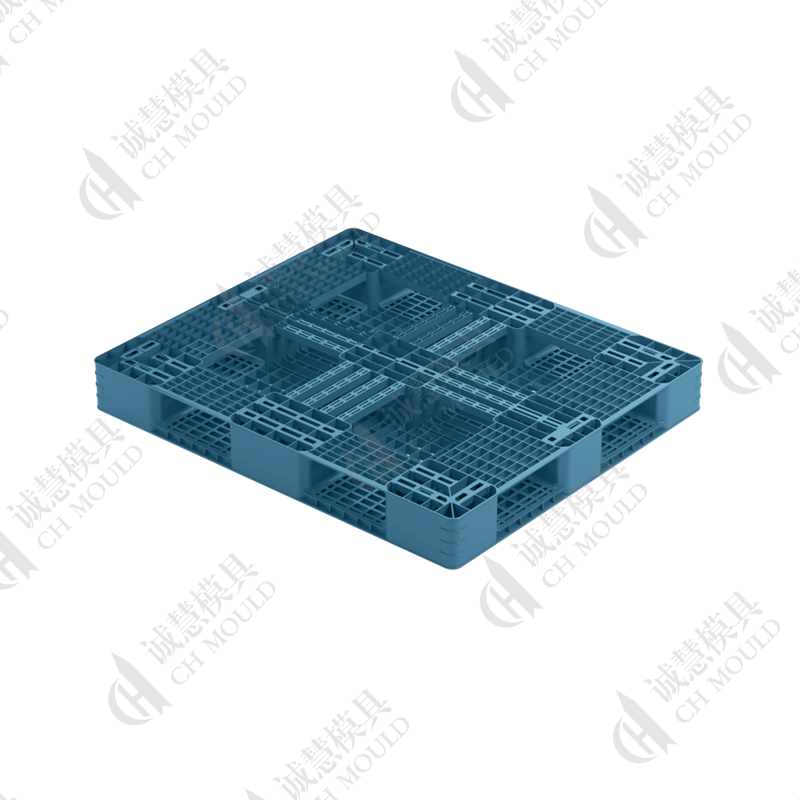
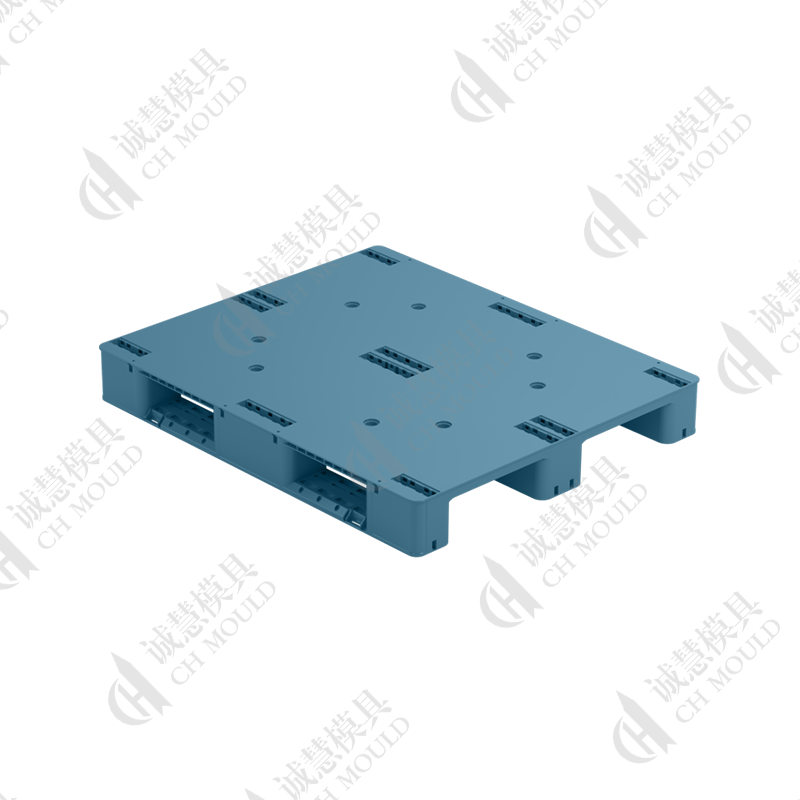
عربىPlastic pallets are widely used in warehouses, distribution centers, manufacturing facilities, and material handling operations. Their performance depends on more than the resin selected for molding. Structural design, material distribution, cooling behavior, and production consistency all influence how a finished pallet performs in daily use. For manufacturers, the challenge is to develop tooling that produces a sufficiently strong pallet while maintaining a practical molding cycle and consistent product dimensions. Addressing these requirements together can help reduce production difficulties and improve the suitability of the finished product for its intended application.
Design the Structure Around Actual Load Requirements
A pallet intended for lightweight storage may have different structural requirements from one used for repeated movement of heavy goods. Buyers should clarify whether the pallet will be supported by racks, placed on the floor, or handled frequently by forklifts and pallet trucks.
These conditions affect the design of the deck, support blocks, entry openings, and reinforcement ribs. A Plastic Pallet Mold must reproduce these structural details accurately while allowing the plastic to fill the cavity effectively.
Manufacturers should review the relationship between load distribution and mold geometry before tooling begins. Adding material indiscriminately may increase product weight without solving the underlying structural problem, so reinforcement should be designed around the expected loading conditions.
Optimize Rib Placement and Material Flow
Ribs provide structural support while allowing manufacturers to avoid making the entire pallet deck excessively thick. However, their height, spacing, and connection points affect both stiffness and molding behavior.
Closely grouped ribs or thick intersections may create areas that cool differently from the surrounding structure. Poor material flow can also contribute to incomplete filling or inconsistent formation in complex sections.
During mold development, engineers should assess rib geometry alongside the runner and gate arrangement. The objective is to distribute material effectively, form the required support structure, and avoid unnecessary complexity that could make production harder to control.
Consider Cooling When Planning the Mold
Large pallet molds require careful cooling design because the deck, ribs, and support blocks do not always have the same thermal characteristics. Uneven cooling may affect cycle time, dimensional stability, and the condition of the part after ejection.
Cooling channels should be arranged according to the mold geometry and the areas most likely to retain heat. Manufacturers should also consider whether the cooling system can be inspected and maintained without excessive difficulty.
During trial molding, actual cooling performance should be checked against the intended production conditions. Adjustments may be necessary when some areas remain too warm or when dimensional changes appear after the part leaves the mold.
Make Ejection Suitable for a Large Molded Part
A pallet's size and structural features can make ejection more demanding than it is for smaller injection-molded products. If release forces are concentrated in a limited area, the pallet may bend or develop local deformation before it has cooled sufficiently.
The ejection system should therefore work with the part's geometry. Ejector positions, draft angles, cavity surfaces, and the timing of release all deserve attention during tooling development.
Manufacturers should observe the complete release process during mold trials. If the pallet sticks, bends, or shows marks around ejection points, the cause should be identified before production parameters are finalized.
Evaluate Cycle Time Without Sacrificing Part Quality
Production efficiency depends on more than reducing cooling time. Excessively short cycles can result in incomplete cooling, deformation, or inconsistent dimensions, while unnecessarily long cycles can restrict output.
A practical approach is to establish stable molding conditions and then assess whether cycle adjustments maintain acceptable product quality. Material characteristics, part geometry, machine capability, and cooling performance all influence the appropriate operating window.
For manufacturers using a Plastic Pallet Mold, recording the settings associated with acceptable trial results can support more consistent production. Cycle-time improvements should be evaluated alongside dimensional checks and structural requirements rather than considered in isolation.
Confirm Tooling Performance Through Trial Production
Before mass production, mold trials provide an opportunity to evaluate the interaction between tooling design and processing conditions. Inspection should cover more than the external appearance of the pallet.
Relevant checks may include:
- Overall dimensions and flatness
- Formation of ribs and support blocks
- Surface defects and incomplete filling
- Release behavior during ejection
- Consistency across successive molded samples
The findings can help manufacturers determine whether adjustments are needed in the mold structure, cooling arrangement, or molding process.
Develop Tooling Around Long-Term Production Needs
A suitable pallet mold should support the required product structure while remaining practical to operate, inspect, and maintain. Buyers should communicate expected pallet dimensions, loading conditions, material preferences, and production volume before confirming a tooling project.
As a manufacturer, we evaluate these requirements together with mold construction, cooling, ejection, and trial results. This approach helps align tooling development with real production needs and gives buyers a clearer basis for assessing manufacturing capability, product consistency, and the long-term practicality of their investment.