
 Français
 Español
 عربى
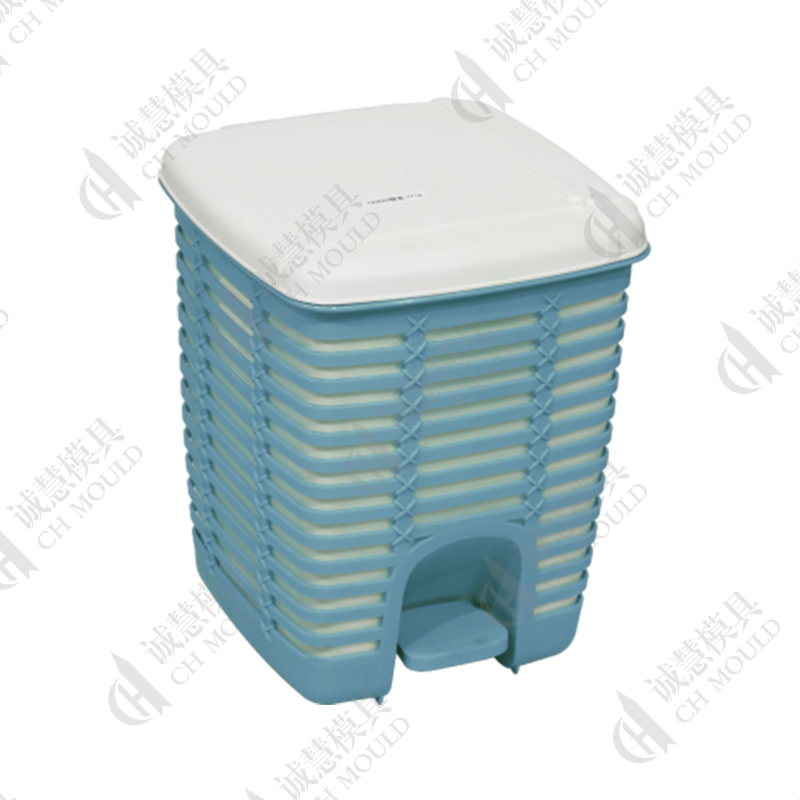
Household dust bins may appear to be simple plastic products, but developing a mold for them involves several practical design decisions. Different markets have different expectations for bin capacity, shape, lid structure, appearance, and available space. At the same time, manufacturers need to consider molding efficiency, product strength, material usage, and production consistency. For buyers sourcing a Household Dust Bin Mold, the challenge is to find a solution that supports the intended product design without creating unnecessary difficulties during injection molding and later assembly.
Product Design Should Reflect Real Household Use
A dust bin designed for a kitchen may have different requirements from one intended for a bedroom, bathroom, or utility room. Kitchen models may need a wider opening and a practical lid arrangement, while smaller household bins often need to fit into limited spaces.
These differences influence the mold design from the beginning. Buyers should confirm the product's dimensions, capacity, opening method, handle position, and intended placement before mold development starts. If the product includes a removable inner bucket, pedal mechanism, or separate lid, these components should also be considered when planning the overall mold structure.
A clear product brief helps the mold manufacturer translate appearance requirements into workable tooling solutions.
Wall Thickness Needs Careful Design
Wall thickness affects both product performance and injection molding behavior. If the design contains large variations in thickness, cooling may become uneven and lead to sink marks, warpage, or longer molding cycles.
For household dust bins, engineers should pay particular attention to corners, bottom sections, handle connections, and reinforced areas. These locations may require additional structural consideration, but simply increasing material thickness is not always the best approach.
A more balanced design can help distribute material appropriately while maintaining the rigidity needed for normal household use. Mold flow analysis may also be considered for products with complex geometries or demanding appearance requirements.
Draft Angles and Ejection Should Be Planned Early
Deep container shapes can create challenges during mold opening and product ejection. Without suitable draft angles and a properly planned ejection system, plastic parts may stick to the cavity, develop surface marks, or become deformed during removal.
When developing a Household Dust Bin Mold, manufacturers need to evaluate the depth of the product, sidewall geometry, surface texture, and possible undercut structures. The ejection arrangement should provide sufficient support to the molded part rather than concentrating force on a small area.
These details are particularly important for bins with textured exterior surfaces or decorative patterns, where visible ejection marks may affect the finished appearance.
Material Selection Influences Mold Requirements
Household dust bins are commonly produced using injection-molded thermoplastics. The choice of material depends on the required stiffness, impact resistance, appearance, cost, and intended use.
Different plastic materials also behave differently during filling, cooling, and shrinkage. This means the mold should be designed with the selected resin's processing characteristics in mind.
Before finalizing the tooling, buyers should communicate their preferred material or performance expectations. If the material has not yet been confirmed, discussing suitable options with the mold manufacturer can help prevent design changes after machining has started.
Lid and Handle Structures Require Special Attention
A household bin is not always a single molded component. Lids, handles, pedal-related parts, and connecting structures may involve separate molds or additional assembly operations.
The connection between these components should be reviewed during product development. For example, a lid needs to fit the bin body properly, while handle structures should be positioned to support practical lifting and movement.
Manufacturers should also consider dimensional tolerances and assembly clearance. A visually attractive design may still create production problems if its separate components do not fit together consistently.
Surface Finish Is Part of the Product Strategy
Appearance can influence how a household dust bin fits into modern living spaces. Buyers may request matte textures, smooth surfaces, decorative patterns, or customized colors to match their target market.
However, surface treatment should be discussed before mold processing begins. Texture depth, polishing requirements, and the intended plastic material can all affect tooling decisions. Late changes to surface appearance may require additional mold modification, so confirming these details during the design stage can help control development time and cost.
Work With a Mold Manufacturer From the Design Stage
Successful household dust bin production depends on the coordination of product design, material selection, mold structure, cooling, ejection, and dimensional inspection. As a Household Dust Bin Mold manufacturer, we consider these factors together when evaluating a new project. For overseas buyers, sharing product drawings, 3D models, material preferences, and expected production requirements early can make mold development more efficient and reduce avoidable revisions. A well-planned mold provides a practical foundation for producing household dust bins with consistent dimensions, reliable assembly, and an appearance suited to the target market.