
 Français
 Español
 عربى
Household waste management is becoming more closely connected with home organization, recycling habits, and everyday convenience. Consumers are looking for waste bins that fit smaller kitchens, support waste separation, and remain easy to clean and operate. For plastic product manufacturers and household goods suppliers, these changing expectations create new requirements for product design and production. A well-engineered Household Dust Bin Mold plays an important role in turning these requirements into practical products, influencing everything from wall thickness and lid fitting to surface quality and manufacturing efficiency.
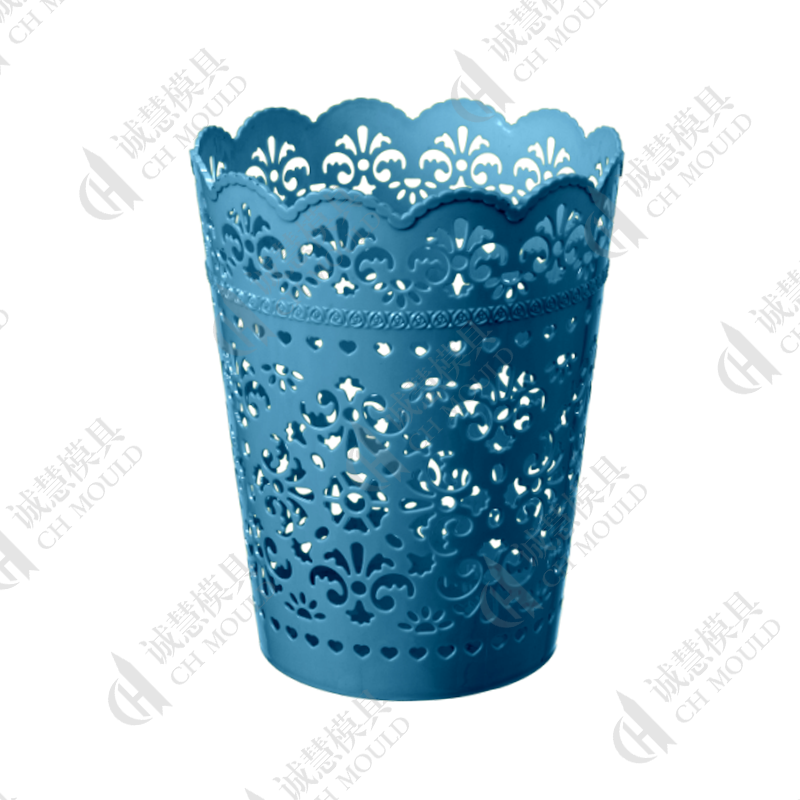
How Are Changing Household Habits Influencing Dust Bin Design?
Household waste sorting is receiving increased attention as more communities encourage residents to separate recyclable materials from general waste. This trend is influencing the design of domestic waste containers, particularly in markets where kitchens and utility areas have limited space.
Buyers are increasingly interested in products with practical features such as removable inner buckets, separate compartments, pedal-operated lids, and compact rectangular structures. These designs require manufacturers to consider more than the external appearance of a plastic dust bin.
For mold developers, the challenge is to accommodate functional details without making the structure unnecessarily complicated. Product dimensions, component positioning, and assembly compatibility should be considered during the initial mold design stage.
Why Does Uniform Wall Thickness Matter in Injection Molding?
One common production challenge in manufacturing household plastic bins is maintaining consistent wall thickness across large molded surfaces. Uneven thickness can cause differential shrinkage, surface depressions, and warpage, affecting both appearance and dimensional accuracy.
A properly designed dustbin injection mold should consider the plastic material, product geometry, gate location, and expected shrinkage behavior.
Several design factors deserve attention:
- Wall distribution: Keep wall thickness as consistent as practical to reduce uneven cooling.
- Rib placement: Use appropriately designed reinforcing ribs to improve rigidity without creating unnecessarily thick sections.
- Draft angles: Allow molded parts to release smoothly during ejection.
- Corner transitions: Avoid abrupt thickness changes that may contribute to stress concentration and deformation.
Addressing these details before tooling begins can reduce the need for mold modifications and production adjustments.
Can Mold Cooling Design Improve Production Efficiency?
Cooling is an important part of the injection molding cycle, especially when producing large household containers. If different areas of the mold experience uneven temperatures, the molded product may shrink inconsistently or deform after ejection.
For household dust bin mold manufacturing, cooling channel placement should match the geometry and thickness distribution of the product. Larger surfaces, deeper sections, and areas around the bottom structure may require particular attention.
Mold designers can evaluate cooling layouts through thermal analysis and simulation before manufacturing. During production, stable coolant flow and appropriate temperature control help maintain repeatable molding conditions.
The objective is not simply to shorten cooling time. The molded product must also retain its intended dimensions, surface appearance, and structural stability.
How Should Manufacturers Handle Large and Complex Bin Structures?
Household dust bins come in different capacities and configurations, from compact bathroom containers to larger kitchen and utility bins. Larger products introduce additional tooling considerations because of their dimensions, material flow paths, and cooling requirements.
A large plastic dustbin mold needs sufficient structural strength and accurate alignment between the mold halves. The injection system must also deliver molten plastic throughout the cavity without creating incomplete filling or excessive pressure variations.
Depending on the product design, manufacturers may need to evaluate:
- Mold opening dimensions and machine compatibility.
- Cavity layout and plastic flow balance.
- Ejection system positioning.
- Mold base strength and guiding components.
- Cooling arrangements for large molded surfaces.
These considerations help establish whether the proposed tooling solution is suitable for the intended production process.
What Should Buyers Consider When Choosing a Dust Bin Mold Supplier?
For overseas importers, plastic household product manufacturers, and private-label suppliers, choosing a mold supplier involves evaluating both technical capability and production communication.
A competitive quotation should be supported by a clear understanding of the product drawing, material selection, mold structure, and expected production volume.
Before confirming an order, buyers should discuss:
- Whether the supplier can manufacture according to 3D drawings or physical samples.
- Which mold steel and component specifications are proposed.
- Whether mold flow analysis is available when required.
- How dimensional accuracy and trial samples are evaluated.
- What maintenance and spare-part support can be provided.
Clear technical communication at this stage helps reduce misunderstandings and makes customization easier to manage.
Why Are Mold Trials Important Before Mass Production?
A completed mold still needs to undergo practical testing before it is ready for regular production. Trial molding allows manufacturers to examine filling performance, cooling behavior, product dimensions, and demolding conditions.
For a household waste bin, particular attention should be given to the bottom structure, rim shape, lid connection, and overall stability. If the product includes a pedal mechanism or separate inner container, the relevant fitting dimensions should also be checked.
Any issues identified during testing can be reviewed and adjusted before mass production. This process helps ensure that the final tooling is aligned with the customer's product requirements rather than relying entirely on design assumptions.
How Can Customized Mold Design Support Future Product Development?
Household product brands frequently update their collections to accommodate different consumer preferences, retail channels, and storage environments. A manufacturer may need several dust bin models with different capacities, colors, lid structures, or surface textures.
Customized tooling provides flexibility when developing these product variations. As a mold manufacturer, we recommend reviewing the complete product structure before finalizing tooling specifications, particularly when multiple components need to work together.
A carefully developed Household Dust Bin Mold can help plastic manufacturers produce household waste containers with consistent dimensions, practical functionality, and reliable assembly performance. By combining thoughtful product design, appropriate cooling arrangements, and thorough mold trials, buyers can build a more dependable production process and respond more effectively to changing household storage and waste sorting demands.