
 Français
 Español
 عربى
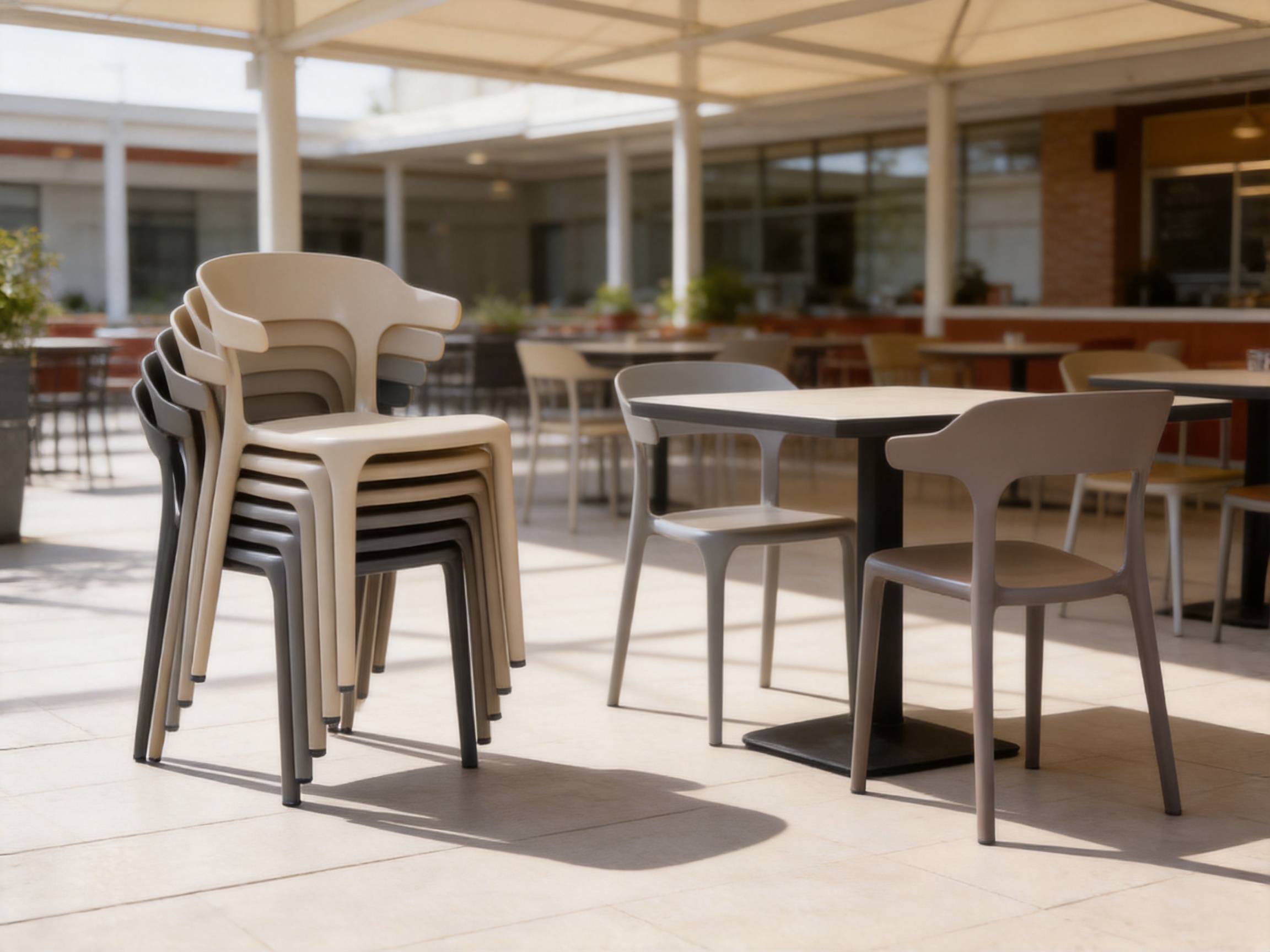
Plastic chairs are widely used in homes, offices, schools, restaurants, public facilities, outdoor venues, and commercial environments. Although the finished chair may appear simple, producing a strong, attractive, and consistently dimensioned chair requires a carefully engineered injection mold. The mold must control material flow, wall thickness, cooling, part ejection, surface quality, dimensional stability, and cycle efficiency at the same time. A weakness in any one of these areas can lead to warpage, sink marks, weld lines, short shots, flash, uneven legs, or difficulty during assembly and stacking.
Plastic Chair Mold 014 is designed for manufacturers seeking dependable tooling for plastic chair production. It belongs to the category of plastic chair injection molds and is suitable for custom production programs in which repeatability, mold durability, efficient processing, and consistent appearance are essential. The tooling concept is supported by more than three decades of experience in injection mold design and manufacturing for daily-use products, household items, furniture, storage products, and industrial plastic goods.
For chair manufacturers, wholesalers, distributors, and product developers, the value of a mold is not limited to its ability to form one plastic part. A professional mold must support the complete production lifecycle, from product review and mold-flow planning to machining, assembly, trial molding, inspection, delivery, and after-sales assistance. Plastic Chair Mold 014 is positioned as a practical solution for companies that need stable mass production and a manufacturing partner capable of handling customized tooling requirements.
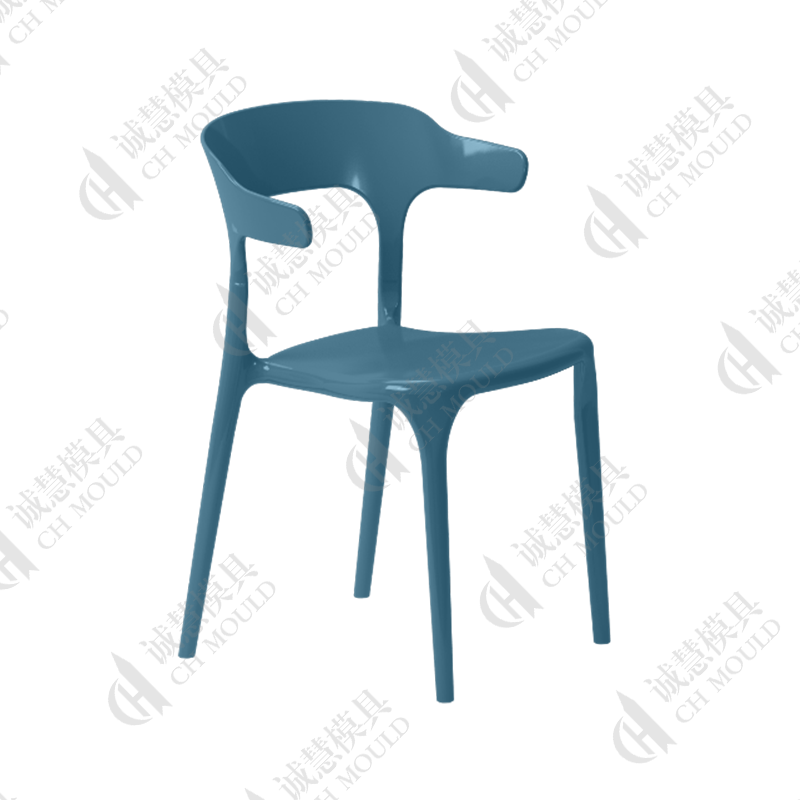
CHENGHUI Plastic Chair Mold 014
Understanding the Role of a Plastic Chair Injection Mold
An injection mold is the precision tool that defines the geometry and surface of a molded plastic component. During production, molten plastic is injected into the mold cavity under controlled pressure. The material fills the designed space, cools against the mold surfaces, solidifies, and is then ejected as a finished chair component or complete chair, depending on the product structure.
For a plastic chair, the mold may need to reproduce a broad seat, a contoured backrest, supporting legs, reinforcing ribs, connection areas, armrests, stacking features, and decorative surfaces. These features must work together structurally. The seat must support the user, the backrest must provide comfort and rigidity, and the legs must remain balanced under load. If the chair is intended for stacking, the mold must also produce accurate nesting geometry so that multiple chairs can be stored and transported efficiently.
The mold design must account for the characteristics of the selected plastic material. Different materials exhibit different levels of shrinkage, flow resistance, stiffness, impact strength, and heat sensitivity. A professional tooling process therefore begins with an understanding of the product application, expected load, visual requirements, production quantity, resin selection, machine capacity, and target cycle time.
Plastic Chair Mold 014 can be developed as part of a customized OEM or ODM tooling program. This allows buyers to provide their own drawings, samples, three-dimensional models, or functional requirements. The mold manufacturer can then review the proposed chair design and recommend adjustments that improve manufacturability, strength, appearance, and production stability before steel cutting begins.
Product Advantages of Plastic Chair Mold 014
Consistent Chair Geometry
One of the most important advantages of a dedicated injection mold is the ability to produce chairs with consistent geometry from one production cycle to the next. Consistency is especially important for chairs because even small dimensional variations can affect stability, stacking, visual alignment, or compatibility with related components.
A precision-produced mold helps control critical dimensions such as seat width, backrest angle, leg position, armrest spacing, connecting points, and stacking clearance. Stable geometry reduces the need for manual correction after molding and makes it easier for downstream production teams to maintain a repeatable quality standard.
Support for High-Volume Manufacturing
Plastic chairs are often produced in large quantities for commercial orders, furniture distribution, hospitality projects, schools, event venues, and retail channels. In these markets, a mold must be capable of repeated operation without frequent adjustment or premature loss of accuracy.
Plastic Chair Mold 014 is manufactured with mass-production requirements in mind. The tooling process emphasizes accurate machining, controlled assembly, mold testing, and quality verification. These steps help the mold perform reliably over extended production periods when it is correctly installed, operated, lubricated, cooled, and maintained according to the agreed technical requirements.
A reliable mold can also improve production planning. When the tool produces stable parts, manufacturers can reduce interruptions related to dimensional correction, mold fitting, excessive flash, difficult ejection, and repeated process experimentation. This contributes to more predictable output and helps production managers organize labor, material supply, packaging, and delivery schedules.
Balanced Structural Performance
Chair molds require more than an attractive external surface. The chair must have an internal structure capable of handling everyday use. Reinforcing ribs, transitions, corners, legs, and backrest supports must be designed to distribute stress effectively while avoiding unnecessary material concentration.
During design review, the tooling team can assess whether the proposed wall thickness and rib layout are suitable for injection molding. Excessive thickness may cause sink marks and longer cooling times, while insufficient thickness may reduce strength or create filling problems. A well-engineered mold supports a more balanced relationship between material consumption, structural strength, cycle efficiency, and appearance.
Improved Surface Quality
The cavity surface has a direct influence on the appearance of the finished chair. Depending on the product concept, the surface may require a polished finish, a textured pattern, a matte appearance, a grain effect, or a controlled decorative treatment. The selected surface finish should be considered together with resin behavior, demolding direction, draft angle, and customer expectations.
Accurate mold processing helps reduce visible defects caused by poor fitting, machining marks, misalignment, or inconsistent polishing. Where the chair design includes large visible surfaces such as the seat and backrest, stable surface quality is particularly valuable for retail presentation and brand consistency.
Efficient Demolding
Large chair parts can be difficult to eject because they may have broad surfaces, deep ribs, curved backrests, or multiple undercut areas. If the ejection system is not properly planned, the molded part may deform, develop ejector marks, remain stuck in the cavity, or require excessive force.
Plastic Chair Mold 014 can be engineered with an ejection arrangement suited to the chair’s geometry and material. The design process considers ejection balance, draft angles, rib locations, parting lines, and areas where marks are acceptable or should be minimized. Effective demolding protects the part, reduces cycle interruptions, and supports continuous production.
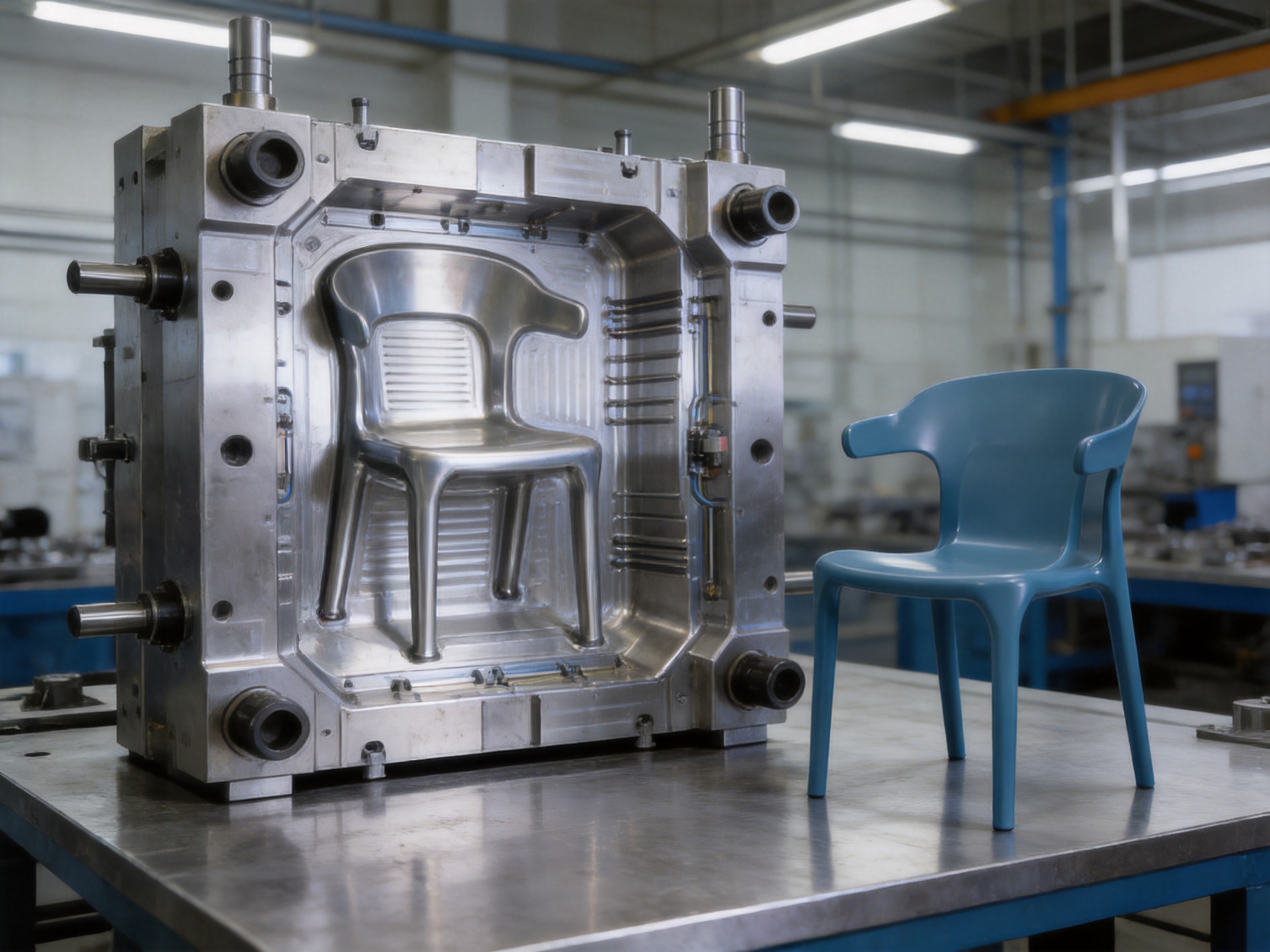
Why Mold Engineering Matters More for Chair Production
Compared with smaller household products, a plastic chair typically has a larger projected area and more complex structural relationships. The mold must manage a greater amount of molten material and may require careful attention to filling balance, cooling uniformity, and clamping force.
Large molded parts can be more sensitive to warpage. Uneven cooling between thick and thin sections, between the front and rear surfaces, or between the center and edges may cause the seat or legs to distort. Warpage can affect whether the chair sits evenly on the floor and whether multiple chairs stack correctly.
Gate location is another important consideration. The gate must allow the melt to fill the cavity effectively while limiting visible marks and reducing the risk of weld lines in highly stressed areas. The most suitable gate design depends on the chair structure, plastic material, expected production speed, and appearance requirements.
Cooling channels also require careful planning. Efficient cooling can shorten cycle time, but cooling must be sufficiently uniform to maintain dimensional stability. A poorly balanced cooling system may create local hot spots, uneven shrinkage, or longer production cycles. The mold design team must therefore consider the shape of the chair, the location of ribs and thick sections, and the practical accessibility of cooling passages.
Ventilation is equally important. Air trapped in the cavity can lead to burn marks, incomplete filling, silver streaks, or surface defects. Proper venting allows displaced air and gases to escape as the cavity fills. This is particularly relevant for large chair surfaces and deep structural features.
Advanced Manufacturing Process
1. Product Consultation and Technical Review
The manufacturing process begins with communication between the buyer and the tooling team. The buyer may provide a product drawing, three-dimensional file, physical sample, reference image, or preliminary concept. The mold engineer reviews the chair’s intended application, material, dimensions, surface requirements, production volume, injection machine, and packaging needs.
This stage is important because many mold problems can be prevented before machining starts. The team can identify insufficient draft angles, difficult undercuts, sharp transitions, uneven wall sections, unsuitable parting lines, and areas where the design may be difficult to eject. Early technical communication also helps clarify responsibilities, approval procedures, modification limits, and delivery expectations.
2. Mold Design and Manufacturability Optimization
After the initial review, the mold structure is developed using professional design methods. The design may include the cavity and core, parting surfaces, slider or lifter mechanisms where necessary, ejector components, cooling circuits, runner system, gate arrangement, guide systems, support structure, and external mold base.
Manufacturability optimization aims to make the chair easier to mold without compromising the product concept. For example, the designer may recommend changes to draft angles, rib thickness, corner radii, gate locations, or ejector positions. These recommendations are intended to improve filling, cooling, ejection, and long-term tooling reliability.
For OEM and ODM projects, design optimization can also help reduce future production costs. A chair design that fills smoothly, cools evenly, and ejects easily may require less processing time and fewer corrective interventions. This creates value throughout the product’s commercial life rather than only during mold fabrication.
3. Material and Component Planning
Material selection affects mold performance, part quality, wear resistance, and maintenance requirements. The specific steel or component configuration should be selected according to the expected production volume, plastic material, surface requirements, corrosion considerations, and customer budget.
A tooling manufacturer with experience in daily-use products can help buyers balance initial investment and expected service life. A lower-cost mold may be suitable for a limited production run, while a high-volume export program may justify more robust construction and replaceable wear components. The correct choice depends on the commercial plan rather than on a single universal specification.
4. Precision Machining
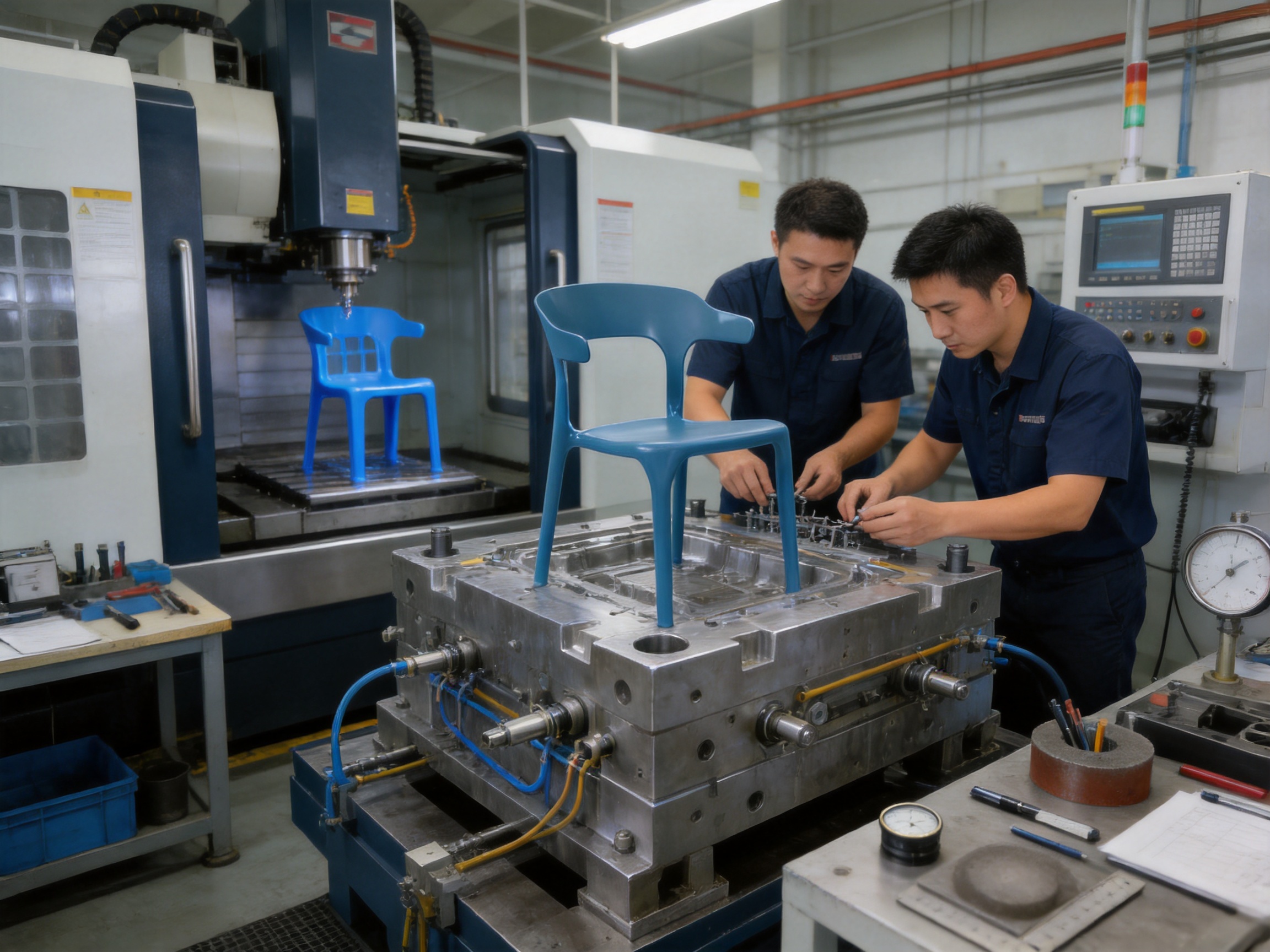
Once the design is approved, the mold components are processed using machining equipment suitable for the required dimensions and surface quality. Chenghui Mould operates its own production workshop with 104 advanced processing machines. This in-house manufacturing capability supports closer coordination between design, machining, assembly, and inspection.
Precision machining may include milling, drilling, electrical discharge machining, wire cutting, grinding, and surface finishing, depending on the mold structure. Each operation contributes to the final accuracy of the cavity, core, inserts, sliders, ejector components, and cooling features.
In-house production can offer several advantages. It allows technical issues to be discussed directly between departments, helps reduce delays associated with unnecessary outsourcing, and makes it easier to coordinate machining priorities. It also gives the manufacturer greater control over process records, component inspection, and modification work.
5. Mold Assembly and Fitting
After machining, the mold components are assembled and fitted. At this stage, the team checks the interaction between the cavity, core, parting surfaces, guide systems, ejection components, sliders, inserts, and other moving elements.
Accurate fitting is essential for preventing flash and ensuring smooth movement. The parting surfaces must close correctly, the ejector system must move without interference, and the cooling and hydraulic or mechanical functions must be accessible for testing and maintenance. Assembly technicians also verify that the mold can be installed and operated safely on the intended injection molding machine.
For a large chair mold, assembly quality is especially important because the tool may be heavy and include multiple sections. Proper support, alignment, lifting provisions, and connection planning help protect the mold during transportation, installation, and production.
6. Mold Trial and Process Verification
Before shipment, the mold is tested on an injection molding machine. The trial process allows the team to evaluate filling, packing, cooling, ejection, part dimensions, surface quality, and mold operation. Trial molding is not simply a demonstration; it is a practical verification of how the complete tool performs under real processing conditions.
The trial report may record the machine used, plastic material, processing conditions, cycle information, sample observations, and recommended adjustments. If a modification is needed, the technical team can address the issue before the mold is delivered or before final customer approval.
Testing is particularly valuable for chairs because the product may contain long flow paths, broad visual areas, and structural ribs. A trial can reveal potential issues that may not be obvious from computer design alone, including filling imbalance, localized shrinkage, difficult ejection, or visible marks in sensitive areas.
7. Inspection and Final Approval
Quality inspection covers both the mold and the molded samples. Inspectors may verify key dimensions, parting-line quality, cavity appearance, ejection performance, cooling connections, movement of moving components, and the consistency of sample parts.
The final approval process should be based on previously agreed technical criteria. These may include product dimensions, surface standards, acceptable flash levels, sample quantity, cycle expectations, and mold operation requirements. Clear approval standards help protect both the buyer and the manufacturer by reducing ambiguity.
Manufacturing Strengths Behind the Tooling
More Than Three Decades of Experience
Chenghui Mould was founded in 1994 and has more than 30 years of experience in injection mold design and manufacturing. This background is relevant to plastic chair tooling because daily-use products often require a combination of structural performance, attractive appearance, efficient production, and cost control.
Experience across related product categories can help engineers recognize common challenges in furniture and household molding. Tables, chairs, storage boxes, turnover boxes, laundry baskets, buckets, storage racks, trash cans, and other products may share requirements involving large surfaces, ribs, handles, stacking features, or repetitive use.
Integrated Production Workshop
The company operates its own production workshop and maintains a broad range of processing equipment. An integrated workshop supports communication among design, machining, fitting, testing, and quality teams. This can be especially useful for customized molds, where design changes and technical decisions must be coordinated quickly.
Integrated production also supports better traceability. When the main mold-making stages are handled within one manufacturing organization, it is easier to track component progress, manage technical revisions, review inspection results, and coordinate final assembly.
Injection Molding Machines for Mold Testing
Having professional injection molding machines for mold testing allows the manufacturer to evaluate the tool in a practical production environment. The test process can identify whether the mold fills correctly, whether the ejection system functions as intended, and whether molded samples meet the agreed requirements.
This capability is valuable to overseas buyers because it reduces the risk of receiving an unverified tool. It also provides a basis for technical discussions before shipment. Trial samples, process records, and inspection information can help the buyer prepare for installation and production at the destination factory.
Annual Capacity of More Than 1,500 Mold Sets
The company reports an annual production capacity of more than 1,500 mold sets. This capacity indicates experience with organized production planning and the ability to manage multiple tooling projects. For buyers with several related products, such as a chair series, table series, or matching storage products, production capacity can support coordinated development.
Capacity alone does not guarantee quality, but when combined with standardized processes, inspection, and experienced technicians, it can help support consistent delivery. Buyers should still confirm the exact schedule, mold complexity, approval stages, and technical scope for each project.
Advantages Compared with Less Specialized Mold Suppliers
Better Product-Focused Engineering
A general machining supplier may be able to produce metal components, but injection molds require specialized knowledge of plastic flow, shrinkage, cooling, ejection, and production maintenance. A supplier with experience in household and industrial injection molds is more familiar with the practical demands of large consumer products.
For Plastic Chair Mold 014, product-focused engineering helps connect the mold structure with the finished chair’s intended use. The objective is not merely to reproduce the shape but to support reliable manufacturing, acceptable appearance, stable dimensions, and efficient daily operation.
Greater Attention to Mass-Production Risk
Some tooling providers concentrate primarily on delivering a mold that produces an initial sample. A stronger approach considers how the tool will perform after thousands of cycles. Wear areas, moving components, cooling access, replaceable inserts, ejection stability, and maintenance procedures should be considered during design.
Long-term thinking can reduce production interruptions. It may also make future repairs easier because the mold structure is organized around serviceability. For commercial chair production, this can be more valuable than focusing only on the lowest initial tooling quotation.
More Complete Project Support
A specialized mold factory can support more stages than machining alone. Chenghui Mould provides customized mold design and manufacturing services covering concept development, drawing review, sample development, machining, assembly, mold trials, quality inspection, and after-sales support.
This complete service structure gives buyers a single point of coordination for the main tooling stages. It can reduce communication gaps between separate design, machining, and testing suppliers. It is particularly useful for international customers that need assistance with technical interpretation, trial feedback, and production preparation.
Export Experience
The company exports molds to the Middle East, Europe, America, Africa, Southeast Asia, and other regions. International project experience can help a supplier understand the importance of documentation, packaging, delivery coordination, remote communication, and different customer approval practices.
Export experience does not eliminate the need for clear specifications, but it can make cross-border cooperation more organized. Buyers should provide complete information about local machine conditions, preferred standards, packaging rules, electrical requirements, and import documentation at the beginning of the project.
Applications for Plastic Chair Mold 014
Plastic Chair Mold 014 can be considered for a range of chair products and commercial applications. The final suitability depends on the approved product design, resin, mold structure, and machine parameters.
Residential chairs may be used in kitchens, dining areas, balconies, patios, gardens, and general household spaces. These products often emphasize comfort, easy cleaning, attractive appearance, stackability, and affordability.
Commercial chairs may be supplied to restaurants, cafés, hotels, event venues, conference facilities, schools, training centers, and public institutions. Commercial products generally require dependable strength, consistent appearance, efficient replacement, and the ability to support larger orders.
Outdoor chairs may require design consideration for moisture, sunlight, temperature variation, and repeated handling. Material selection and surface design should be evaluated according to the intended environment.
Institutional chairs may be designed for schools, waiting areas, community facilities, or workplaces. In these applications, balance, durability, cleanability, and ease of storage can be important selection criteria.
Some buyers may also use the mold platform for customized chair programs. Changes may include color, surface texture, logo placement, backrest pattern, armrest configuration, leg geometry, or stacking arrangement. Any modification should be reviewed for its effect on mold complexity, cycle time, cost, and structural performance.
Customization and OEM/ODM Service
OEM service is suitable for customers that already have a product concept, drawing, brand specification, or existing chair design. The tooling supplier develops the mold according to the approved technical documents and manufacturing requirements.
ODM service is suitable for customers that need assistance developing the product itself. The mold engineering team can help evaluate the concept, improve manufacturability, and prepare a mold design that supports the desired commercial result.
Customization may cover product dimensions, cavity arrangement, texture, parting-line position, gate location, ejection design, cooling layout, labeling, and packaging-related requirements. The scope should be defined clearly before quotation so that both sides understand what is included.
Customers should provide as much technical information as possible. Useful information may include the three-dimensional product file, two-dimensional drawings, resin type, annual production target, injection machine model, expected cycle time, surface finish, tolerance requirements, sample approval standard, and destination market.
When the product design is still under development, a structured review can prevent expensive revisions. For example, a backrest opening that creates an undercut may require a slider. A deeply textured surface may require additional draft. A thick decorative area may increase cooling time or create sink marks. Identifying these issues during design is more efficient than correcting them after mold assembly.
Quality Control Considerations
Quality control should begin before machining and continue through final testing. A strong quality system includes design review, material confirmation, component inspection, machining checks, assembly verification, trial molding, sample inspection, and final documentation.
Dimensional control is essential for chair tooling. The buyer and mold supplier should identify critical dimensions rather than treating every feature as equally important. Critical areas may include leg height, seat flatness, backrest position, stacking features, connection points, and overall stability.
Surface inspection should consider both visible appearance and functional performance. A small mark in a hidden area may be acceptable, while the same mark on the front of a backrest may not be acceptable. Surface standards should therefore identify visual zones and inspection conditions.
Functional testing can include checking whether the chair sits evenly, whether it stacks correctly, whether moving components operate smoothly during molding, and whether the molded sample can be removed without deformation. Where required, customers may conduct additional load, impact, fatigue, or environmental tests based on their market standards.
The mold itself should also be inspected for maintenance access. Cooling connections, lubrication points, ejector components, wear plates, and removable inserts should be practical to service. Good maintainability supports longer tool life and reduces downtime during production.
Production and Maintenance Recommendations
Even a well-built mold requires appropriate operation and maintenance. The injection molding machine should provide sufficient clamping force, injection capacity, platen dimensions, and connection compatibility. Processing conditions should be established through controlled trials rather than relying only on general material recommendations.
Operators should inspect the mold before and after production. The inspection may include checking for residual plastic, contamination, unusual wear, loose components, damaged ejector pins, blocked cooling passages, and signs of corrosion. Any abnormal condition should be recorded and addressed before it affects product quality.
Cleaning should be performed with suitable tools and materials. Hard or sharp objects may damage polished or textured cavity surfaces. Moving components should be lubricated according to the mold manufacturer’s recommendations, while excessive lubricant should be avoided because it can contaminate molded parts.
Cooling performance should be monitored because blocked or restricted passages can increase cycle time and cause uneven shrinkage. At the end of a production run, the cooling system should be drained or treated according to the local operating environment and the supplier’s instructions.
Storage conditions also matter. When the mold is not in use, it should be protected from moisture, dust, impact, and unauthorized movement. The mold should be closed or secured in accordance with the supplier’s guidance, and exposed surfaces should receive suitable rust protection where necessary.
How Buyers Can Evaluate a Chair Mold Supplier
Buyers should evaluate more than the initial quotation. Important questions include whether the supplier has experience with large household molds, whether the company owns its main production equipment, whether mold trials are conducted internally, and whether inspection records are available.
It is also useful to review the supplier’s ability to provide technical feedback. A professional supplier should be able to explain how the mold will fill, cool, eject, and handle expected production requirements. The supplier should identify design risks instead of accepting every drawing without review.
Communication quality is another important factor. Buyers should confirm who will manage engineering questions, how design revisions will be documented, how approvals will be recorded, and how trial results will be reported. Clear communication reduces the chance of misunderstandings concerning dimensions, surface finish, sample acceptance, and delivery scope.
After-sales support should be discussed before the order is placed. Buyers may need assistance with installation, troubleshooting, replacement components, maintenance, or future modifications. A supplier that provides continuing technical support can offer greater value over the lifetime of the tooling.
Project Workflow from Concept to Delivery
A typical project begins with an inquiry and the exchange of product information. The buyer provides the available drawings, files, samples, and production requirements. The supplier reviews the information and prepares technical comments, a quotation, and an estimated schedule.
After commercial and technical confirmation, the mold design is prepared. The buyer reviews the design and approves the key structure before material ordering and machining. Any design change should be documented so that its effect on price, timing, and performance is understood.
Machining, fitting, assembly, and trial molding follow the approved design. The supplier then evaluates the molded samples and makes necessary corrections. Depending on the project, the buyer may review sample photos, inspection information, or physical samples before final acceptance.
Once approved, the mold is cleaned, protected, packaged, and prepared for delivery. Export packaging should protect the tool from moisture, movement, impact, and contamination during transportation. Documentation may include mold drawings, spare-part information, operating notes, trial records, and inspection reports according to the agreed scope.
Frequently Asked Questions
What type of product is Plastic Chair Mold 014 designed for?
Plastic Chair Mold 014 is designed for plastic chair injection molding. It can support customized chair production programs, with the final mold structure determined by the approved product design, resin, production requirements, and injection machine.
Can the mold be customized for an existing chair design?
Yes. The mold can be developed from customer drawings, three-dimensional files, physical samples, or product concepts. Customization may include chair dimensions, surface texture, structural features, stacking geometry, parting-line design, and ejection arrangement.
What services are included in the tooling process?
The service can cover concept review, drawing analysis, mold design, sample development, machining, assembly, mold trials, quality inspection, delivery preparation, and after-sales technical support. The exact scope should be confirmed in the commercial and technical agreement.
Why is mold testing important?
Mold testing verifies how the tool performs under injection molding conditions. It helps identify filling problems, cooling imbalance, ejection difficulty, dimensional variation, surface defects, and operational issues before the mold is shipped or placed into regular production.
Can the mold be used for high-volume production?
The mold can be designed for mass production when the expected volume, material, machine conditions, and service-life requirements are specified at the beginning. The appropriate mold construction, components, and maintenance plan depend on the production target.
What information should a buyer provide before requesting a quotation?
Useful information includes the product drawing or three-dimensional file, chair dimensions, resin type, expected annual quantity, injection machine information, surface requirements, color, tolerance expectations, sample standard, and delivery destination.
Does the manufacturer provide mold trial samples?
Mold trials are part of the company’s tooling process. Trial molding allows the manufacturer to evaluate the mold and produce samples for inspection and approval. The number of samples and the approval procedure should be agreed before the trial.
How can chair warpage be reduced?
Warpage can be influenced by product geometry, wall thickness, rib layout, gate position, cooling balance, processing conditions, and material shrinkage. A manufacturability review and controlled mold trial can help identify measures to reduce dimensional distortion.
How long can a plastic chair mold last?
Mold life depends on steel and component selection, resin abrasiveness, production volume, cycle conditions, maintenance, storage, and repair practices. Buyers should discuss the expected service life and maintenance requirements with the manufacturer before finalizing the mold specification.
Does the company support overseas customers?
The company exports molds to the Middle East, Europe, America, Africa, Southeast Asia, and other regions. Its international service can include communication during design, trial feedback, export preparation, and after-sales technical support.
Can the same supplier develop other household molds?
Yes. The company manufactures molds for tables, chairs, furniture, storage boxes, turnover boxes, laundry baskets, buckets, storage racks, trash cans, PET storage products, and other household and industrial products.
Conclusion
Plastic Chair Mold 014 is a tooling solution for manufacturers that require dependable production of plastic chairs with consistent dimensions, reliable ejection, controlled appearance, and suitable mass-production performance. Its value comes from the combination of product-focused mold engineering, precision processing, internal assembly, injection testing, quality inspection, and customized project support.
The manufacturer’s experience since 1994, own production workshop, 104 advanced processing machines, professional mold-testing injection machines, and reported annual capacity of more than 1,500 mold sets provide a strong foundation for international OEM and ODM projects. Its experience with daily necessities, furniture, storage products, and industrial plastic goods further supports the practical requirements of chair tooling.
For buyers comparing mold suppliers, the most important consideration is not simply the lowest purchase price. A better evaluation considers the complete lifecycle of the mold: design quality, production stability, ease of maintenance, trial verification, documentation, service response, and ability to support future modifications. When these factors are addressed carefully, a well-engineered chair mold can help manufacturers improve product consistency, reduce production interruptions, and build a more reliable supply program.
Companies seeking a customized plastic chair injection mold should prepare complete technical information and discuss product requirements early. With a structured design review and clearly defined approval standards, Plastic Chair Mold 014 can serve as a practical foundation for efficient, repeatable, and commercially scalable chair production.
References
1. Injection Molding Handbook, principles of plastic flow, mold design, cooling, ejection, and process control.
2. Plastics Engineering Fundamentals, guidance on resin behavior, shrinkage, wall thickness, ribs, draft angles, and product design.
3. Moldmaking and Die Design Practice, methods for mold structure, precision machining, fitting, inspection, and maintenance.
4. General Principles of Plastic Product Design, recommendations for manufacturability, structural reinforcement, surface quality, and dimensional stability.
5. Internal company information supplied for the development of this article, including manufacturing capability, product categories, service scope, export experience, and company background.