
 Français
 Español
 عربى
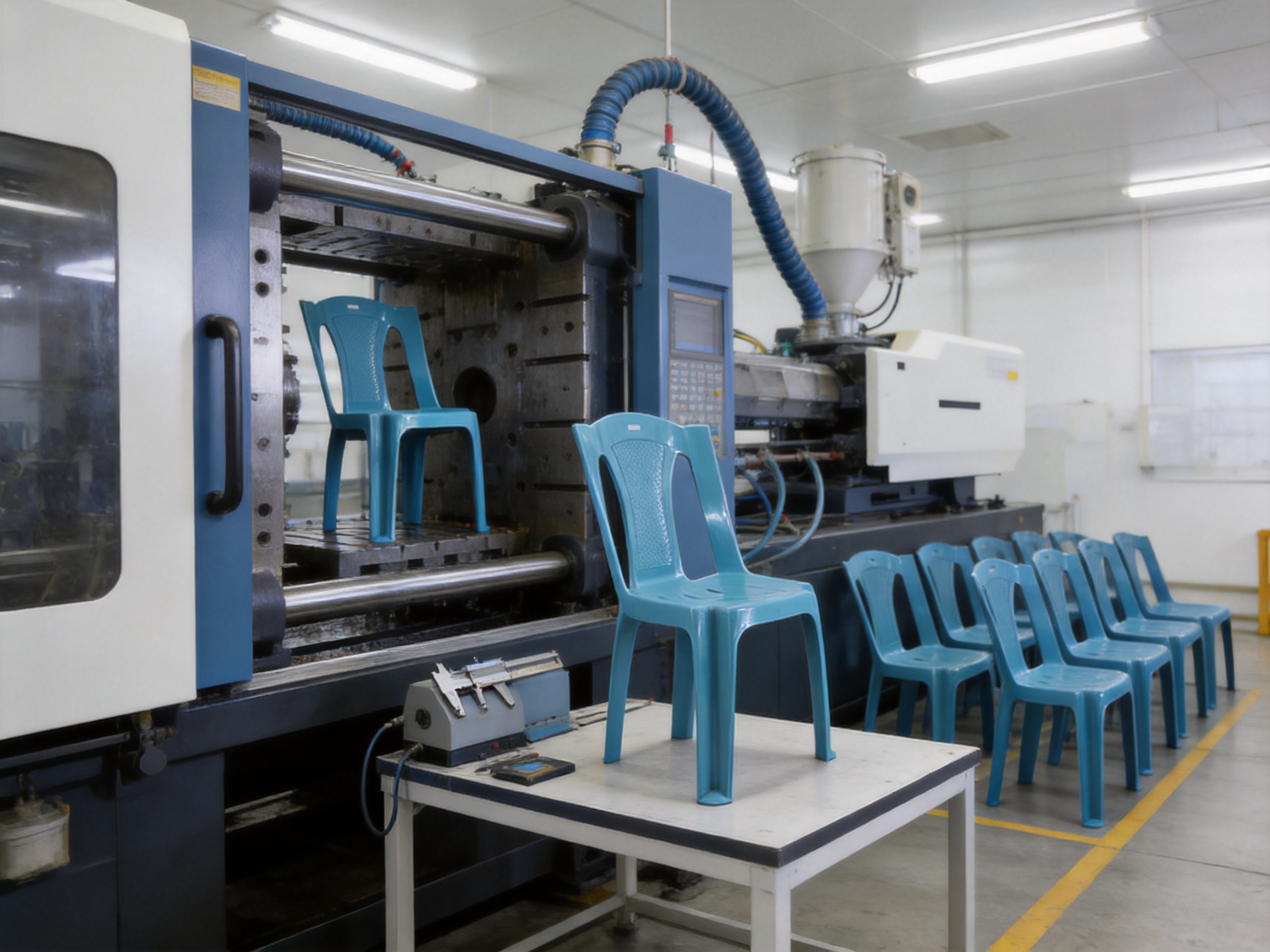
Plastic chairs are among the most widely used injection-molded products in the world. They are found in homes, schools, restaurants, offices, event venues, public facilities, gardens, warehouses, and outdoor leisure areas. Although a chair may appear simple, producing a strong, attractive, and economical plastic chair requires carefully engineered tooling. The mold must control the shape, wall thickness, support structure, surface finish, cooling behavior, ejection process, and long-term production stability. A small weakness in any of these areas can lead to warpage, sink marks, short shots, flash, uneven surfaces, difficult ejection, or premature mold wear.
The CHENGHUI Plastic Chair Mold 006 is designed for manufacturers, wholesalers, distributors, and furniture brands that require dependable tooling for plastic chair production. As a plastic chair injection mold, it is intended to support repeatable molding, efficient cycle management, and the production of chair components with consistent dimensions and appearance. Its value is not limited to the physical mold itself. The complete tooling service includes product development, mold design, machining, assembly, trial molding, quality inspection, and after-sales support.
For buyers comparing suppliers, the most important question is not simply whether a mold can produce a chair. The more important question is whether the tooling partner can deliver a mold that remains stable throughout mass production, matches the approved design, reduces avoidable manufacturing interruptions, and can be supported over its service life. A professional mold manufacturer must combine engineering knowledge, precision processing, suitable materials, disciplined assembly, practical testing, and responsive communication.
This article examines the product value of a custom plastic chair injection mold, explains the manufacturing requirements behind reliable chair tooling, and describes how an experienced mold factory can help customers move from an initial concept to a production-ready solution.

CHENGHUI Plastic Chair Mold 006
Understanding the Role of a Plastic Chair Injection Mold
A plastic chair injection mold is a precision tool used to form molten plastic into the shape of a chair or chair component. During injection molding, plastic material is heated until it becomes fluid and is then forced into the mold cavity under controlled pressure. Once the material fills the cavity and cools sufficiently, the mold opens and the finished part is ejected.
The mold contains several functional areas. The cavity creates the visible outer surface of the chair. The core forms the internal side and structural features. The parting line determines where the two main mold halves separate. The runner and gate system guides molten material into the cavity. Cooling channels remove heat from the plastic and the steel. Ejector components release the molded product after cooling. Additional components may include sliders, lifters, inserts, guide systems, support plates, wear plates, and locating elements.
Chair molds are more demanding than many small household-product molds because a chair generally has a large projected area and a broad visible surface. It may also contain long legs, curved back supports, armrests, reinforcing ribs, foot pads, attachment details, and other complex geometries. The mold must fill these areas evenly while maintaining a practical balance between product weight, strength, appearance, and cycle time.
The design of a chair is closely linked to the mold structure. A product with deep undercuts may require sliders or lifters. A chair with a broad backrest may require carefully planned gates and cooling circuits. A thin-wall design may need higher injection pressure and more precise filling control. A design intended for outdoor use may require additional attention to material behavior, shrinkage, surface finish, and dimensional stability.
For this reason, the mold should be considered part of the product development system rather than an isolated piece of equipment. The tooling affects production efficiency, product quality, material consumption, maintenance requirements, and the total cost of ownership.
Product Value of the CHENGHUI Plastic Chair Mold 006
The CHENGHUI Plastic Chair Mold 006 is positioned as a customized solution for plastic chair injection molding. Its primary advantage is that it can be developed around the customer’s chair design, production requirements, target market, and intended material. This approach is more flexible than relying on a generic mold that may not match the desired appearance or performance.
Customization allows the mold design team to evaluate the chair geometry before steel processing begins. The team can review wall thickness, draft angles, rib placement, corner transitions, parting lines, gate locations, ejection areas, and cooling requirements. Early engineering review helps identify potential problems while they are still easier and less expensive to correct.
A professional chair mold also needs to support stable mass production. A product may pass an initial trial but still create problems after thousands of cycles if the cooling layout is unbalanced, the ejection system is overloaded, or the mold components are not manufactured accurately. Reliable tooling must therefore be designed not only to form the first acceptable chair, but also to continue producing consistent chairs over a long production schedule.
Another important advantage is production compatibility. Customers may have different injection molding machines, available clamping forces, plastic materials, automation systems, and factory layouts. A mold manufacturer should consider these conditions when confirming mold dimensions, mold weight, injection requirements, opening stroke, ejection stroke, and connection details. This helps the final tool work effectively within the customer’s existing production environment.
The product can also be adapted for different commercial objectives. A low-cost chair may prioritize material efficiency and fast cycle performance. A premium chair may require a more refined surface finish, stronger structural details, and tighter dimensional control. A chair for institutional use may require higher durability and reinforcement. The mold design must reflect these priorities rather than applying one standard configuration to every project.
Advantages Compared with Less Specialized Mold Solutions
Better Control of Product Consistency
One of the most important advantages of a professionally engineered chair mold is repeatability. Chair manufacturers often produce large quantities for distributors, retailers, hospitality projects, schools, or government contracts. In these applications, inconsistent dimensions can cause stacking problems, unstable chairs, mismatched colors or components, and customer complaints.
Precision mold manufacturing helps maintain consistent cavity geometry and moving-part alignment. When the mold is correctly designed, machined, and assembled, the product is more likely to maintain stable dimensions from one production batch to another. Consistency is particularly important for chair legs, feet, armrests, connecting features, and stacking surfaces.
More Efficient Material Distribution
The flow of molten plastic must reach all important areas of the chair before solidifying. A poorly planned filling system can create weld lines in highly stressed areas, incomplete filling near the legs or backrest, excessive pressure requirements, or visible flow marks on the surface. A well-developed gate and runner layout supports more balanced filling and can help reduce unnecessary material waste.
Material efficiency is especially valuable in high-volume furniture production. Even a small reduction in part weight can create meaningful savings when thousands or millions of chairs are produced. However, weight reduction must be balanced against stiffness, impact resistance, load-bearing requirements, and long-term durability. The goal is not simply to make the chair lighter, but to make the product efficient without compromising its intended performance.
Improved Surface Appearance
Plastic chairs are often purchased based on visual appearance as well as price and strength. Surface defects such as weld lines, sink marks, drag marks, burn marks, air traps, and uneven texture can reduce perceived quality. Mold surface treatment, polishing, texturing, venting, and cooling design all influence the final appearance.
A specialized mold factory can help the customer select a practical surface finish. A smooth finish may be appropriate for a modern indoor chair, while a textured finish can help reduce the visibility of minor marks and provide a different tactile effect. The selected finish must be applied consistently to the relevant cavity areas and protected during machining and assembly.
Reduced Risk of Ejection Damage
Large chair parts can be difficult to remove from the mold because of their size, shape, and surface area. If the ejection force is concentrated in too few locations, the product may bend, whiten, deform, or show ejector marks. A properly distributed ejection system supports the part while it is released from the cavity.
Ejection planning should take place during the early design stage. Ejector pins, sleeves, blades, lifters, or other mechanisms must be located where they can provide effective force without damaging visible or structurally sensitive areas. The design should also account for shrinkage, draft, surface texture, and the expected temperature of the part at ejection.
Greater Serviceability
A mold is a production asset that must be maintained. Wear parts, ejector components, guide systems, inserts, and sealing elements may eventually require inspection or replacement. A serviceable mold is easier to disassemble, clean, repair, and reassemble. Clear component identification and practical access to maintenance areas can reduce downtime.
Compared with a low-cost tool designed without sufficient attention to maintenance, a professionally organized mold can provide better long-term value. The initial purchase price is only one part of the total cost. Downtime, repair delays, rejected products, difficult troubleshooting, and premature replacement can be much more expensive over the life of the project.
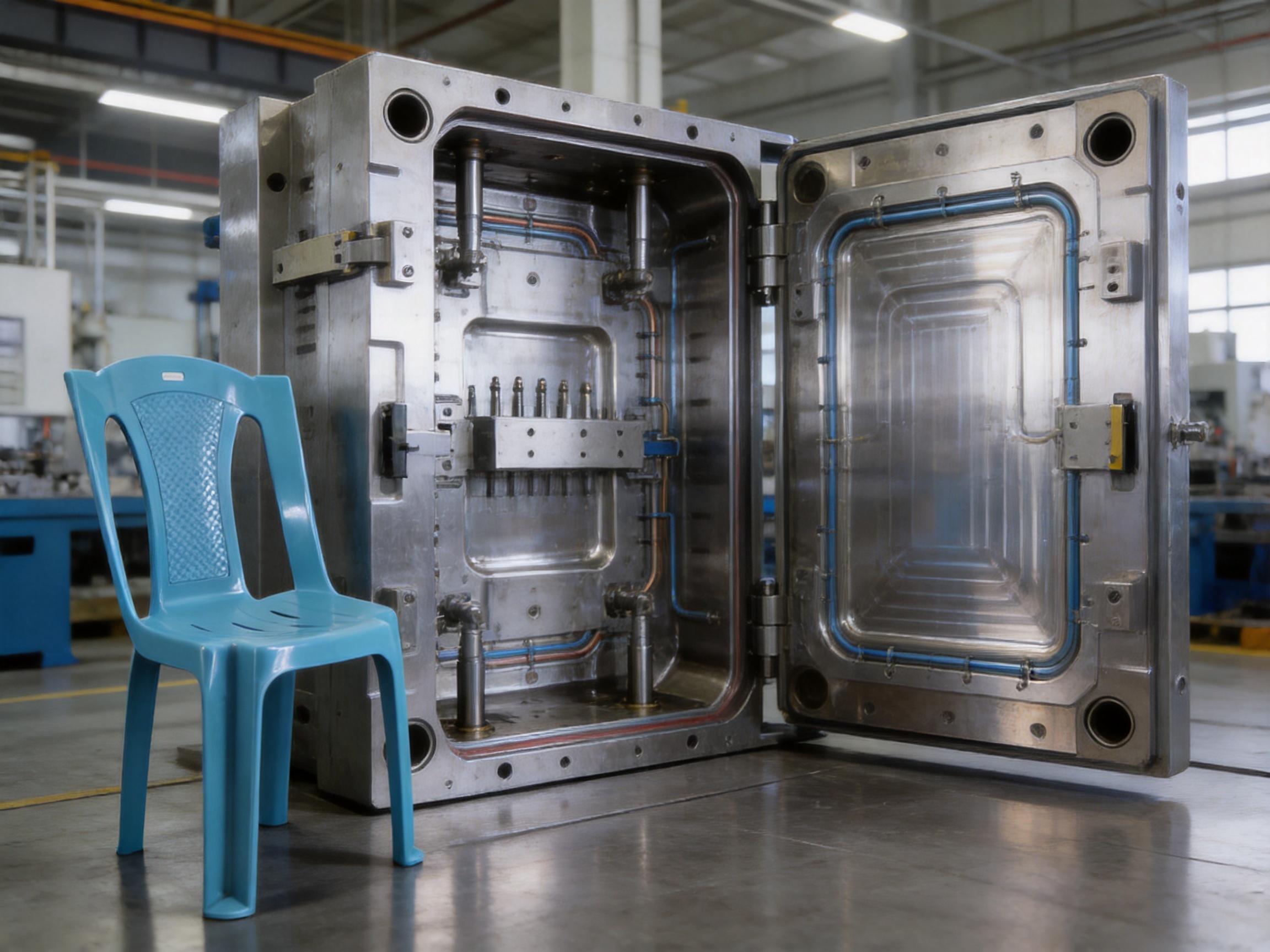
Engineering Considerations for Chair Mold Design
Product Geometry and Draft
Draft angles allow the molded chair to separate from the cavity and core. Without sufficient draft, the plastic part may stick to the mold surface, require excessive ejection force, or suffer scratches and deformation. The necessary draft depends on the surface finish, material, depth, texture, and local geometry.
Chair designers sometimes want nearly vertical walls for visual reasons. In such cases, the mold engineer must evaluate whether the design can be released reliably and whether a texture or deep feature will increase the required draft. Early communication between the product designer and mold manufacturer can prevent significant revisions later in the project.
Wall Thickness and Structural Balance
Uniform wall thickness generally helps reduce uneven shrinkage and warpage. However, a chair cannot be designed as a simple uniform shell because it must carry loads and resist bending. Structural ribs, bosses, curved transitions, and local reinforcement are often necessary. These features must be designed carefully because thick intersections can create sink marks or internal stresses.
The mold design team can review transitions between the main seat, backrest, legs, armrests, and reinforcing features. Smooth transitions may improve material flow and reduce stress concentration. Properly placed ribs can increase stiffness without requiring excessive overall wall thickness. The product design, material selection, and molding process must be considered together.
Gate and Runner Planning
The gate is the entry point through which molten plastic enters the chair cavity. Its location affects filling balance, weld-line position, packing behavior, gate marks, and product appearance. For a large chair, the gate system may require careful analysis to ensure that the material reaches distant sections before cooling.
The correct gate solution depends on the chair’s geometry, resin, expected cycle, surface requirements, and machine capability. A gate placed in a visible area may leave a mark that is unacceptable for a premium product. A gate placed too far from a critical section may create insufficient packing or incomplete filling. The objective is to establish a practical flow pattern that supports both appearance and structural performance.
Cooling System Design
Cooling is one of the most important factors in injection molding productivity. Once the plastic fills the cavity, heat must be removed evenly and efficiently. If one region cools much faster than another, the part may warp or shrink unevenly. If cooling is insufficient, the cycle may need to be extended, reducing output.
Chair molds often require cooling channels distributed across broad surfaces and thick structural areas. The cooling system should be designed to reach critical regions while preserving mold strength and avoiding interference with ejector components or other mechanisms. Water connections should be arranged in a practical manner so that operators can connect, inspect, and maintain the system.
Balanced cooling can improve dimensional stability, shorten cycle time, and reduce energy consumption per part. It can also reduce the risk of deformation after ejection. Because every chair design is different, the cooling layout should be developed specifically for the product rather than copied from an unrelated mold.
Venting and Air Evacuation
Air trapped inside a cavity can prevent complete filling and create burn marks, surface defects, or local pressure problems. Large chair surfaces and deep structural areas may require carefully positioned vents. Venting must allow air and process gases to escape without creating unacceptable flash.
Vents should be reviewed near the end of filling areas, ribs, corners, deep pockets, and potential weld-line locations. Proper venting can help reduce injection pressure and improve surface quality. During mold trials, the engineering team can assess whether additional venting or adjustments are necessary.
Parting Line and Mold Opening
The parting line is the boundary where the mold opens. Its location influences flash, appearance, ejection, machining complexity, and the need for side actions. An inappropriate parting line may create visible marks on important surfaces or make the product difficult to remove.
For a chair mold, the parting line must accommodate the broad product shape and any undercuts created by arms, supports, legs, or connecting details. The design team must also consider how the mold will be mounted, opened, cleaned, and serviced. A well-planned parting line can simplify the tool while protecting the visible quality of the chair.
Manufacturing Process for the Mold
The manufacturing process begins with technical communication. The customer provides product drawings, three-dimensional data, reference samples, material information, expected production volume, and machine details where available. The mold factory reviews the information and identifies questions relating to product function, appearance, stacking, packaging, assembly, and production conditions.
After the initial review, the engineering team develops the mold concept. This stage may include parting-line analysis, mold layout, gate planning, cooling planning, ejection design, steel selection, and component specification. The design should be checked for manufacturability and maintenance access before detailed machining begins.
Computer-aided design is used to define cavity geometry and mold structure. Computer-aided manufacturing supports machining instructions for milling, drilling, electrode production, and other operations. Where appropriate, simulation and digital inspection can help identify filling, shrinkage, interference, or dimensional risks before the mold is completed.
Steel preparation follows design approval. Mold plates, inserts, cores, cavities, and other components are cut or prepared according to the project requirements. The choice of steel and treatment depends on production volume, material characteristics, surface requirements, expected wear, and customer specifications. The material decision should balance durability, machinability, corrosion resistance, polishability, and cost.
Rough machining removes excess material and establishes the basic shape. Semi-finishing and finishing operations then bring the cavity and core closer to the required dimensions. High-precision machining equipment is important because large chair cavities may contain complex curves, deep areas, thin edges, and large visible surfaces.
Electrical discharge machining may be used for certain details that are difficult to produce through conventional cutting. Wire cutting can support precise production of selected components and openings. Grinding, polishing, and texturing complete the surface requirements. Each process must be controlled to avoid distortion, unwanted marks, or dimensional deviation.
After individual components are processed, the mold is assembled. Assembly includes the installation of guide systems, ejectors, cooling components, inserts, sliders or lifters where required, support structures, and other moving elements. The assembly team checks movement, contact, fit, alignment, and clearances. Correct assembly is essential because even accurately machined components can perform poorly if installed incorrectly.
Mold testing is carried out using professional injection molding equipment. The purpose of a trial is to confirm filling, ejection, appearance, dimensions, cooling behavior, and general mold operation. Trial molding may involve process adjustments such as injection speed, pressure, temperature, holding time, cooling time, and ejection timing. These settings should be adjusted in a controlled manner so that the team can understand the cause of each result.
Trial samples are reviewed against the approved product data or reference sample. If improvements are needed, the mold may undergo corrections, polishing, venting adjustments, gate modifications, or other engineering changes. The goal is to deliver a mold that is ready for the customer’s mass-production conditions rather than simply a tool that produces one acceptable sample under unusual settings.
Before shipment, the mold should be inspected, cleaned, protected, and documented. Relevant information may include mold dimensions, weight, water-circuit identification, operating notes, spare parts, maintenance recommendations, and trial records. Good documentation helps the customer install and operate the mold more efficiently.
Advanced Manufacturing Strengths
The manufacturer behind the product has more than 30 years of experience in designing and manufacturing injection molds for daily necessities. This experience is relevant to plastic chair tooling because household and industrial products often require the same combination of large surfaces, functional strength, attractive appearance, efficient cycles, and high-volume production stability.
The company operates its own production workshop and has 104 advanced processing machines. An in-house workshop allows important stages of production to be coordinated under one management system. It can improve communication between design, machining, assembly, testing, and quality teams. It also helps the manufacturer monitor project progress and respond more directly when technical changes are needed.
Professional injection molding machines are available for mold testing. This is a significant advantage because trial molding provides practical evidence of how the tool performs. Digital design alone cannot reveal every behavior that may occur during filling, cooling, opening, or ejection. A controlled trial allows the factory to identify issues and make improvements before the mold is delivered.
The company reports an annual production capacity of more than 1,500 mold sets. This capacity indicates experience in managing multiple projects and production schedules. For customers with repeated tooling requirements, a factory with established capacity may be better positioned to coordinate new molds, modifications, spare parts, and follow-up projects.
Quality management is integrated into the manufacturing process. Precision equipment, standardized procedures, and inspection activities help reduce variation between design intent and finished tooling. For a plastic chair mold, quality control should cover dimensions, cavity surfaces, component fit, cooling passages, ejector movement, water leakage, mold opening, and trial samples.
The manufacturer serves customers in the Middle East, Europe, America, Africa, Southeast Asia, and other regions. International experience can support clearer documentation, export preparation, communication across time zones, and awareness of different production environments. It may also help the supplier understand the commercial requirements of wholesalers, distributors, furniture brands, and contract manufacturers.
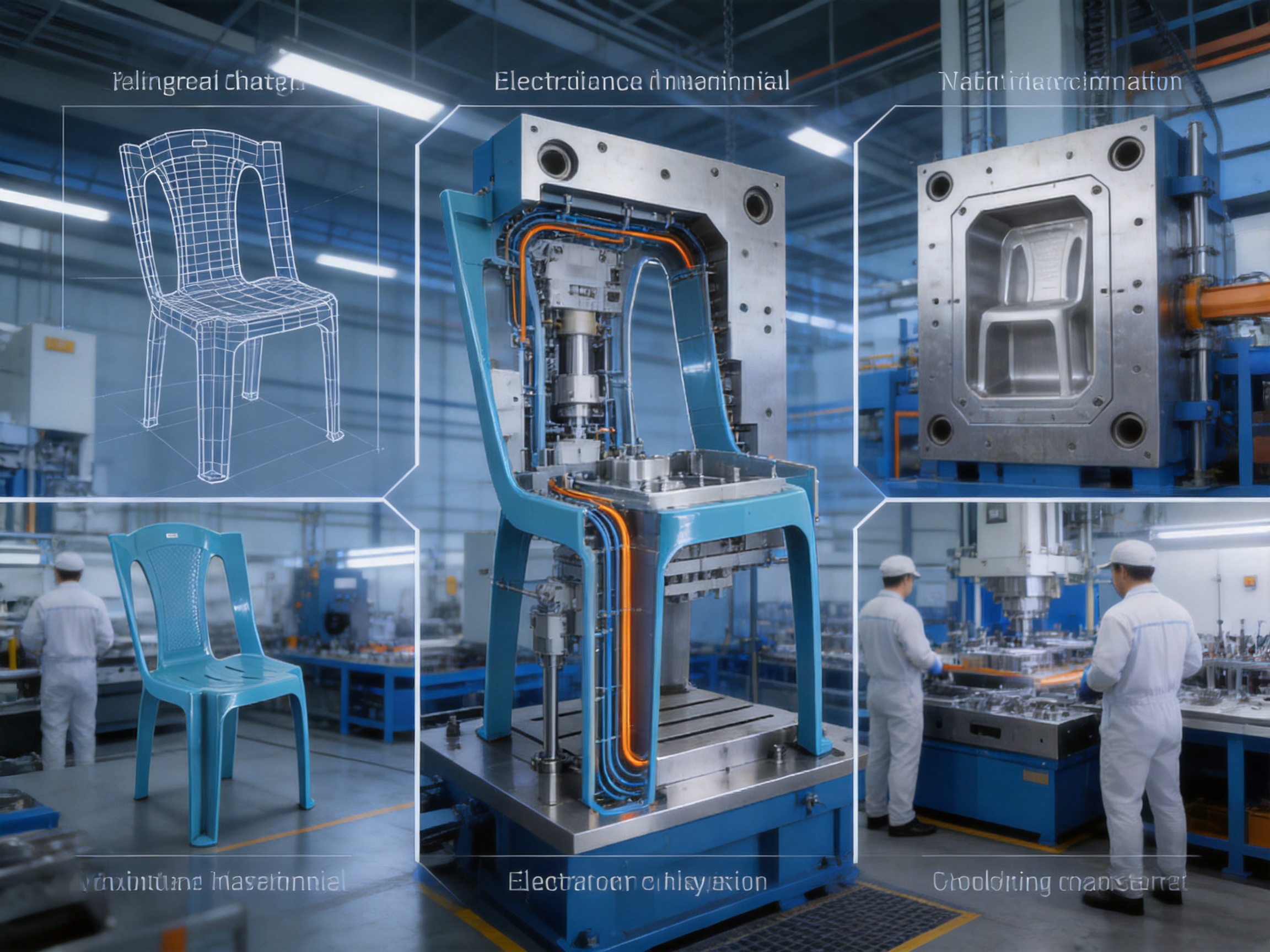
Quality Control for a Production-Ready Chair Mold
Quality control begins with reviewing the customer’s product data. The mold factory should confirm that the correct revision has been used and that changes are documented. Confusion between old and new product versions can result in costly rework, particularly when cavity machining has already begun.
Dimensional inspection is used to check critical mold components and product samples. The inspection focus depends on the chair design, but may include overall dimensions, leg spacing, seat height, backrest position, stacking interfaces, attachment features, and symmetry. Visible surfaces may require additional inspection for polishing quality, texture consistency, and machining marks.
Moving components must operate smoothly. Sliders, lifters, ejector plates, guide pillars, and other mechanisms should be checked for interference, excessive looseness, insufficient travel, and abnormal wear points. Difficult movement can increase machine load and create long-term reliability problems.
Cooling circuits should be checked for flow and leakage. Poorly sealed water lines can damage the mold, interrupt production, and create safety concerns. Clear circuit identification can help operators connect the mold correctly and diagnose temperature differences between zones.
The trial process provides a practical quality assessment. Inspectors should review whether the cavity fills completely, whether the part can be ejected without damage, whether the surface finish is acceptable, and whether the sample matches the approved design. Any required correction should be recorded and verified after completion.
Packaging is also part of quality protection. Mold surfaces should be cleaned and protected from corrosion. Moving components should be secured for transportation. The mold should be packed to reduce the risk of impact, moisture, or contamination during shipment and storage.
Benefits for Wholesalers, Distributors, and Furniture Brands
For wholesalers and distributors, a dependable chair mold can support a more stable product supply. Consistent tooling helps manufacturers produce chairs with predictable dimensions and appearance, which is important when orders are repeated across different seasons or markets.
For furniture brands, custom tooling creates an opportunity to develop a recognizable chair design. Instead of competing solely on price with generic products, a brand may use a distinctive backrest, armrest, leg structure, texture, or stacking format. The mold becomes an important part of protecting the product concept and supporting brand consistency.
For contract manufacturers, a production-ready mold can help improve machine utilization and reduce trial-and-error during regular production. When the tool is designed around the available equipment and material, operators may be able to establish stable process parameters more efficiently.
For companies entering a new market, working with an experienced mold manufacturer can reduce development risk. The supplier can help identify issues that may not be obvious in a product drawing, such as insufficient draft, difficult ejection, unbalanced filling, or cooling limitations. Early technical guidance can save time and reduce the chance of expensive mold modifications.
For high-volume buyers, long-term mold service is an important consideration. A supplier that provides design, manufacturing, trials, inspection, and after-sales support can remain involved beyond the initial delivery. This is useful when the product requires engineering changes, replacement parts, maintenance recommendations, or additional molds for expanded capacity.
Material and Production Considerations
The correct plastic material depends on the chair’s intended use, design, required strength, appearance, cost target, and environmental conditions. Different resins have different shrinkage, flow, cooling, impact, stiffness, and surface behavior. The material should be confirmed before final mold design because it can influence gate selection, cooling requirements, draft, and dimensional expectations.
Recycled or reprocessed material may be considered for certain chair applications, but its consistency must be controlled. Variations in material composition can affect color, strength, flow, and shrinkage. If recycled content is part of the commercial objective, the product and mold should be evaluated with the expected material condition rather than an ideal laboratory resin.
Color and surface finish also influence the customer’s perception of quality. Dark colors may make certain flow or weld-line marks more visible, while light colors may reveal contamination or uneven texture. The mold surface should be prepared according to the approved appearance standard, and trial samples should be assessed under suitable lighting.
Production settings must be developed together with the mold. Injection speed, pressure, melt temperature, mold temperature, holding pressure, cooling time, and ejection timing all influence the final chair. A mold manufacturer can provide a useful starting point based on trial results, but the customer’s machine, material batch, and factory environment may require final optimization.
Maintenance and Long-Term Mold Performance
Regular maintenance helps preserve mold performance. Operators should clean the cavity and core surfaces, remove residue, inspect vents, check water connections, lubricate appropriate moving components, and monitor ejector movement. Maintenance frequency depends on production volume, material, mold construction, and operating conditions.
Water quality should also be considered. Scale or contamination in cooling channels can reduce heat transfer and create uneven cooling. A planned cooling-system maintenance program can help preserve cycle performance and reduce corrosion or blockage risks.
Wear parts should be inspected before they cause production failure. Guide components, ejector pins, sliders, lifters, locks, and sealing elements can gradually wear during repeated operation. Replacing a small wear component during scheduled maintenance is generally preferable to waiting until it damages the mold or interrupts a production order.
Storage conditions matter when the mold is not in use. The tool should be cleaned, dried, protected against corrosion, and stored in a safe environment. Cooling passages may need to be drained depending on the storage period and local conditions. The mold should be opened or closed according to the manufacturer’s recommendations.
A professional supplier can support the customer with maintenance guidance, troubleshooting, spare-part recommendations, and repair services. Such support adds value because the mold’s commercial usefulness depends on its performance over time, not only on its condition when first delivered.
Why Choose an Integrated Mold Factory
An integrated mold factory can manage the project through multiple stages, including concept review, engineering, machining, assembly, testing, inspection, and after-sales service. This reduces the number of handoffs between separate suppliers and can make responsibility clearer when technical issues appear.
When design and production teams work within the same organization, feedback from machining and trial molding can be transferred more quickly to engineering. This can accelerate corrections and reduce misunderstandings. An integrated workflow also helps maintain project records and coordinate changes.
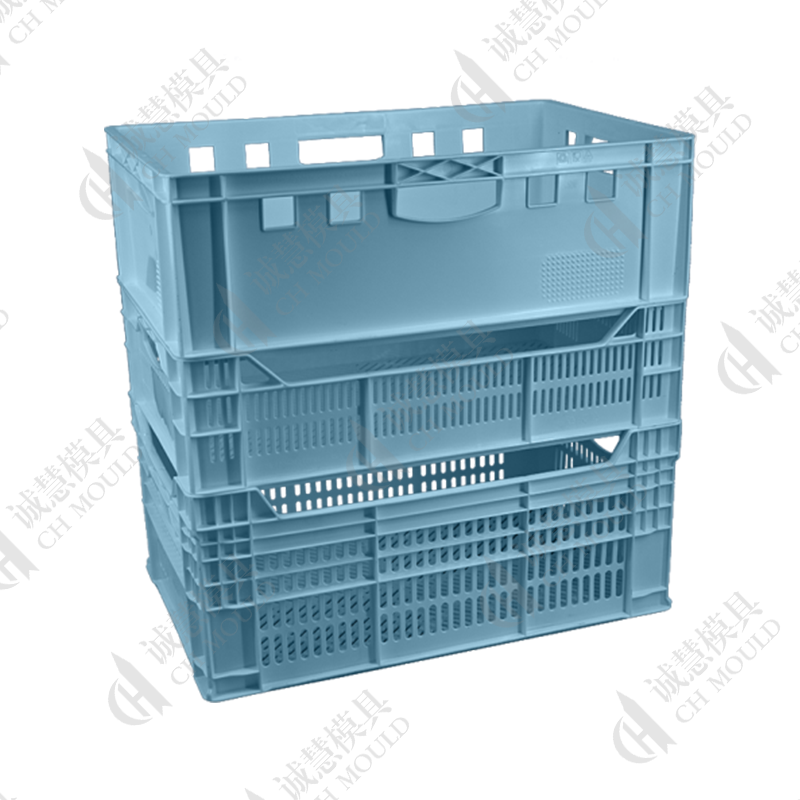
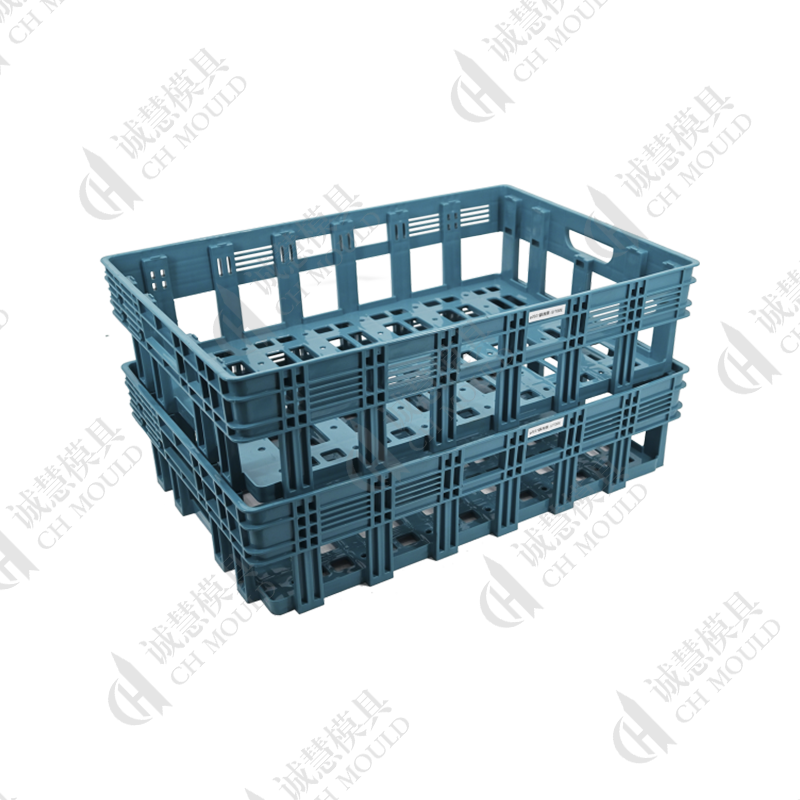
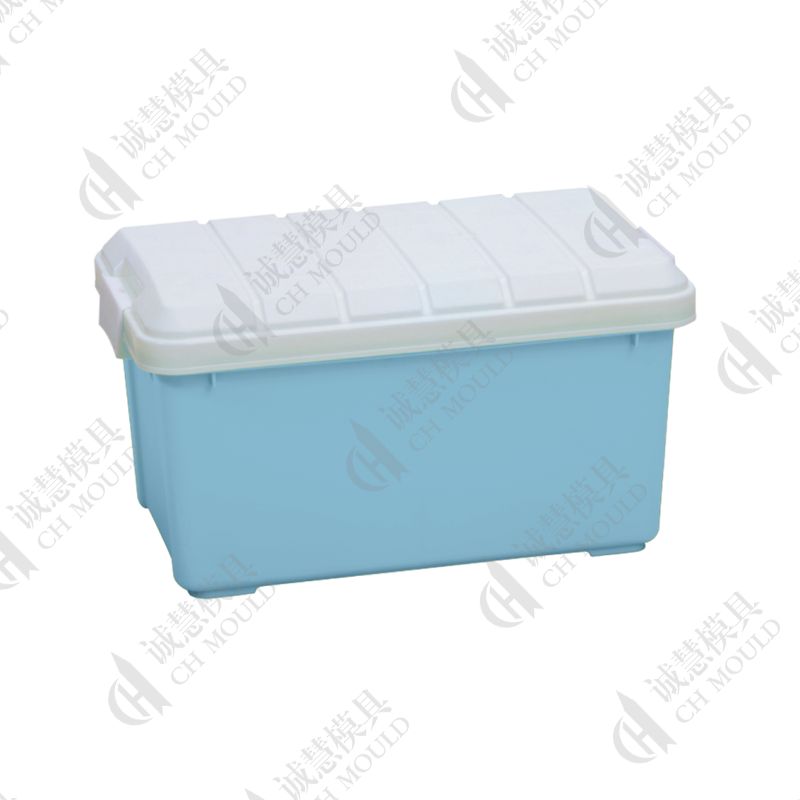
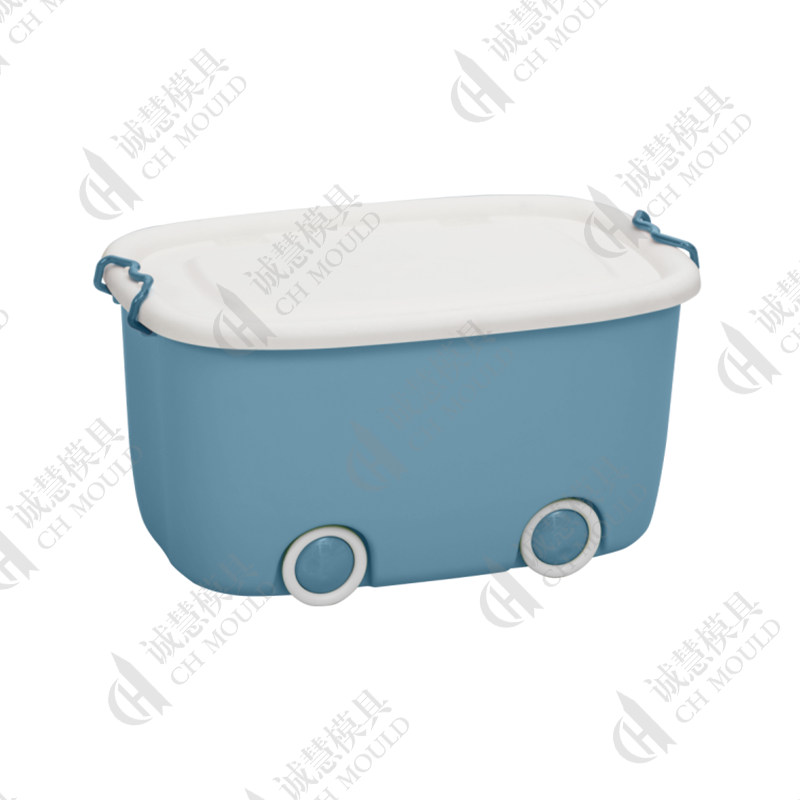
The manufacturer’s experience with pallets, crates, bins, storage products, furniture, laundry baskets, buckets, storage racks, trash cans, and other daily-use products is relevant to chair mold development. These products often require practical knowledge of large plastic parts, durable structures, cost-efficient tooling, and repeatable injection molding.
Customers can benefit from a supplier that understands both the technical and commercial sides of a project. A successful mold must be manufacturable, but it must also support the customer’s target cost, output, quality level, delivery plan, and market positioning.
Project Communication and Ordering Process
A successful project begins with complete information. Customers should provide the latest three-dimensional product file, two-dimensional drawings where available, material requirements, estimated annual output, preferred injection machine, surface finish expectations, color information, and any special performance requirements.
It is also helpful to explain how the chair will be used. Indoor residential seating, outdoor furniture, event seating, school furniture, and industrial or institutional applications may require different priorities. Information about stacking, transportation, packaging, armrest configuration, and expected load can help the mold engineer understand the product objectives.
The supplier should then review the product and propose a mold structure. Important discussion points may include the number of cavities, gate type, cooling layout, ejection method, steel grade, mold base, expected cycle, trial process, spare parts, and maintenance requirements. The final configuration should be confirmed before steel processing begins.
During manufacturing, the customer should receive progress updates and approve key design information. Sample evaluation should be based on agreed criteria rather than subjective comments alone. If modifications are required, both sides should record the requested change and its effect on timing, cost, and product performance.
Before shipment, the customer should confirm the trial sample, inspection information, mold documentation, packaging, and delivery arrangements. Clear communication at this stage helps ensure that the mold arrives ready for installation and production.
Frequently Asked Questions
What type of product is the CHENGHUI Plastic Chair Mold 006 designed for?
It is a plastic chair injection mold intended for producing molded plastic chair products or chair-related structures. The final configuration should be developed according to the customer’s approved chair design, material, production volume, appearance requirements, and injection molding equipment.
Can the mold be customized for a special chair design?
Yes. Custom mold design and manufacturing are central to the service. Customers can provide product drawings, three-dimensional data, samples, or an initial concept. The engineering team can then review the structure and develop a tooling solution around the required product.
What information should be provided before requesting a quotation?
Useful information includes the product file, chair dimensions, material, estimated production quantity, preferred machine information, surface finish, color, packaging method, stacking requirements, and any special strength or usage requirements. More complete information usually leads to a more accurate technical proposal.
Why is cooling design important for a chair mold?
Chair products have broad surfaces and structural areas that may cool at different rates. Balanced cooling helps reduce warpage, improve dimensional stability, and support shorter production cycles. It also contributes to more consistent chair quality over repeated production.
How does the mold help control chair quality?
The mold controls the product geometry, surface finish, material flow, cooling behavior, and ejection process. Accurate machining and careful assembly help the mold reproduce the approved design consistently. Trial molding and inspection provide additional confirmation before delivery.
Can the mold be tested before shipment?
Yes. The manufacturer has professional injection molding machines for mold testing. Trials can be used to evaluate filling, ejection, appearance, dimensions, cooling, and general operating performance. Any required corrections can be addressed before the tool is shipped.
What advantages does an experienced mold manufacturer provide?
An experienced supplier can identify design risks earlier, recommend practical mold structures, coordinate precision machining and assembly, conduct meaningful trials, and provide after-sales assistance. Experience with daily-use products is especially useful for balancing appearance, strength, cost, and production efficiency.
Does the supplier support products other than plastic chairs?
Yes. The company also manufactures molds for storage products, tables, furniture, storage boxes, turnover boxes, laundry baskets, buckets, storage racks, trash cans, PET products, and other household and industrial items. This broad product experience supports cross-category engineering knowledge.
What should be included in a mold maintenance program?
Maintenance should include cleaning mold surfaces, inspecting vents, checking cooling circuits, lubricating appropriate moving components, monitoring ejector and slider movement, checking for wear, and protecting the mold against corrosion during storage. The exact schedule depends on production conditions and mold usage.
How can buyers compare this mold with a lower-priced alternative?
Buyers should compare more than the initial quotation. They should evaluate design review, steel and component specifications, machining capability, trial molding, inspection, expected service life, maintenance access, documentation, delivery support, and after-sales service. A lower initial price may not represent lower total cost if the tool causes frequent downtime or quality problems.
Conclusion
The CHENGHUI Plastic Chair Mold 006 represents a customized tooling solution for manufacturers seeking reliable plastic chair production. Its value comes from the combination of product-focused engineering, precision processing, practical mold testing, quality control, and long-term service support.
A chair mold must do much more than reproduce an attractive outline. It must support balanced filling, consistent cooling, reliable ejection, stable dimensions, suitable surface quality, efficient cycles, and maintenance over a long production life. These requirements make the experience and capabilities of the mold factory especially important.
With more than 30 years of mold-making experience, an in-house production workshop, 104 advanced processing machines, professional injection molding equipment for trials, and reported annual capacity exceeding 1,500 mold sets, the manufacturer offers an integrated approach to injection tooling. Its experience with household and industrial products provides a practical foundation for developing durable and efficient chair molds.
For wholesalers, distributors, furniture brands, and contract manufacturers, selecting the right mold partner can influence product quality, operating cost, delivery reliability, and market competitiveness. A carefully engineered plastic chair mold can help transform a product concept into a repeatable mass-production solution while reducing avoidable problems throughout the project lifecycle.
References
1. Injection Molding Handbook, general principles of mold design, polymer flow, cooling, ejection, and process control.
2. Plastics Engineering Fundamentals, guidance on material behavior, shrinkage, wall thickness, ribs, draft, and molded-part design.
3. Mold Engineering and Manufacturing Practice, reference material covering mold bases, cavity machining, surface finishing, cooling channels, and maintenance.
4. Industrial Injection Mold Quality Management Guidelines, general recommendations for dimensional inspection, trial molding, documentation, and production readiness.
5. Supplier-provided company and product information for the plastic chair injection mold, manufacturing capabilities, production experience, and service scope.