
 Français
 Español
 عربى
A laundry basket is a familiar household product, but producing a durable, attractive, and consistently dimensioned basket requires a carefully engineered injection mold. The mold must support thin yet strong walls, open ventilation patterns, smooth edges, stable stacking, comfortable handling, and efficient high-volume production. For manufacturers, distributors, and brands searching for a dependable laundry basket mold, tooling quality directly influences product appearance, production cost, cycle efficiency, and long-term commercial success.
The CHENGHUI Laundry Basket Mold 004 is designed for manufacturers seeking a practical and reliable solution for producing plastic laundry baskets. It is part of a broader range of injection molds developed for household and industrial products, including storage boxes, turnover containers, buckets, trash cans, tables, chairs, furniture components, and storage products. Its development reflects the production requirements of modern plastic processors: accurate dimensions, repeatable molding performance, efficient cooling, convenient maintenance, and compatibility with customized product designs.
Behind the mold is Zhejiang Chenghui Mould Co., Ltd., a China-based injection mold manufacturer with more than 30 years of experience in the design and production of molds for daily necessities. Founded in 1994, the company combines product development support, precision machining, mold assembly, trial molding, inspection, and after-sales service within an integrated manufacturing process.
This article explains the key characteristics of a professional laundry basket mold, the advantages of a well-engineered solution over basic or poorly optimized tooling, and the manufacturing capabilities that support dependable production for wholesalers, distributors, household product manufacturers, and OEM or ODM customers.
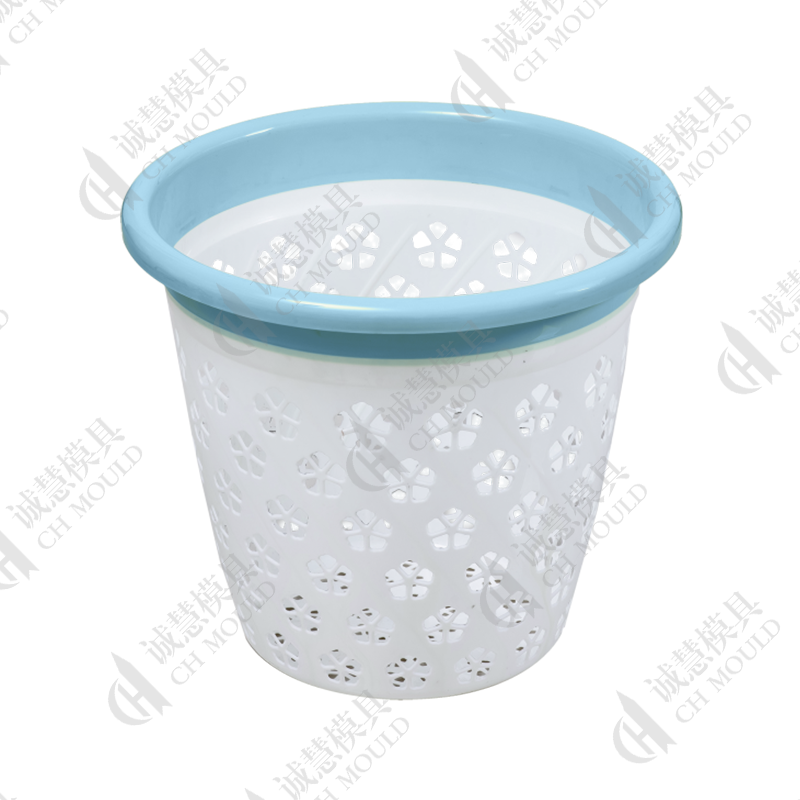
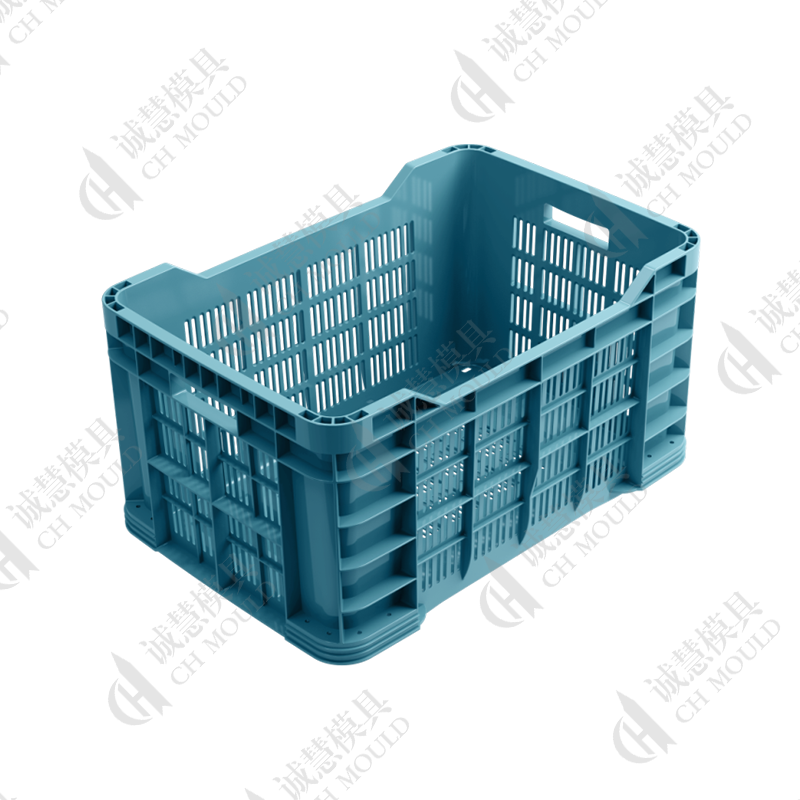
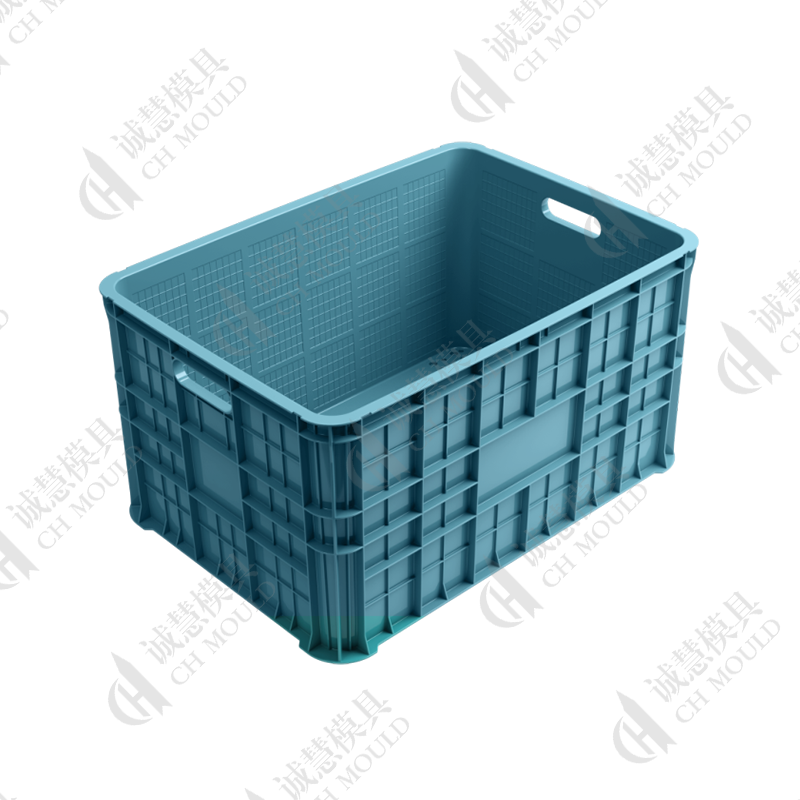
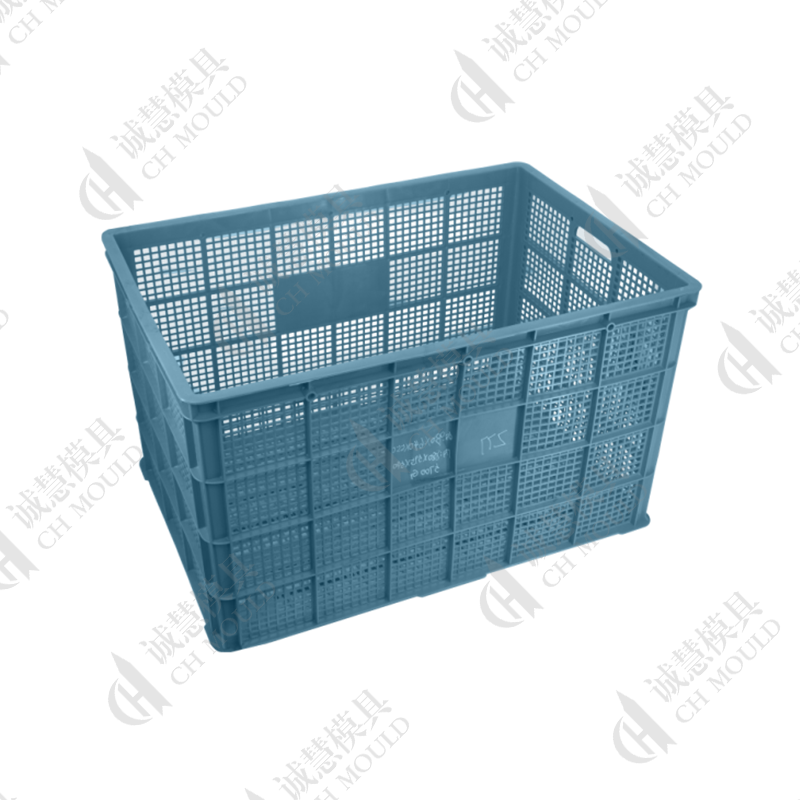
CHENGHUI Laundry Basket Mold 004
1. The Role of a Laundry Basket Mold in Product Quality
A laundry basket mold is more than a cavity shaped like a household container. It is a complete production system that determines how molten plastic flows, cools, shrinks, ejects, and repeatedly forms the finished product. Every detail of the tooling can influence the final basket, from the position of the injection gate to the design of the cooling channels and the shape of the ejector system.
Laundry baskets commonly include a large open body, ventilation holes, reinforced rims, carrying handles, ribs, feet, and decorative or functional surface features. These elements must be formed accurately while avoiding defects such as short shots, weld-line weakness, sink marks, warpage, flash, burn marks, uneven gloss, and difficult ejection.
When a mold is poorly designed, production problems may not be limited to one visible defect. Uneven cooling can cause the basket to twist or rock on a flat surface. Insufficient support around the rim can lead to deformation during handling. Poor venting can create black marks or incomplete filling around fine openings. Excessive draft restrictions can make automatic ejection difficult and damage the product during demolding.
A professionally developed laundry basket mold addresses these risks during the engineering stage. The mold structure is planned around the selected plastic material, product thickness, injection machine, expected production volume, and required appearance. This approach helps manufacturers achieve stable mass production rather than simply obtaining a first acceptable sample.
1.1 Product Geometry and Mold Complexity
Laundry basket designs vary considerably. Some models are rectangular, while others are oval, round, or tapered. Some feature large perforations for ventilation, and others use a woven visual pattern or a combination of holes and ribs. Handles may be integrated into the basket body or formed as separate reinforced areas.
Each geometry creates specific tooling requirements. A tapered basket may need carefully balanced draft angles to support easy ejection. A basket with many ventilation openings requires accurate core and cavity details. A reinforced rim needs appropriate steel support and cooling to reduce deformation. A model with integrated handles may require additional attention to filling balance and local wall thickness.
CHENGHUI Laundry Basket Mold 004 can be adapted to the intended product design and customer specifications. This is particularly valuable for OEM and ODM projects, where a buyer may need a basket with a distinctive profile, brand-oriented appearance, customized dimensions, or a special combination of handles and ventilation openings.
2. Design Advantages of a Professional Laundry Basket Mold
A high-quality mold should provide more than a correct external shape. It should create an efficient relationship between product design, material behavior, tooling structure, production speed, and maintenance requirements. The following design advantages are especially important for laundry basket production.
2.1 Consistent Product Dimensions
Consistent dimensions are essential when laundry baskets must be stacked, packaged, shipped, or displayed in large quantities. Variations in rim size, base dimensions, height, or handle position can make products difficult to nest and may increase packaging volume.
Precision mold manufacturing helps maintain consistency from one production cycle to the next. Accurate machining of cavity and core components ensures that the basket shape remains stable when the mold is properly installed, operated, and maintained. Reliable dimensional control also helps reduce customer complaints caused by uneven appearance or inconsistent assembly with lids, racks, or related household products.
2.2 Strong but Material-Efficient Structures
Plastic laundry baskets must be light enough for comfortable daily use but strong enough to carry clothing and withstand repeated handling. Excessive wall thickness can increase material consumption, cooling time, and product weight. Insufficient thickness can produce weak walls, deformation, or breakage around handles and rims.
A well-designed mold supports an optimized product structure. Reinforcing ribs can be placed where additional strength is needed, while ventilation openings reduce weight and improve air circulation. The mold can be developed around balanced wall sections so that the processor can pursue a practical combination of strength, appearance, and cycle efficiency.
This balance offers an advantage over basic tooling that relies on thick walls to compensate for weak engineering. Material-efficient product design may reduce resin usage and shorten cooling time, contributing to lower production costs over the life of the mold.
2.3 Clean Ventilation Openings
Ventilation openings are one of the most recognizable features of a laundry basket. They allow air circulation, reduce product weight, and create a distinctive visual pattern. However, openings also make the mold more complex because each opening involves core details, edge transitions, and possible weld-line locations.
Precision machining helps ensure that the openings are accurately formed and visually consistent. Proper venting around the cavity and core can support complete filling and reduce the risk of trapped gas. Carefully designed transitions help minimize sharp edges, excess flash, or rough areas that could affect safe household use.
For manufacturers selling into retail and export markets, uniform openings are an important part of perceived quality. A basket with inconsistent hole dimensions or visible flash may appear inexpensive even when the basic structure is functional. A well-made mold helps create a cleaner and more professional product surface.
2.4 Smooth Edges and Comfortable Handling
Laundry baskets are frequently carried by hand. The upper rim, handle openings, and corner areas must therefore be designed with attention to comfort and safety. Sharp edges, uneven transitions, and excessive parting-line flash can create an unpleasant user experience.
The mold surface and parting design influence the appearance of these high-contact areas. Appropriate polishing, controlled parting lines, and accurate matching between mold components help support smooth finished edges. Depending on the final product design, additional radii and reinforcing sections can be incorporated into the tooling to improve comfort without compromising strength.
2.5 Reliable Ejection
Because laundry baskets often have broad surfaces and multiple openings, ejection must be carefully balanced. If the product is pushed unevenly, it may deform, show ejector marks, or remain stuck in the cavity. A reliable ejection system distributes force across suitable structural areas and supports quick, repeatable demolding.
The design should also consider the material's shrinkage behavior. Plastic parts naturally contract as they cool, and the mold must provide suitable draft and release conditions. Proper ejection design reduces the risk of production interruptions and protects the appearance of the basket during high-volume operation.
3. Advantages Compared with Basic or Poorly Optimized Tooling
Not all injection molds deliver the same production value. Lower initial tooling prices can sometimes be accompanied by inadequate steel selection, weak cooling design, inaccurate machining, poor venting, or limited trial testing. These weaknesses may become expensive once production begins.
3.1 Lower Risk of Warpage
Large household products with broad walls are sensitive to uneven cooling and internal stress. A basket that does not sit flat, stack correctly, or retain its intended shape can lead to significant rejection rates.
A professionally engineered mold uses cooling channels, wall-thickness planning, and processing validation to promote more uniform temperature control. Although final molding results also depend on machine settings and material selection, a balanced mold foundation gives the processor a much better opportunity to control warpage.
3.2 Better Surface Appearance
Surface quality affects both consumer perception and brand reputation. Uneven gloss, visible flow marks, weld lines, burns, and flash can make a household product look poorly manufactured.
Advanced tooling production places emphasis on cavity surface preparation, parting-line accuracy, venting, and mold trial evaluation. These factors help manufacturers achieve a cleaner appearance and make it easier to adjust processing conditions during commissioning.
3.3 More Stable Long-Term Production
A mold may produce an acceptable sample and still fail to provide reliable long-term performance. Repeated production exposes weaknesses in guide systems, inserts, cooling connections, ejector components, and parting surfaces. If these elements are poorly designed or manufactured, maintenance costs can rise quickly.
Stable long-term production requires suitable component selection, accurate assembly, controlled tolerances, and practical maintenance access. Chenghui Mould's integrated production capability supports these requirements by combining machining, assembly, testing, and inspection within its own manufacturing organization.
3.4 Reduced Production Waste
Waste can result from incomplete filling, excessive flash, deformation, difficult ejection, or inconsistent dimensions. Each rejected basket consumes resin, machine time, labor, and packaging resources.
Better mold design does not eliminate every possible molding defect, but it reduces the number of variables that the processor must overcome. Balanced filling, appropriate venting, uniform cooling, and dependable ejection can contribute to higher first-pass yield and more predictable production planning.
3.5 Greater Customization Potential
Many low-cost mold suppliers focus on standard products with limited design flexibility. This may be acceptable for a simple commodity item, but it can restrict manufacturers that want to develop a differentiated product range.
A custom mold manufacturer can work from drawings, samples, product concepts, or functional requirements. Customization may include basket dimensions, handle configuration, hole patterns, rib layout, surface texture, logo areas, nesting features, and packaging considerations. This gives buyers more control over market positioning and product differentiation.
4. Manufacturing Capabilities Supporting Mold Quality
The quality of a laundry basket mold depends on the manufacturing system used to build it. Design software alone cannot guarantee precision. The tooling must be machined accurately, assembled carefully, tested under realistic conditions, and inspected against the agreed requirements.
Zhejiang Chenghui Mould Co., Ltd. has its own production workshop and operates 104 advanced processing machines. This equipment base supports a broad range of manufacturing activities, including precision machining, component preparation, mold fitting, surface treatment, assembly, and quality verification.
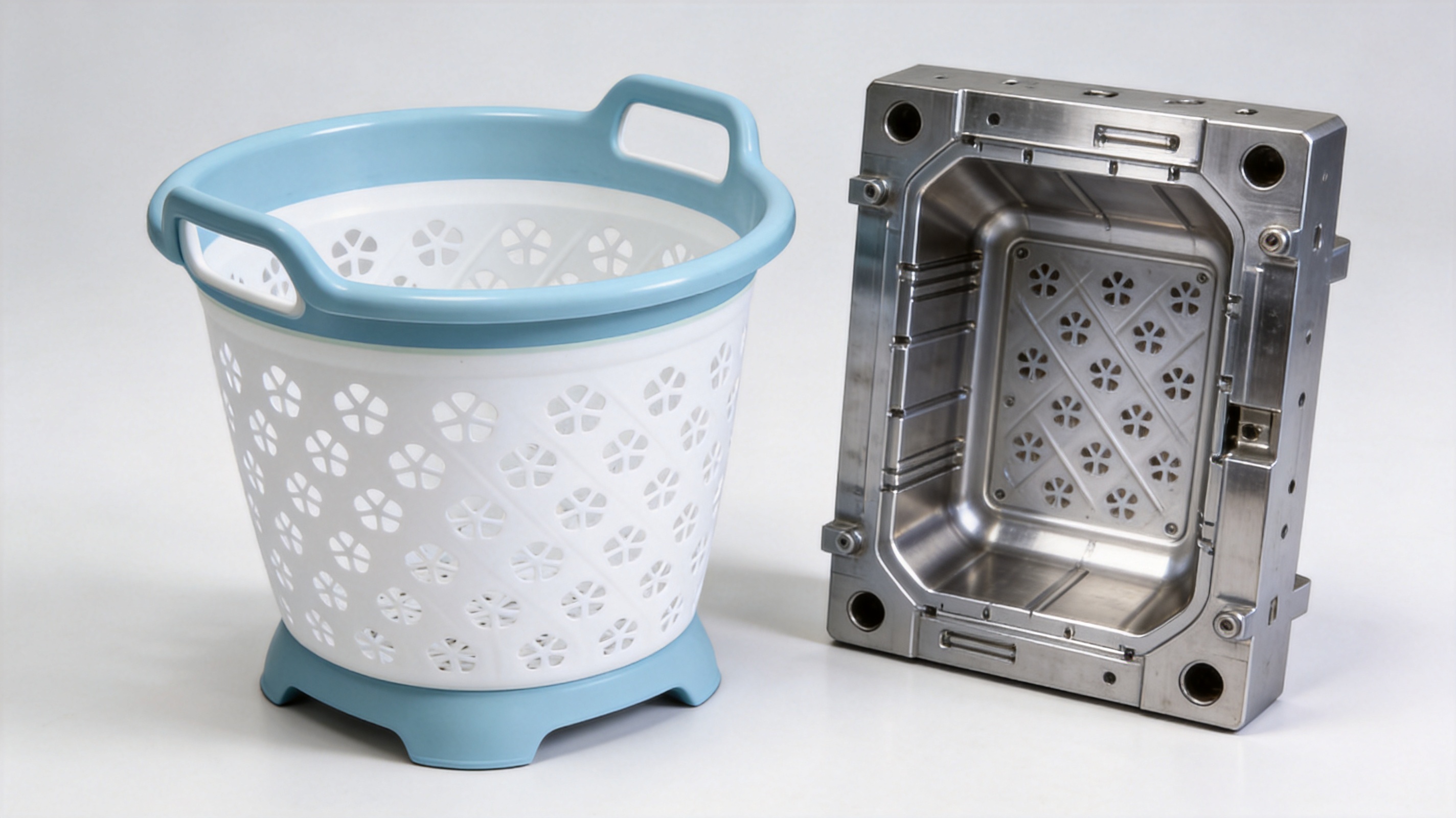
The company also has professional injection molding machines for mold testing. Trial molding is an important step because it allows engineers to evaluate how the mold performs with actual plastic material and production equipment. Trial results can reveal filling behavior, ejection performance, cooling balance, surface quality, and areas requiring adjustment before delivery.
5. The Mold Development Process
A complete mold project generally moves through several stages. Clear communication between the buyer and manufacturer is essential at each stage, particularly when the mold is being developed for a new product or customized market requirement.
5.1 Product Requirement Review
The process begins with an understanding of the intended basket. The buyer may provide a 3D drawing, 2D drawing, physical sample, product photograph, or preliminary concept. Important information includes overall dimensions, target weight, plastic material, color, surface finish, annual production volume, injection machine specifications, and expected delivery market.
At this stage, engineers review whether the product can be molded efficiently. They may identify areas requiring draft, changes to wall thickness, stronger handle transitions, improved corner radii, or modifications to the ventilation pattern. Early engineering feedback can prevent expensive changes after machining has started.
5.2 Product and Mold Design
Once the requirements are confirmed, the product geometry and mold structure are developed. The design team considers parting-line location, cavity and core arrangement, gate position, runner configuration, cooling layout, ejection method, guide components, inserts, and maintenance access.
The parting line should be positioned so that it supports efficient molding and minimizes visible marks in important consumer-facing areas. The gate should help fill the basket evenly while limiting undesirable flow marks. Cooling channels should be arranged to remove heat from thick or high-stress areas without weakening the mold structure.
For products with handles, deep corners, or complicated openings, the design may require additional inserts or carefully planned machining strategies. The goal is to create a mold that is precise but also practical to manufacture, maintain, and repair.
5.3 Steel and Component Preparation
Steel selection depends on expected production volume, plastic material, surface requirements, corrosion considerations, and customer budget. A high-volume export product may require a different tooling strategy from a short-run promotional item.
Core and cavity blocks, mold plates, inserts, guide components, ejector parts, and other components are prepared according to the approved design. Dimensional accuracy at this stage is critical because errors can affect later assembly and product quality.
5.4 CNC and Precision Machining
Modern machining equipment is used to produce complex cavity and core geometry. CNC machining supports repeatable cutting of basket contours, ventilation details, ribs, handles, and other product features. Additional processes may be used for fine details, difficult corners, small openings, and finishing requirements.
Precision machining reduces manual correction and helps maintain consistency between matching components. However, machining quality also depends on programming, tool selection, workholding, measurement, and operator experience. A capable manufacturer combines equipment with standardized procedures and skilled technical personnel.
5.5 Polishing and Surface Treatment
The required surface finish depends on the product design. Some laundry baskets use a smooth gloss surface, while others use a matte texture, patterned finish, or functional grain that helps conceal minor handling marks.
Surface treatment must be controlled carefully around ventilation openings, ribs, corners, and parting areas. Over-polishing can alter dimensions or soften important details, while insufficient finishing can leave machining marks on visible surfaces. Proper finishing supports both appearance and easier part release.
5.6 Mold Assembly and Fitting
After individual components are machined, the mold is assembled and fitted. Engineers check the alignment of cavity and core sections, guide systems, inserts, ejector mechanisms, cooling circuits, and other moving or fixed elements.
Fitting quality is especially important for a large household product mold. Even a small mismatch along the parting line may create flash around the rim or ventilation openings. Ejector movement must be smooth, and cooling connections must remain secure during operation.
5.7 Mold Trial and Adjustment
The first trial provides valuable information about the interaction between the mold, material, and injection machine. Engineers examine filling, packing, cooling, ejection, product weight, dimensions, surface appearance, and deformation.
Adjustments may include changes to processing conditions, venting, ejection timing, cooling flow, gate dimensions, or local steel correction. The purpose is not merely to make one sample look acceptable, but to establish a stable production window that the customer's molding team can use consistently.
5.8 Final Inspection and Delivery
Before delivery, the mold is checked against the agreed specifications. Inspection may include product dimensions, mold dimensions, opening and closing movement, water-circuit testing, ejector operation, surface condition, and trial sample review.
Documentation and communication are also important. The customer should receive information needed for installation, operation, maintenance, spare parts, and future technical support. Clear records make it easier to manage the mold throughout its production life.
6. Technical Features Important to Laundry Basket Production
| Technical area | Importance for laundry basket molding | Production benefit |
|---|---|---|
| Balanced filling design | Supports even distribution of molten plastic across the basket body and structural features. | Helps reduce short shots, uneven weld lines, and inconsistent product appearance. |
| Efficient cooling layout | Controls heat removal from walls, corners, rims, handles, and reinforced areas. | Can reduce cycle variation, shrinkage differences, and warpage. |
| Accurate ventilation details | Forms clean and consistent openings while allowing trapped air to escape. | Improves appearance and supports complete filling. |
| Reliable ejection system | Applies balanced force to release the basket after cooling. | Reduces sticking, deformation, ejector marks, and production interruptions. |
| Precision parting surfaces | Controls the meeting line between mold halves and around inserts. | Helps minimize flash and improves product edge quality. |
| Maintainable mold construction | Allows access to wear components, inserts, cooling lines, and ejector elements. | Supports faster servicing and longer useful mold life. |
| Trial molding capability | Allows the tooling to be evaluated under realistic injection conditions. | Provides an opportunity to correct issues before mass production. |
7. Material and Processing Considerations
The final resin has a major influence on mold design and production performance. Laundry baskets are often produced from common thermoplastics selected for impact resistance, stiffness, appearance, cost, and ease of processing. The exact material should be confirmed during the project because shrinkage, flow behavior, cooling requirements, and surface appearance vary between resins and grades.
Polypropylene is frequently considered for household products because of its lightweight nature, chemical resistance, and practical toughness. Other materials may be selected when a manufacturer requires different stiffness, impact performance, surface quality, or recycled-content compatibility.
The mold must be designed around the selected material's behavior. Higher shrinkage can affect dimensional planning. Flow characteristics influence gate location and filling balance. Additives, colorants, glass fiber, or recycled content can affect surface appearance and wear on the tooling.
Processing conditions should be developed during mold trials. Injection speed, pressure, holding time, melt temperature, mold temperature, cooling time, and ejection timing all influence the finished basket. A good mold gives the processor a sound platform for optimization, but correct machine setup remains essential.
Manufacturers should also consider material drying requirements, color-change procedures, contamination control, and the handling of recycled resin. Consistent raw-material management helps preserve product quality and makes trial results more representative of future production.
8. Customization for Different Markets and Product Lines
Household product markets differ by region, retail channel, and consumer preference. Some customers want compact baskets for apartments, while others need large-capacity models for family use or commercial laundry environments. Product appearance may also vary from simple utility designs to premium household collections.
A custom laundry basket mold can support a broader product strategy. Dimensions can be adapted for different nesting ratios, shipping cartons, retail shelves, or storage spaces. Handle shapes can be changed to suit hand comfort and carrying requirements. Ventilation patterns can be designed for a modern appearance or a more traditional woven effect.
Surface textures can help create a distinctive visual identity and may reduce the visibility of minor scuffs during transportation. Logo areas, decorative panels, and embossed markings can be incorporated when required. The mold may also be designed to support several related basket sizes or a family of products, provided that the technical structure and business objectives justify the approach.
For OEM customers, the tooling can be developed according to the buyer's drawings and specifications. For ODM customers, the mold manufacturer can contribute engineering suggestions and product-development support. This cooperation is useful when the customer has a market concept but needs assistance converting it into a manufacturable plastic product.
9. Chenghui Mould's Integrated Manufacturing Strengths
Zhejiang Chenghui Mould Co., Ltd. has specialized in injection molds for daily necessities since 1994. More than three decades of experience provide practical knowledge of household product structures, common molding challenges, production economics, and export-oriented quality expectations.
The company's product experience covers PET storage products, tables, chairs, furniture, storage boxes, turnover boxes, laundry baskets, buckets, storage racks, trash cans, and other household and industrial products. This broad range is valuable because many of these products share technical requirements such as large molded surfaces, reinforced structures, ventilation features, stacking needs, and high-volume production.
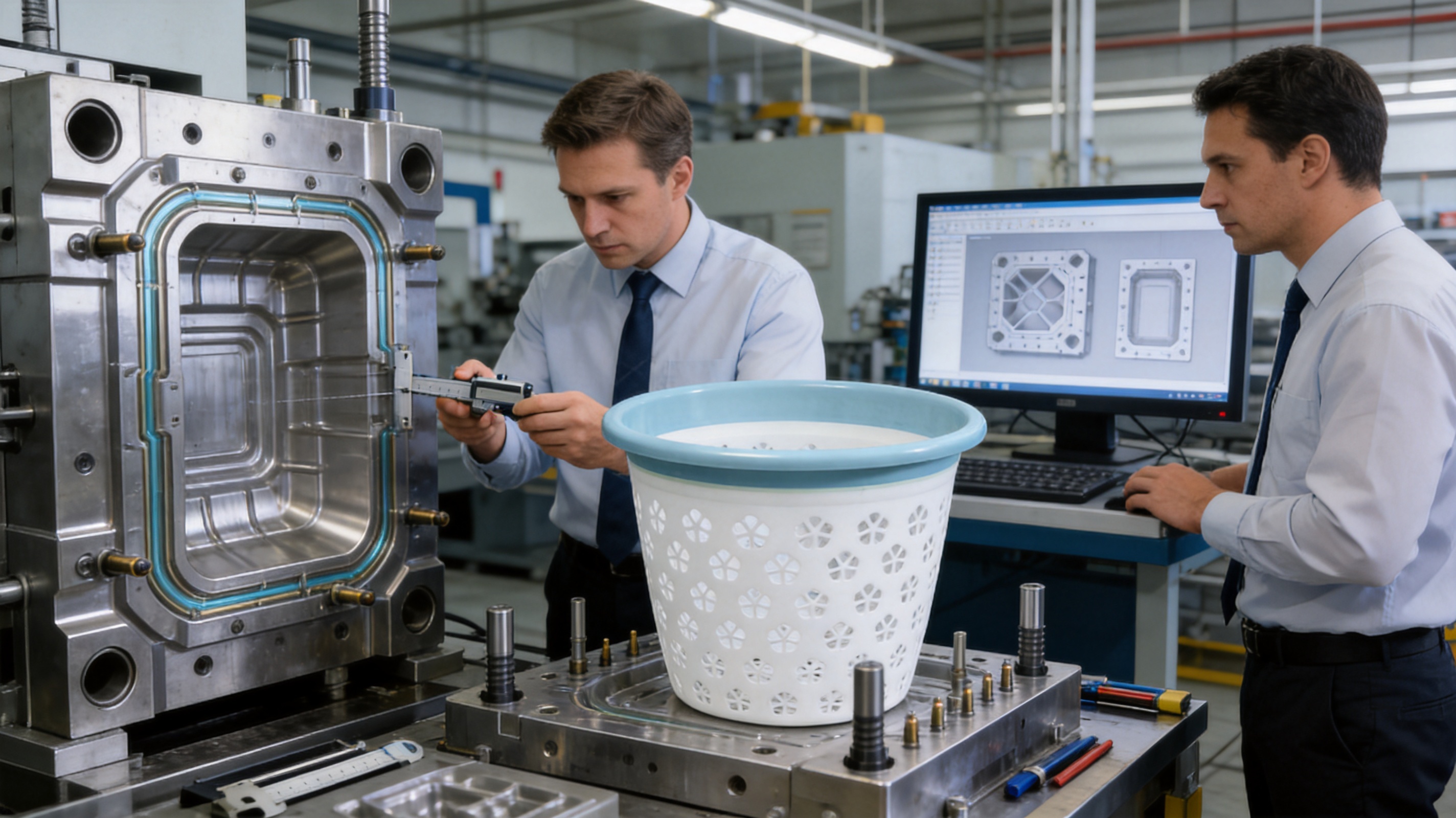
Its own production workshop allows key activities to be coordinated within one organization. Product discussions, design development, machining, fitting, trial molding, inspection, and technical support can be connected more efficiently than when every stage is separated among unrelated suppliers.
The reported equipment base of 104 advanced processing machines supports production flexibility and helps the company manage different mold sizes, structures, and processing requirements. Professional injection molding machines are available for mold testing, enabling engineers to evaluate tooling performance before shipment.
The company states that it has an annual production capacity of more than 1,500 mold sets. This capacity reflects an established production system capable of serving multiple projects and product categories. At the same time, each project still requires individual engineering review because product geometry, material, machine size, and production volume can vary significantly.
9.1 Standardized Processes
Standardized workflows help reduce avoidable variation. Design review, material preparation, machining, assembly, testing, inspection, and delivery should follow controlled procedures rather than relying entirely on informal judgment.
For a laundry basket mold, standardized processes can support consistency in cavity dimensions, cooling connections, ejector movement, surface finish, and trial documentation. They also make it easier to identify the source of a problem if a product requires adjustment during testing.
9.2 Quality Management
Quality management covers more than final inspection. It begins with confirming customer requirements and continues through design verification, component machining, assembly checks, trial molding, sample evaluation, and delivery preparation.
Strict quality control is particularly important for export orders because the mold may be installed far from the manufacturer. A problem that is simple to correct before shipment can become expensive when it requires international transport, machine downtime, or on-site engineering support later.
9.3 Global Service Orientation
Chenghui Mould exports to the Middle East, Europe, America, Africa, Southeast Asia, and other regions. International experience helps a mold supplier understand the importance of communication, documentation, delivery coordination, packaging protection, and after-sales support.
Global customers may have different machine standards, inspection procedures, product regulations, and commercial expectations. Clear technical communication helps ensure that the mold is designed for the actual production environment rather than only for the supplier's workshop.
10. Production Efficiency and Total Cost of Ownership
The purchase price of a mold is only one part of its total cost. Buyers should also consider cycle time, material consumption, rejection rate, maintenance, spare parts, downtime, energy use, and the number of products the mold is expected to produce.
A mold that costs slightly more initially may provide better value if it offers more stable production, fewer repairs, faster cycles, and longer service life. Conversely, a low-priced mold can become expensive if it causes frequent flash, warpage, difficult ejection, or repeated corrective work.
For laundry basket production, several efficiency factors deserve particular attention. A balanced cooling design may shorten the time required for the product to become rigid enough for ejection. An efficient runner and gate system may reduce unnecessary waste, depending on the selected configuration. A reliable ejection mechanism can reduce machine pauses and protect the product from damage.
Material-efficient product engineering can also provide long-term savings. Reducing unnecessary wall thickness while retaining strength lowers resin consumption for every basket produced. Even a small reduction in product weight can create a meaningful financial effect across hundreds of thousands or millions of cycles.
Maintenance should be considered from the beginning. Replaceable wear components, accessible cooling connections, clear lubrication points, and practical mold construction can help reduce service time. A maintenance plan should include regular cleaning, inspection of parting surfaces, checking of ejector movement, cooling-circuit maintenance, and protection against corrosion during storage.
11. Quality Inspection for a Finished Laundry Basket
Before approving a mold for mass production, the customer should evaluate both the tooling and the molded sample. Product inspection may include overall dimensions, wall thickness, weight, flatness, basket stability, handle strength, opening dimensions, rim condition, and visual appearance.
The basket should be checked for short shots, flash, sink marks, warpage, flow marks, burn marks, weld-line weakness, ejector marks, and scratches. The customer may also conduct practical tests such as stacking, nesting, carrying, impact, load-bearing, and repeated handling.
Where the basket is intended for export retail markets, packaging and transportation tests may be appropriate. The product should remain protected from deformation during carton packing, palletizing, shipping, and storage. If several baskets are nested together, the nesting depth and separation force should be reviewed.
Inspection criteria should be agreed before the final trial whenever possible. Clear criteria help both the mold manufacturer and the buyer distinguish between a tooling issue, a processing issue, a raw-material issue, and a product-design issue.
12. Communication Requirements for a Successful Project
Good mold manufacturing depends on detailed communication. Buyers should provide as much information as possible about the product's intended use, market, material, machine, annual volume, appearance, packaging, and quality expectations.
Important questions include whether the basket must be nestable, whether the handle needs to support a specific load, whether the product will be stacked with other sizes, whether the surface should be glossy or textured, and whether recycled resin will be used. These details can influence both product geometry and mold structure.
It is also useful to confirm the injection machine's shot size, tie-bar spacing, mold thickness range, maximum opening stroke, ejector configuration, and available cooling connections. A mold designed without reference to the customer's machine may require unnecessary adaptation or may not fit the production equipment efficiently.
During the design stage, buyers should review the 3D product model and mold layout carefully. Changes are generally easier and less costly before steel machining begins. After the first trial, comments should be specific and prioritized so that the manufacturer can make corrections efficiently.
13. Applications for Different Business Models
The CHENGHUI Laundry Basket Mold 004 can support several types of plastic product businesses. Household goods manufacturers may use the tooling for their own branded basket range. Trading companies and wholesalers may order customized designs for regional markets. Retail suppliers may develop private-label products with specified colors, textures, dimensions, and packaging.
OEM customers can supply their own product designs and request mold production according to approved specifications. ODM customers may seek assistance with product structure, manufacturability, and appearance development. In both cases, the mold supplier's ability to provide engineering input can reduce the distance between a product idea and a production-ready item.
Manufacturers producing related products may also benefit from working with a supplier experienced in multiple household categories. A supplier familiar with storage boxes, buckets, trash cans, racks, and furniture components may be able to apply relevant knowledge to new laundry basket projects.
14. Sustainability Considerations
Plastic household products are increasingly evaluated according to material efficiency, service life, recyclability, and manufacturing waste. A durable laundry basket that remains functional for many years may have a lower replacement frequency than a fragile alternative.
Mold engineering can support sustainability by enabling lightweight but sufficiently strong designs, reducing rejected products, and improving production repeatability. Accurate tooling helps ensure that more of the resin becomes saleable product rather than scrap caused by dimensional or appearance defects.
Where the selected product and material system permit it, manufacturers may consider recycled resin or resin blends. Such materials should be evaluated carefully because they may affect flow, shrinkage, color stability, surface appearance, and mold wear. Trial molding with the actual intended material is important before mass production.
Long mold service life is another sustainability factor. Proper steel selection, cooling design, maintenance access, and replaceable components can extend the useful period of the tooling. A mold that supports reliable production over a large number of cycles reduces the need for premature replacement.
15. Maintenance Recommendations
Regular maintenance helps preserve the performance of a laundry basket mold. After production, the mold should be cleaned of resin residue, dust, and contaminants. Parting surfaces should be inspected for damage or buildup that could create flash.
Ejector pins, guide components, and moving elements should be lubricated according to the manufacturer's recommendations. Operators should monitor unusual noise, resistance, uneven movement, or changes in product release. These signs may indicate wear or contamination that should be addressed before a major failure occurs.
Cooling channels should be checked for restricted flow, leakage, scale, or corrosion. Poor cooling performance can gradually increase cycle time and cause greater dimensional variation. Water quality management and periodic circuit cleaning may be necessary, depending on the factory environment.
When the mold is stored, it should be dried, protected against corrosion, and kept in a suitable position. The cavity and core surfaces should not be exposed unnecessarily to humidity or abrasive contaminants. Maintenance records should include production cycles, repairs, component replacements, and observed product changes.
16. Frequently Asked Questions
Q1: What product is the tooling designed to manufacture?
The tooling is designed for the injection molding production of plastic laundry baskets. The final basket shape, dimensions, ventilation pattern, handle structure, surface finish, and other details can be developed according to the customer's product requirements.
Q2: Can the mold be customized?
Yes. Customization can cover product dimensions, basket profile, hole pattern, handle design, reinforcing ribs, surface texture, logo areas, nesting features, and other approved specifications. Customers may provide drawings, samples, or product concepts for engineering review.
Q3: Which plastic material can be used?
The appropriate material depends on the product's required strength, weight, appearance, impact resistance, cost, and processing conditions. Polypropylene is one possible option for household products, but the final resin should be confirmed during technical discussions and mold trials.
Q4: How does the mold help improve product consistency?
Precision-machined cavity and core components, controlled assembly, balanced cooling, suitable ejection, and trial molding all contribute to repeatable product dimensions and appearance. Consistency also depends on stable machine settings and controlled raw materials.
Q5: What problems can a poorly designed laundry basket mold cause?
Potential problems include short shots, flash, warpage, sink marks, burn marks, uneven surface appearance, difficult ejection, weak handles, inconsistent openings, and excessive cycle time. These problems can increase material waste, labor, maintenance, and product rejection.
Q6: Does the manufacturer conduct mold trials?
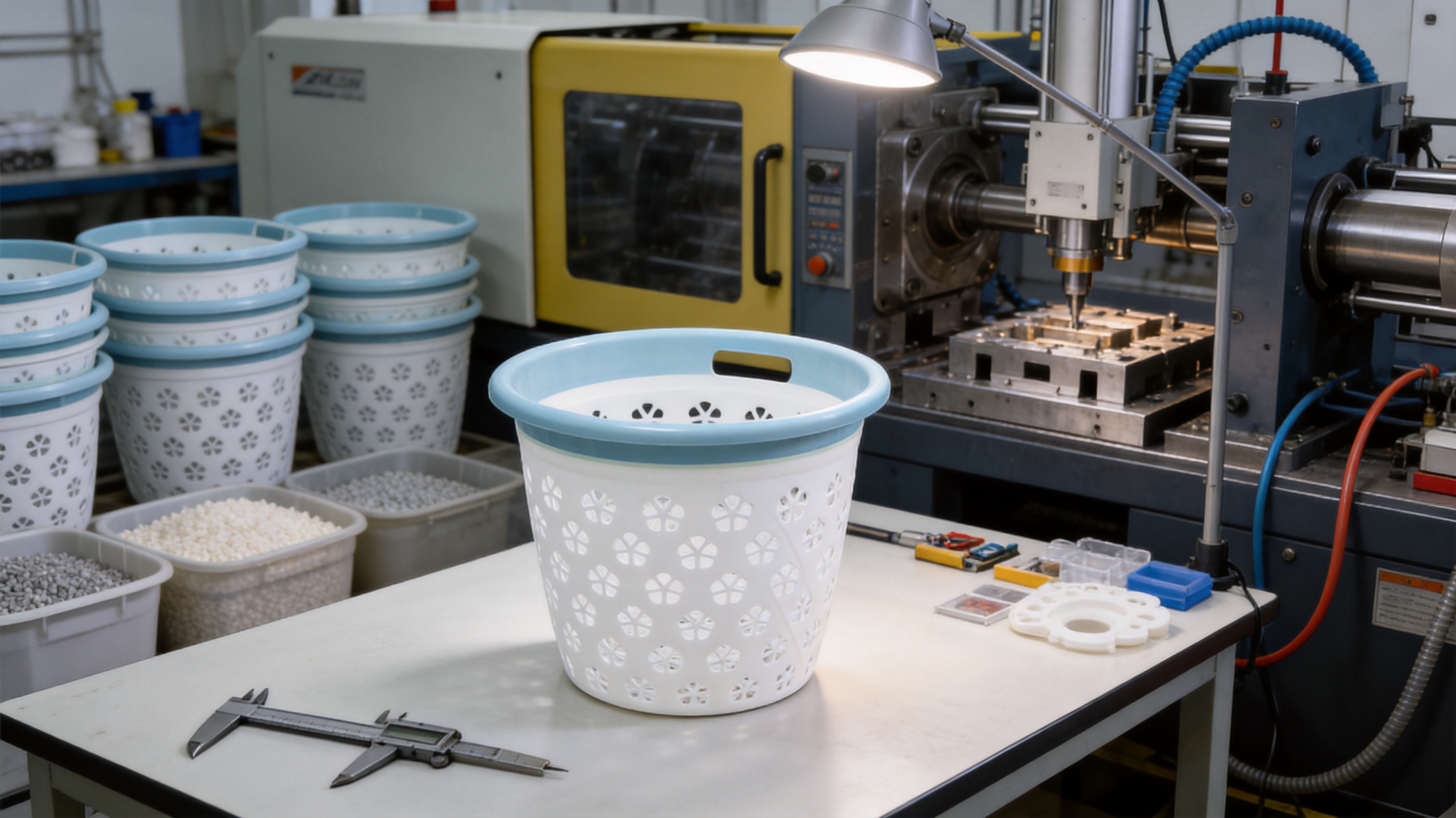
Yes. The company has professional injection molding machines for mold testing. Trial molding allows the engineering team to evaluate filling, cooling, ejection, dimensions, and appearance before the tooling is delivered for customer production.
Q7: What manufacturing resources does the company have?
Zhejiang Chenghui Mould Co., Ltd. operates its own production workshop with 104 advanced processing machines and has more than 30 years of experience in injection mold manufacturing for daily necessities and industrial products.
Q8: What other products does the company manufacture molds for?
The company's experience includes PET storage products, tables, chairs, furniture, storage boxes, turnover boxes, laundry baskets, buckets, storage racks, trash cans, and other household and industrial products.
Q9: Can the mold be used for export-oriented production?
The company exports molds to the Middle East, Europe, America, Africa, Southeast Asia, and other regions. Export customers should confirm machine compatibility, inspection standards, packaging requirements, documentation, and delivery conditions during project planning.
Q10: What information should a buyer provide before requesting a quotation?
A buyer should ideally provide a product drawing or sample, target material, expected annual quantity, product weight, dimensions, surface finish, injection machine information, number of cavities required, packaging requirements, and desired delivery schedule.
Q11: How can the mold's useful life be extended?
Proper material selection, regular cleaning, lubrication, cooling-system maintenance, inspection of parting surfaces, controlled machine operation, and timely replacement of wear components can help extend mold service life. Detailed maintenance records are also recommended.
Q12: Why is trial molding important before delivery?
Trial molding shows how the mold performs under actual injection conditions. It helps identify filling imbalance, cooling problems, ejection issues, dimensional variation, surface defects, and other concerns while corrections are still being made at the manufacturing facility.
17. Why Select a Specialized Mold Manufacturer?
A specialized mold manufacturer understands that tooling must be designed for production rather than only for visual appearance. It can evaluate how the basket will be filled, cooled, ejected, stacked, packed, and produced over a long operating period.
Experience with daily necessities is especially useful because household products are usually produced in large quantities and sold in competitive markets. Buyers need tooling that balances quality with cost, supports rapid production, and remains serviceable after installation.
Chenghui Mould's long operating history, broad household-product experience, in-house workshop, advanced processing equipment, mold-testing machines, standardized procedures, and international service background provide a strong foundation for this type of project.
Its annual capacity of more than 1,500 mold sets also indicates the ability to manage substantial production demand. For customers developing a wider product line, cooperation with one experienced supplier may simplify communication and create consistency across multiple molds.
18. Conclusion
The quality of a plastic laundry basket begins with the quality of its mold. A reliable mold must support accurate dimensions, clean ventilation openings, comfortable edges, strong handles, stable cooling, dependable ejection, efficient cycles, and practical maintenance. These requirements are closely connected, and weakness in one area can affect the entire production process.
CHENGHUI Laundry Basket Mold 004 is positioned as a customized injection molding solution for manufacturers seeking dependable tooling for household laundry baskets. Its value lies not only in the basket-shaped cavity but also in the engineering, machining, assembly, trial molding, inspection, and support processes behind the finished mold.
With more than 30 years of experience, 104 advanced processing machines, professional mold-testing injection machines, an annual capacity exceeding 1,500 mold sets, and experience serving customers across multiple global regions, Zhejiang Chenghui Mould Co., Ltd. offers the manufacturing infrastructure needed for OEM and ODM tooling projects.
For wholesalers, distributors, household product brands, and plastic processors, selecting a professional mold partner can improve product consistency, reduce production risk, support customization, and strengthen long-term cost control. A well-designed laundry basket mold is therefore not merely a production accessory; it is a strategic asset that helps transform a household product concept into a reliable commercial product.
References
1. Injection Molding Handbook, principles of polymer flow, mold design, cooling, and ejection.
2. Plastics Engineering Fundamentals, material behavior, shrinkage, warpage, and production control.
3. Standard Practices for Plastic Injection Mold Design, guidance on parting lines, draft angles, gates, runners, and mold maintenance.
4. Industrial Mold Manufacturing and Quality Management, methods for precision machining, assembly, inspection, and trial molding.
5. Household Plastic Product Development Principles, considerations for product strength, ergonomics, nesting, packaging, and mass production.