
 Français
 Español
 عربى
Storage baskets are widely used in homes, offices, warehouses, retail stores, hotels, laundry rooms, and industrial facilities. Although the finished product may appear simple, manufacturing a durable and attractive plastic basket requires a carefully engineered injection mold. The mold must control dimensions, wall thickness, rib formation, openings, corners, draft angles, surface finish, and ejection performance. A small weakness in any of these areas can lead to warpage, short shots, flash, difficult demolding, uneven appearance, or unstable production.
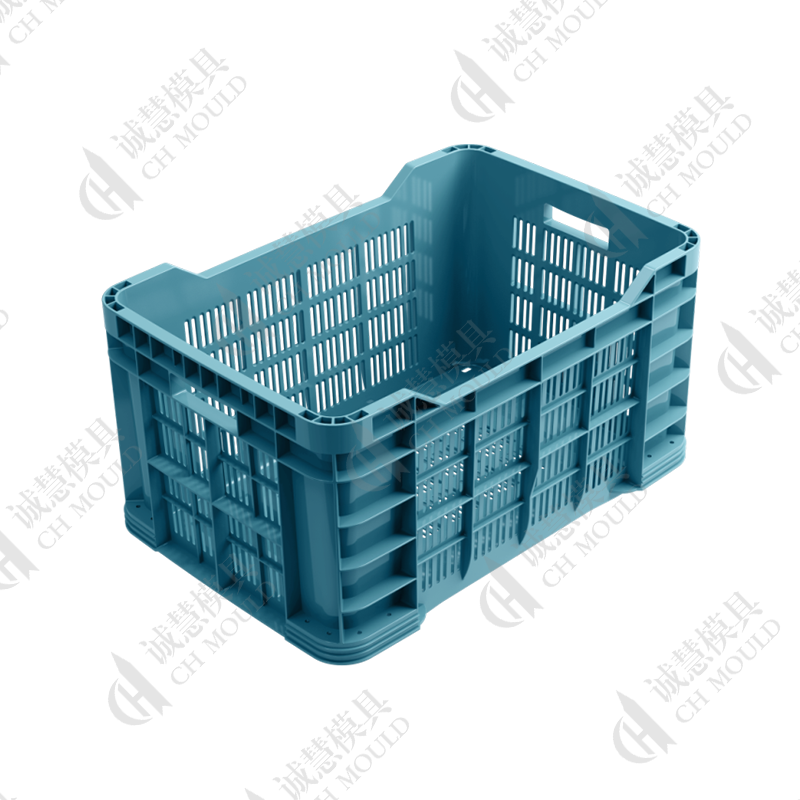
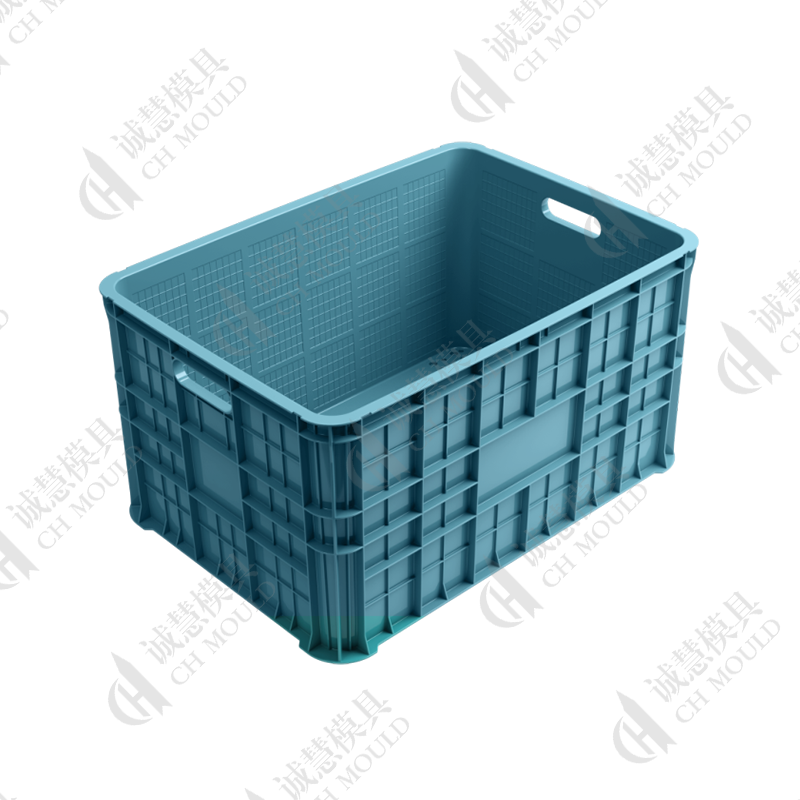
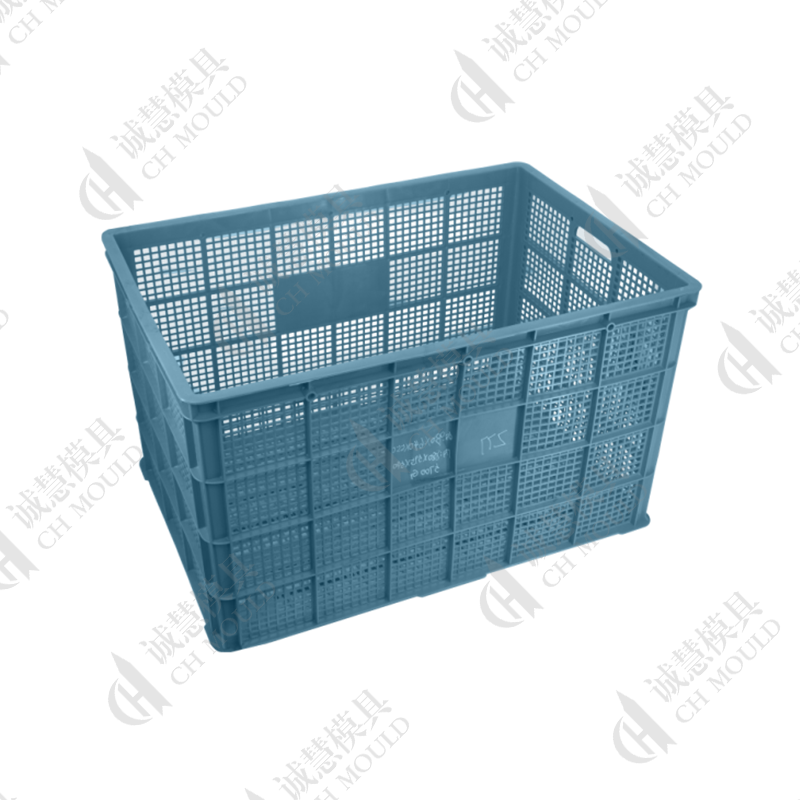
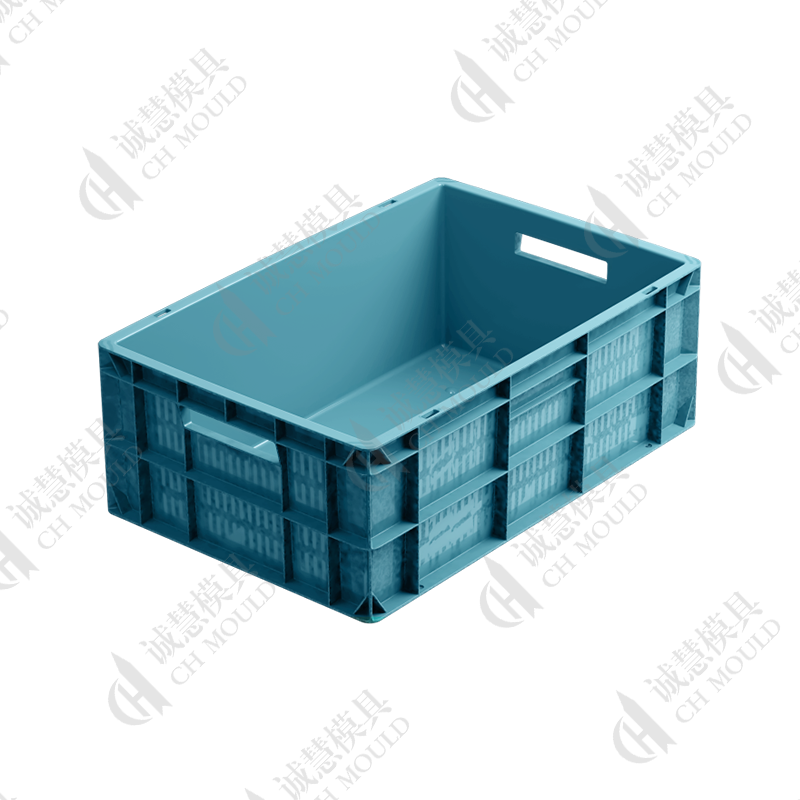
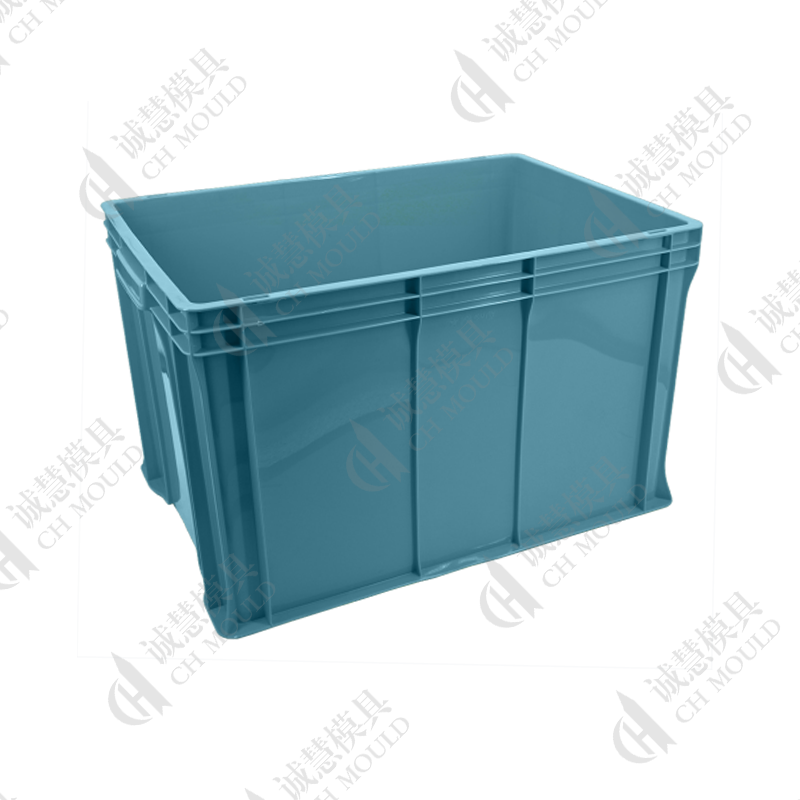
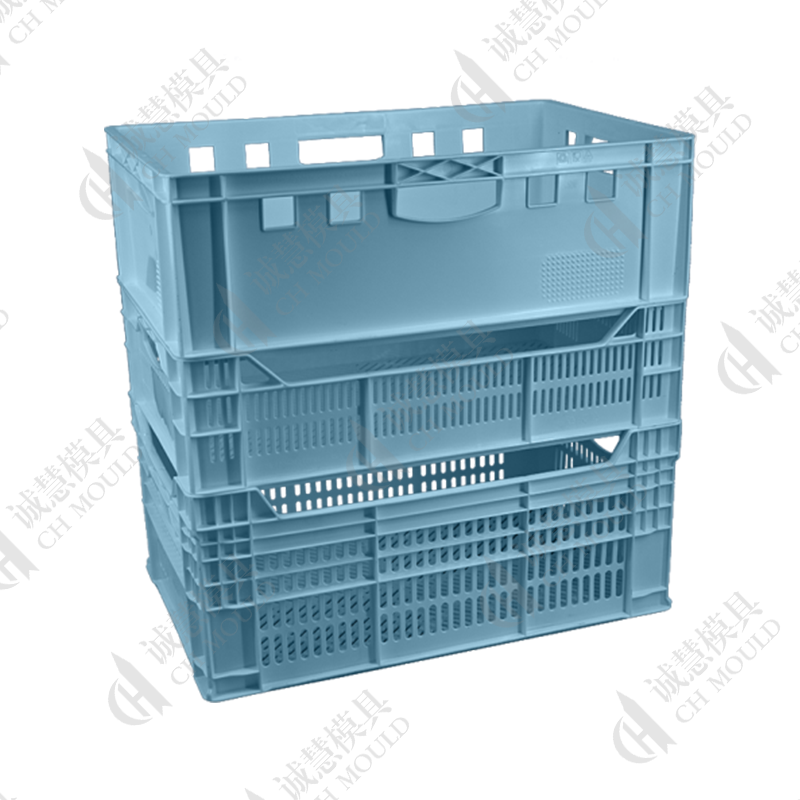
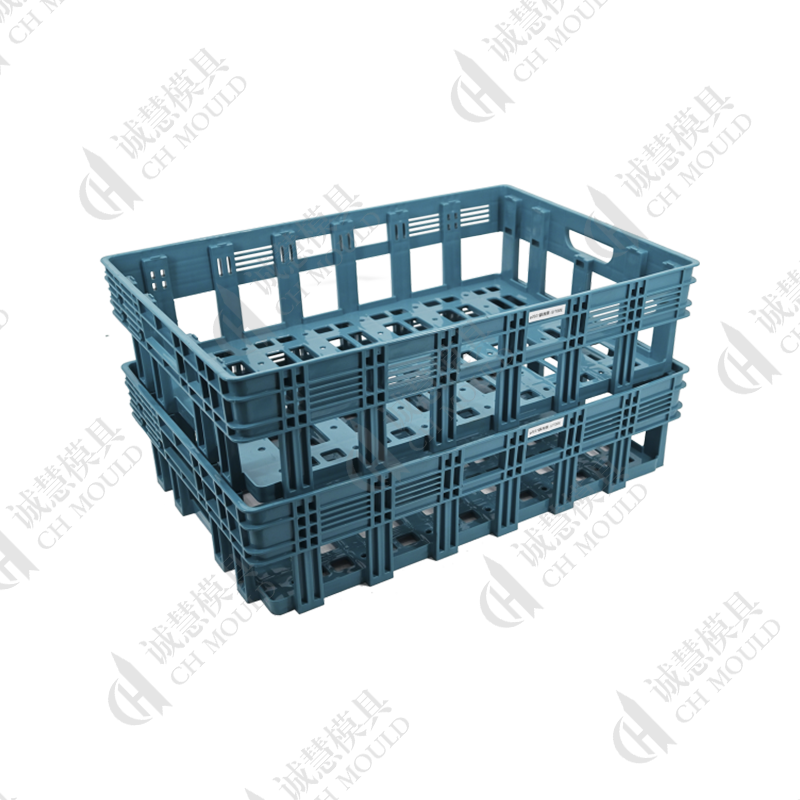
The Storage Basket Mold 009 is developed for manufacturers seeking a dependable tooling solution for plastic storage baskets and related household organization products. It is suitable for customized production programs in which product appearance, structural strength, cycle efficiency, and long-term mold reliability are equally important. The mold can support the development of baskets with practical internal capacity, reinforced sidewalls, ventilation openings, integrated handles, stacking features, and modern surface textures, depending on the final product design.
Manufactured by Zhejiang Chenghui Mould Co., Ltd., the mold benefits from more than three decades of experience in injection mold design and production. The company specializes in molds for daily necessities, storage boxes, turnover boxes, laundry baskets, buckets, racks, trash cans, furniture, tables, chairs, pallets, and other plastic products. Its experience across multiple product categories allows the engineering team to understand the relationship between product design, mold construction, injection molding conditions, assembly, and mass production.
This article explains the key characteristics of a storage basket mold, the advantages of a professionally engineered solution, the manufacturing capabilities behind the tooling, and the practical factors international buyers should evaluate before placing an order.
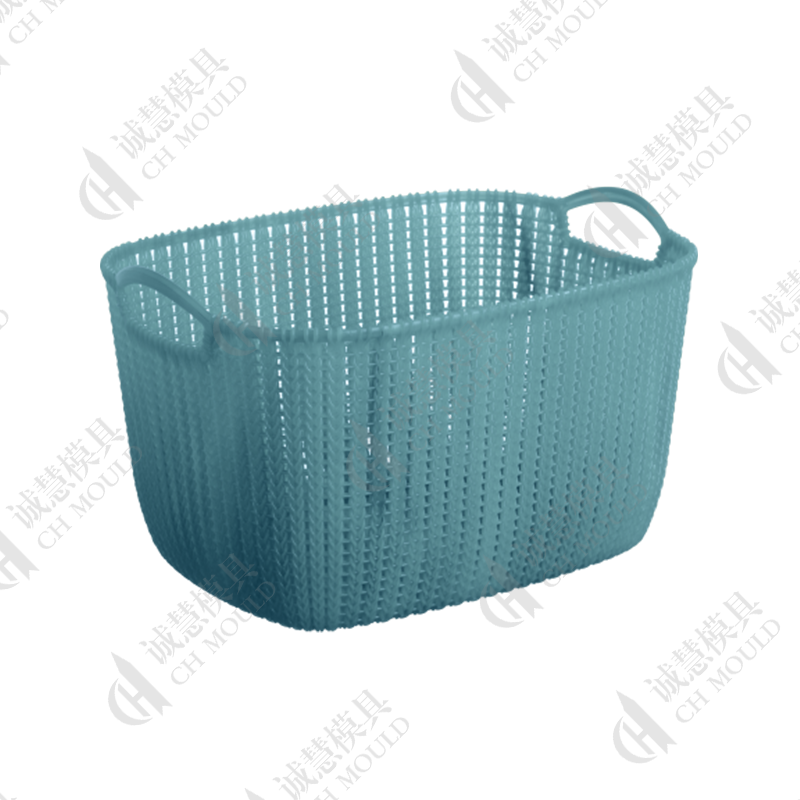
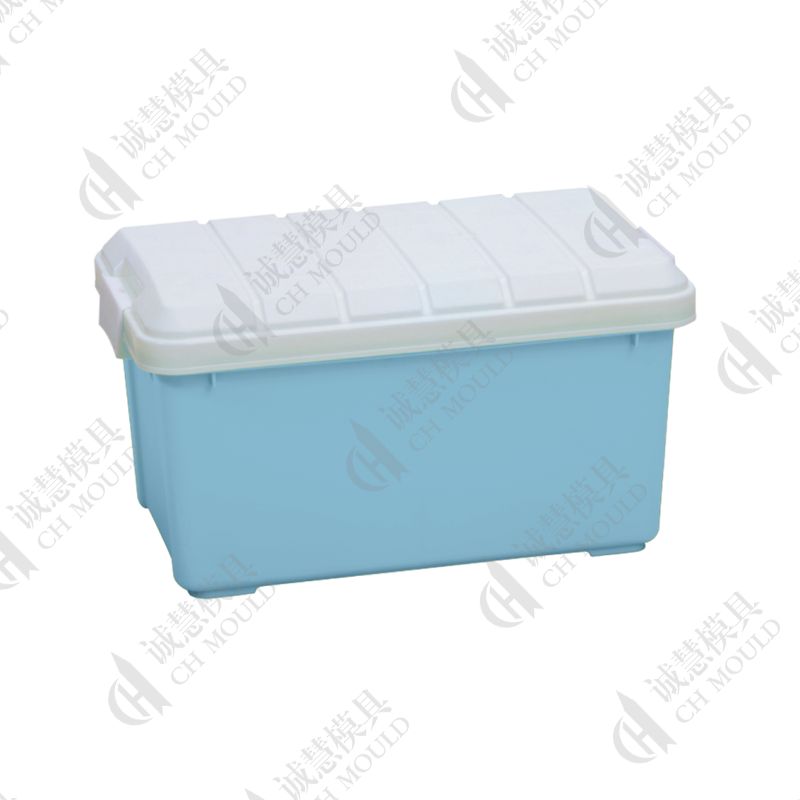
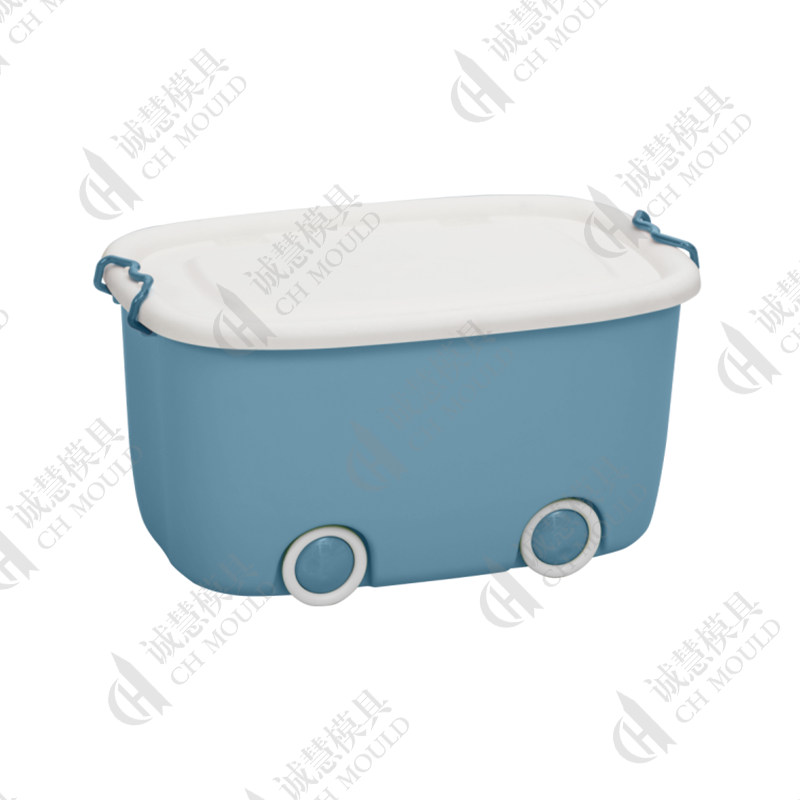
CHENGHUI Storage Basket Mold 009
1. Product Overview
A storage basket mold is an injection tooling system used to produce baskets from thermoplastic materials. During production, plastic pellets are heated until molten and injected into the mold cavity under controlled pressure. The mold defines the shape of the basket, while the cooling and ejection systems help produce a stable part that can be removed efficiently and repeated consistently.
The Storage Basket Mold 009 is categorized as a storage box mold and is intended for products used to organize, transport, or store household and light industrial items. The tooling concept can be adapted to different basket sizes, wall structures, handle arrangements, colors, textures, and functional details. Depending on the customer’s requirements, the finished basket may be designed for use in bedrooms, bathrooms, kitchens, offices, warehouses, workshops, supermarkets, or distribution centers.
Storage baskets commonly include openwork sidewalls or ventilation holes. These openings reduce material consumption, improve visibility of the contents, and create a lightweight appearance. However, openwork construction introduces engineering challenges. Thin ribs must fill correctly, intersections must remain strong, and the mold must release the part without damaging narrow features. A well-designed mold therefore requires more than a simple cavity and core. It requires balanced flow analysis, carefully positioned gates, suitable cooling channels, effective venting, polished or textured surfaces, and an ejection system matched to the product structure.
The tooling can be developed for different plastic materials, including commonly used polypropylene or high-density polyethylene grades, subject to the final product design and processing requirements. Material selection affects shrinkage, stiffness, impact resistance, chemical resistance, surface appearance, cycle time, and mold design. For this reason, material information should be confirmed at the beginning of the engineering process rather than after the mold has been manufactured.
2. Design Characteristics of a Modern Storage Basket Mold
2.1 Functional Basket Geometry
A storage basket must provide usable internal space while maintaining enough strength to withstand handling. The mold design must account for the relationship between the outer profile and the inner cavity. Excessively thick walls may increase material consumption, cooling time, and molding cost. Walls that are too thin may create filling problems, deformation, weak corners, and poor load performance.
The Storage Basket Mold 009 can be engineered around a balanced wall structure that supports both appearance and practical use. Rib thickness, corner radii, base thickness, handle reinforcement, and opening dimensions can be adjusted according to the product drawings. A properly rounded corner reduces stress concentration and helps molten plastic flow through the cavity. It also makes the finished basket easier to clean and more comfortable to handle.
2.2 Openings, Ribs, and Ventilation Features
Many storage baskets use a pattern of slots or openings to reduce weight and provide visibility. Each opening changes the way plastic flows through the mold. The design must prevent incomplete filling at narrow ribs and must provide sufficient support around opening intersections. If the openings are too sharp or too densely arranged, the part may become difficult to demold or may require additional mold components.
Advanced mold design considers the complete opening pattern rather than treating each hole as an isolated detail. Rib intersections should have consistent thickness, and transitions should be smooth wherever possible. The location of gates and the direction of flow should support uniform filling across the entire basket. Venting is also important because trapped air can cause burn marks, hesitation, weld lines, or incomplete filling in the last-to-fill areas.
2.3 Handles and Reinforced Areas
Handles are frequently integrated into storage basket designs. They must be strong enough for repeated lifting while remaining visually consistent with the basket body. A handle opening may also affect mold separation, ejection, and the location of parting lines. Reinforcing ribs can improve stiffness, but excessive reinforcement may increase sink marks or create uneven cooling.
During mold development, handle geometry is reviewed together with the overall basket structure. The engineering team can evaluate whether the handle should be formed directly in the main cavity, supported by inserts, or designed with additional features to improve release. The final approach depends on the basket size, material, wall thickness, production volume, and required service life.
2.4 Stackability and Storage Efficiency
Commercial storage baskets are often stacked during transportation, retail display, or warehouse storage. The mold can incorporate tapered sidewalls, stacking shoulders, locating features, or reinforced upper edges when these functions are included in the product design. The geometry must provide enough clearance for nesting or stacking without making the basket unstable.
Stacking requirements should be confirmed before detailed mold construction begins. The correct clearance depends on material shrinkage, product dimensions, surface texture, and the required stacking quantity. If the clearance is too small, baskets may become difficult to separate. If it is too large, the stack may become unstable or occupy unnecessary space.
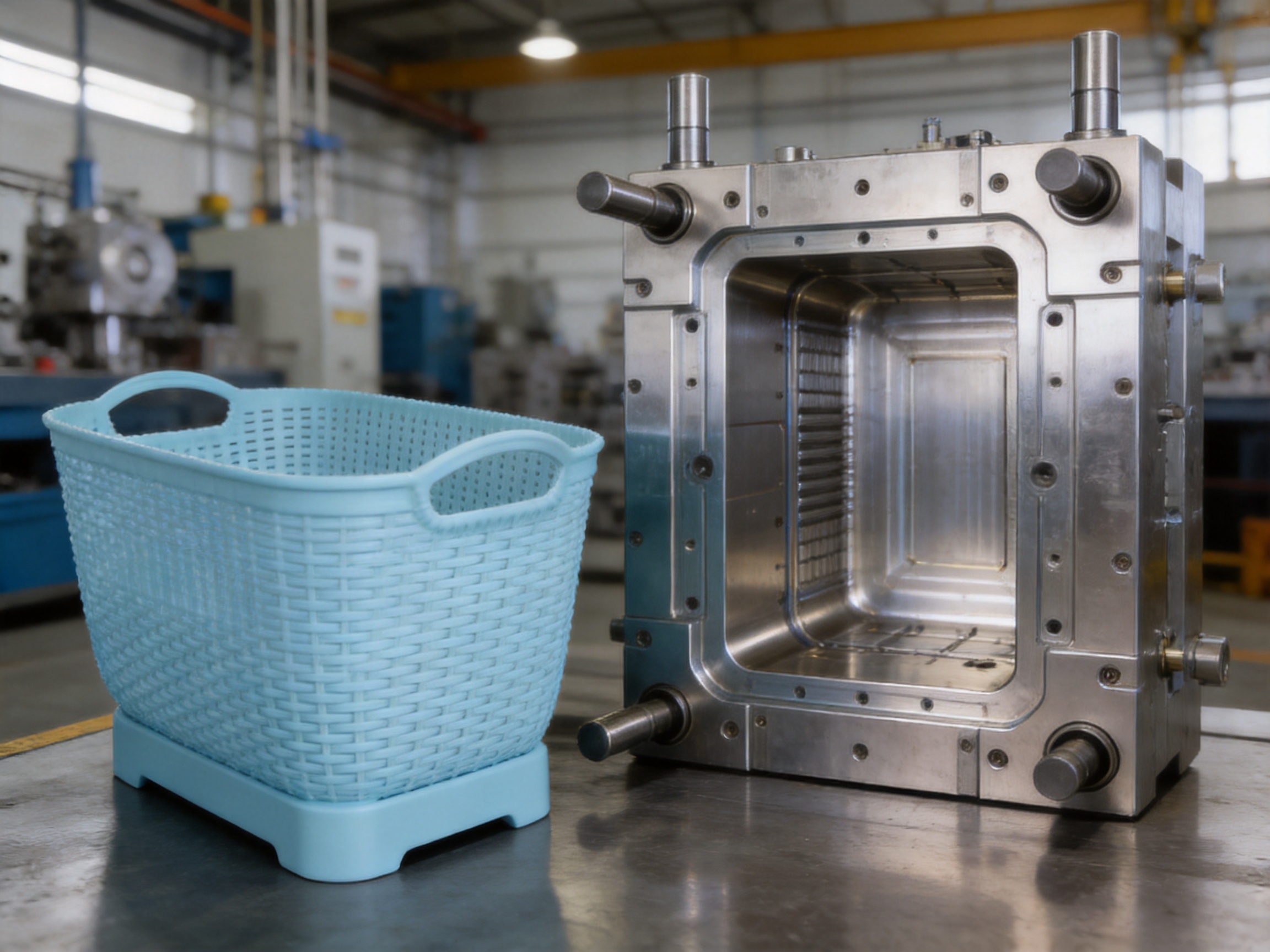
3. Advantages Compared with Basic or Poorly Engineered Tooling
3.1 More Consistent Product Dimensions
A professionally manufactured mold provides better control over critical dimensions. Consistency is particularly important for baskets sold as sets, used with shelves, placed in cabinets, or stacked with matching units. Dimensional variation can cause lids, dividers, racks, or accessories to fit incorrectly. A stable mold structure, accurate machining, and careful trial adjustments help reduce these risks.
Compared with basic tooling made without sufficient dimensional planning, a precision-oriented mold is more likely to maintain repeatable cavity geometry during long production runs. This supports consistent product quality and simplifies downstream inspection. Buyers can establish inspection points for basket length, width, height, handle dimensions, wall thickness, opening size, flatness, and stacking clearance.
3.2 Improved Filling and Reduced Defects
Storage baskets often contain long flow paths and narrow ribs. Poor gate positioning can produce unbalanced filling, weld lines in visible areas, pressure concentration, or incomplete filling at the far end of the cavity. A properly planned runner and gate system distributes the molten material more effectively and can reduce molding pressure requirements.
Venting is equally important. Air trapped in the cavity must escape as the plastic advances. If it cannot escape, the result may include burn marks, silver streaks, short shots, or weak weld lines. A mold manufacturer with experience in household products can identify likely air-trap areas and incorporate suitable venting solutions during design and machining.
3.3 Better Surface Appearance
Storage baskets are often sold in highly visible retail environments. Consumers notice surface defects, uneven textures, gate marks, flash, sink marks, and color inconsistency. The mold surface therefore has a direct effect on the perceived quality of the finished product.
The cavity may be polished, textured, or treated according to the approved sample and product specification. Surface treatment should be selected carefully because texture affects demolding, visual appearance, scratch visibility, and the feel of the finished basket. A uniform surface finish across the cavity also helps reduce visible variation between production batches.
3.4 Efficient Demolding
Basket products include many ribs, openings, corners, and reinforced areas that can create resistance during ejection. If the draft angle is insufficient or the ejection system is poorly balanced, the product may stick, deform, whiten, or show ejector marks. Repeated sticking can also slow the molding cycle and increase the possibility of mold damage.
The Storage Basket Mold 009 is designed with demolding considerations integrated into the product and mold engineering process. Draft angles, parting-line locations, ejector positions, and release surfaces are reviewed before machining. Where necessary, the mold structure can use inserts or other construction methods to improve maintenance access and release performance.
3.5 Longer Production Reliability
A mold is an industrial asset that must operate through many molding cycles. Its value depends not only on producing the first approved sample but also on maintaining performance after extended use. Stable guide components, suitable steel selection, accurate fitting, effective cooling, and accessible wear parts all contribute to long-term reliability.
Compared with low-cost tooling produced with limited process control, a carefully manufactured mold can reduce the risk of premature wear, misalignment, excessive flash, and repeated corrective work. This is particularly important for wholesalers, distributors, and manufacturers planning large orders or multiple production seasons.
3.6 Greater Customization Potential
Storage basket buyers may require different dimensions, patterns, colors, logos, handles, textures, and functional features for different markets. A customized mold program makes it possible to align the product with a specific sales channel rather than relying only on a standard basket design.
Customization may include a new basket outline, revised opening pattern, stronger base, modified handle, nesting structure, branding area, or compatibility with an existing storage system. Engineering review is necessary to confirm that each requested feature can be molded efficiently without causing unacceptable increases in cycle time, tooling complexity, or maintenance cost.
| Evaluation Area | Basic Tooling Risk | Professionally Engineered Mold Advantage |
|---|---|---|
| Product dimensions | Inconsistent size or poor fit with accessories | More stable cavity geometry and controlled inspection points |
| Filling performance | Short shots, unbalanced flow, visible weld lines | Improved gate planning, runner balance, and venting |
| Surface quality | Uneven texture, flash, marks, or inconsistent finish | Controlled machining, polishing, texturing, and fitting |
| Demolding | Sticking, deformation, whitening, or slow cycles | Proper draft, balanced ejection, and release planning |
| Maintenance | Difficult access and longer repair downtime | Serviceable construction and organized component replacement |
| Production life | Accelerated wear and repeated adjustment | Durable construction supported by quality control |
4. Manufacturing Process and Engineering Workflow
4.1 Requirement Confirmation
The process begins with the collection and review of product requirements. These may include 2D drawings, 3D files, reference samples, target material, annual production volume, expected cycle time, molding machine information, packaging requirements, and destination-market standards.
For a storage basket, the engineering team should also confirm whether the product must nest, stack, support a specified load, fit inside a cabinet, accommodate a liner, or match another product in a series. Color, texture, logo placement, labeling areas, and acceptable gate or ejector marks should be discussed before the design is finalized.
Early clarification prevents expensive modifications later. It also allows the mold structure to be selected according to the real production objective. A basket for occasional household use may require a different balance of tooling cost and durability from a heavy-duty warehouse basket produced continuously on an automated line.
4.2 Product Design Review
Before mold design, the product geometry is reviewed for injection molding suitability. Engineers examine wall thickness, draft angles, ribs, undercuts, openings, handle structures, corners, parting lines, and ejection surfaces. They also consider expected shrinkage and the relationship between the product design and the selected resin.
Uniform wall thickness is generally preferred because it supports more even cooling and reduces the risk of sink marks and warpage. Where thick sections are necessary for strength, transitions should be gradual and supported by suitable cooling design. Sharp internal corners may be modified with radii to improve material flow and reduce stress concentration.
4.3 Mold Design and Flow Planning
The mold design defines the cavity, core, parting surface, runner system, gate arrangement, cooling channels, venting, guide components, and ejection system. For a basket with a complex opening pattern, the design must maintain a practical balance between precise detail and reliable production.
Flow planning helps determine how molten plastic is likely to move through the cavity. Although final conditions must be confirmed during mold trials, engineering analysis can identify potential hesitation areas, weld lines, air traps, and pressure concentration. The result is a more informed decision about gate location, runner dimensions, and venting positions.
The number of cavities is also considered according to product demand and machine capacity. A single-cavity mold may be suitable for large baskets or moderate production volumes. Multi-cavity tooling may improve output for smaller baskets, but it requires careful balancing of filling, cooling, ejection, and part removal. The correct choice should be based on the buyer’s forecast and production economics rather than simply maximizing cavity count.
4.4 Steel Preparation and Component Machining
Once the design is approved, mold components are produced using precision machining equipment. The company operates 104 advanced processing machines, supporting processes such as cutting, milling, drilling, grinding, electrical discharge machining, and other specialized operations as required by the tooling structure.
Steel preparation begins with the selection of suitable mold materials for the expected application. Important factors include production volume, material abrasiveness, surface requirements, corrosion exposure, hardness, toughness, and repairability. The final steel specification should be agreed during the technical stage because it influences mold life, cost, and maintenance procedures.
Computer-controlled machining creates the cavity and core geometry. Tight control of machining references is important for basket products because small errors may be visible across repeated ribs or opening patterns. When narrow slots, deep ribs, or detailed features cannot be produced efficiently through conventional cutting, electrical discharge machining or other suitable processes may be applied.
4.5 Surface Treatment and Fitting
After machining, cavity and core surfaces are finished according to the approved appearance standard. This may involve polishing, texturing, deburring, or other finishing procedures. The purpose is not only to improve appearance but also to support consistent demolding and reduce the risk of surface damage during production.
Fitting is a critical stage in which mold components are assembled and adjusted to achieve the intended parting accuracy. The engineering team checks alignment, shutoff areas, inserts, slides if used, ejector movement, guide components, and contact surfaces. Accurate fitting helps prevent flash along the basket perimeter, openings, handles, and other split lines.
4.6 Cooling and Ejection Verification
Cooling has a significant influence on cycle time and part stability. Storage baskets may have broad sidewalls and complex rib structures that cool at different rates. Cooling channels should be positioned to remove heat efficiently while avoiding interference with inserts, ejectors, and structural components.
The ejection system is checked for smooth movement and balanced force distribution. Ejector pins, sleeves, plates, or other components should act on areas that can tolerate ejection pressure without leaving unacceptable marks. A balanced system reduces the chance of product distortion and supports reliable automatic or semi-automatic operation.
4.7 Mold Trial and Sample Evaluation
Before shipment, the mold is tested on an appropriate injection molding machine. Trial molding verifies whether the tooling fills correctly, releases the product, maintains dimensions, and produces the required surface quality. Samples are inspected for short shots, flash, sink marks, warpage, weld lines, burn marks, gate appearance, ejector marks, and functional performance.
Trial conditions may include different injection speeds, holding pressures, cooling times, and mold temperatures. The objective is not simply to produce one acceptable sample but to establish a practical processing window. A wider processing window can make the mold easier to operate in different factories and under changing production conditions.
Any required corrections are recorded and completed before final approval. These may include polishing, vent adjustment, gate refinement, dimensional correction, ejection adjustment, or changes to cooling performance. A structured trial and correction process reduces the chance of problems appearing after the mold reaches the customer’s factory.
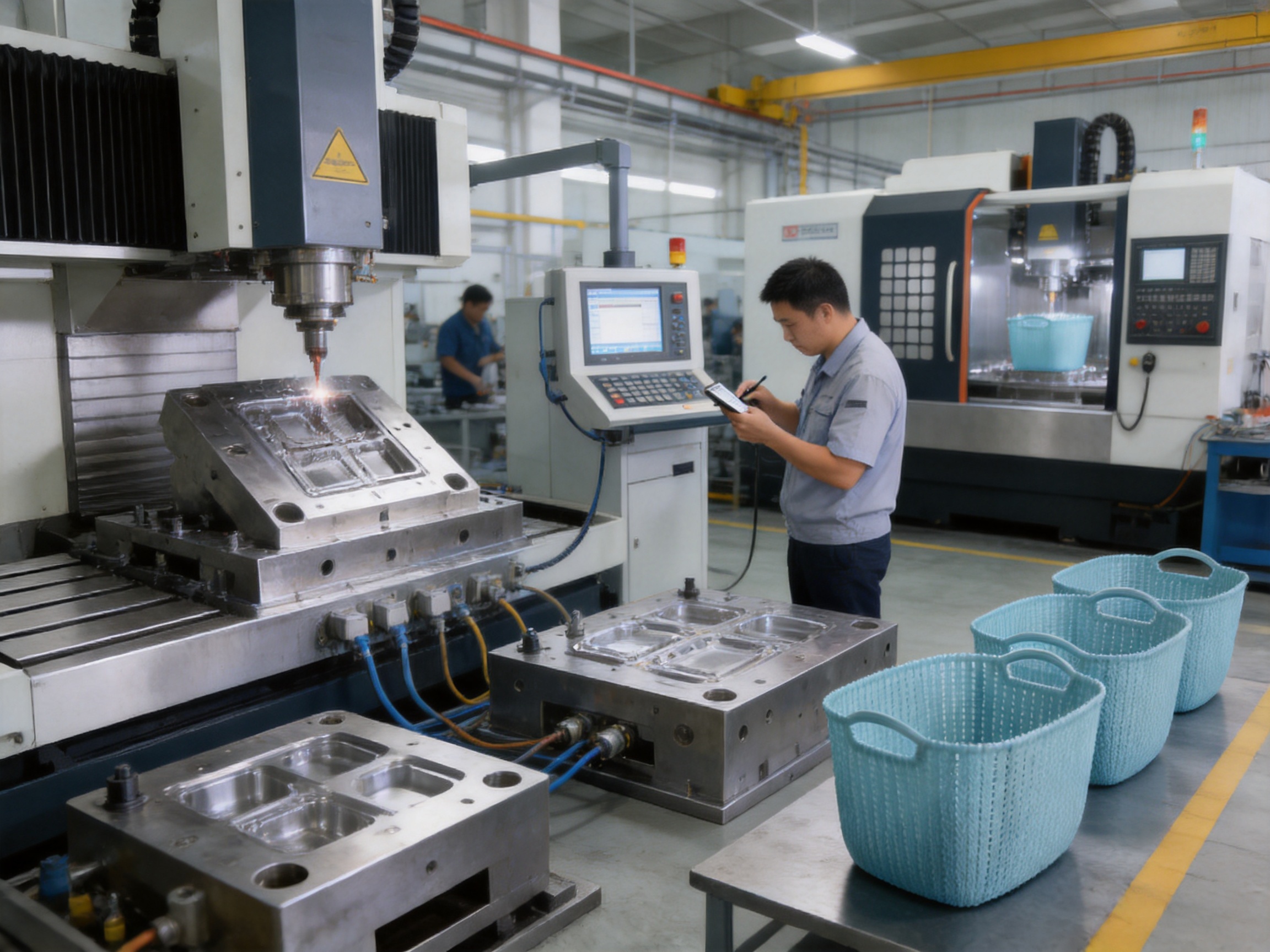
5. Manufacturing Strengths of the Supplier
5.1 More Than Thirty Years of Industry Experience
Zhejiang Chenghui Mould Co., Ltd. was founded in 1994 and has accumulated more than 30 years of experience in injection mold design and manufacturing. This long operating history provides practical knowledge of household products, industrial storage items, plastic structures, mold maintenance, and mass-production challenges.
Experience is particularly valuable for storage basket tooling because the products often combine relatively thin walls with repeated openings and large visible surfaces. The supplier’s background in storage boxes, turnover boxes, laundry baskets, buckets, racks, trash cans, furniture, and other daily-use products supports a broader understanding of similar molding problems.
5.2 Integrated Production Workshop
The company operates its own production workshop rather than relying exclusively on external suppliers. An integrated workshop can improve communication between design, machining, fitting, trial molding, inspection, and project management. When a problem is identified during trial production, the relevant teams can coordinate more directly to determine the cause and implement a correction.
Internal production capability also supports better control of scheduling, process records, component tracking, and quality checkpoints. This is important for overseas customers who need clearer project visibility and dependable delivery planning.
5.3 Advanced Processing Equipment
With 104 advanced processing machines, the company has substantial equipment support for mold manufacturing. Different machines can be assigned to different operations according to the required accuracy, surface quality, geometry, and production stage. This equipment base helps support both standard household molds and more detailed custom tooling.
Advanced equipment alone does not guarantee a successful mold. It must be combined with correct programming, experienced operators, measurement, fitting, and process management. The value of the equipment lies in its ability to support repeatable manufacturing when used within a controlled workflow.
5.4 In-House Mold Testing
The company has professional injection molding machines for mold testing. In-house testing allows the supplier to evaluate filling, cooling, ejection, dimensions, surface appearance, and operational stability before the mold is delivered. This is especially useful for international buyers who may face higher costs and longer lead times if a tool arrives with unresolved problems.
Testing can also help confirm the relationship between the mold and the customer’s selected material. While the customer’s own machine and processing conditions may differ, factory testing provides an important reference point for initial production setup.
5.5 Annual Production Capacity
The company reports an annual production capacity of more than 1,500 mold sets. This capacity indicates experience in organizing multiple projects while maintaining a structured production system. For buyers with several related products, the supplier may be able to support a broader tooling program rather than manufacturing only one isolated mold.
Multiple product families can benefit from coordinated engineering. For example, a storage basket, storage box, lid, divider, and rack may share design language, material requirements, or packaging dimensions. Working with a supplier experienced in multiple household mold categories can simplify technical coordination across the product range.
6. Applications and Market Opportunities
The Storage Basket Mold 009 is suitable for a variety of product applications. Household storage is the most direct market, including baskets for clothing, toys, books, cleaning supplies, kitchen items, bathroom accessories, and general organization. The same basic mold-development principles can also support baskets for offices, retail displays, hotels, schools, workshops, and light industrial environments.
Retailers and distributors often seek storage products that combine practical function with a modern appearance. A basket with an attractive opening pattern, strong handles, stable base, and clean surface finish can serve both organizational and decorative purposes. Color options and surface textures can help a product line address different consumer preferences without changing the basic tooling, provided the design remains suitable for the selected material and process.
Industrial and logistics users may prioritize strength, repeatability, easy cleaning, and compatibility with shelves or transport systems. For these applications, the product design may require a reinforced base, thicker rim, stronger handles, or improved stacking stability. The mold can be developed around those performance requirements during the initial engineering stage.
For wholesalers and importers, customized tooling offers an opportunity to create exclusive product dimensions or patterns. A distinctive basket can reduce direct price comparison and strengthen a private-label product range. It may also allow the product to fit local cabinet sizes, retail shelf dimensions, or regional packaging requirements.
7. Quality Control and Acceptance Criteria
A clear acceptance standard helps both the buyer and the mold manufacturer evaluate the tooling objectively. The standard should define product dimensions, allowable tolerances, surface appearance, flash limits, gate position, ejector mark limits, warpage, color requirements, and functional tests.
For storage baskets, dimensional inspection may cover overall length, width, height, diagonal measurements, base flatness, handle opening, rib spacing, and stacking clearance. Functional tests may include handle loading, stacking stability, drop resistance, base support, and repeated assembly with related products. The exact test method should reflect the intended application and market requirements.
Mold acceptance should also include checks of opening and closing movement, cooling water flow, ejection smoothness, guide alignment, oil or grease condition, component labeling, and spare-part documentation. If the mold uses inserts, slides, lifters, or other moving elements, their operation should be verified during the trial process.
Sample approval is generally stronger when multiple samples are evaluated rather than only one part. A sample set can reveal variation in filling, color, dimensions, or surface quality. It also provides a better reference for future production inspection.
8. Maintenance and Long-Term Use
Even a well-manufactured mold requires regular maintenance. After production, the mold should be cleaned, dried, inspected, and protected against corrosion according to the steel and operating environment. Residual plastic, dust, water, and lubricant contamination can affect future performance if not removed.
Moving components should be lubricated using suitable products, while cooling channels should be monitored for blockage, scaling, or leakage. Ejector pins and guide components should be checked for wear or abnormal resistance. The parting surface should be inspected for damage because small dents or foreign particles can create flash in subsequent production.
A maintenance record can help identify trends before they become major failures. Useful information includes production cycles, repair dates, replaced components, trial results, processing materials, and observed product defects. This information supports preventive maintenance and makes future troubleshooting more efficient.
The mold should also be stored in a dry and secure area when not in use. Large molds require appropriate lifting equipment and support to prevent accidental impact. Protective treatment should be renewed when necessary, especially when the tooling is shipped or stored for an extended period.
9. Why Early Technical Communication Matters
The final performance of a storage basket mold depends on decisions made before machining begins. Buyers should provide complete product information whenever possible, including the 3D model, expected material, target quantity, molding machine details, product function, packaging method, and quality expectations.
It is also important to discuss whether the basket will be produced with recycled content, mineral-filled material, flame-retardant material, or other special grades. These materials may affect flow, shrinkage, wear, surface appearance, and mold life. A product designed for standard polypropylene may require changes if the customer later switches to a filled or recycled compound.
Branding requirements should be addressed early as well. Logos, embossed marks, label areas, barcode locations, and decorative textures can influence cavity machining and parting-line design. Late changes may require additional steel work or affect the mold delivery schedule.
International customers should clarify shipping terms, documentation, spare parts, trial sample requirements, installation support, and after-sales communication. Zhejiang Chenghui Mould provides customized mold design and manufacturing services covering concept development, drawings, sample development, machining, assembly, mold trials, quality inspection, and after-sales support. A complete project discussion helps ensure that these stages are aligned with the customer’s expectations.
10. Frequently Asked Questions
Q1: What type of product is the Storage Basket Mold 009 designed to produce?
The mold is designed for plastic storage basket products and related storage box applications. The final shape, opening pattern, handle structure, dimensions, texture, and other features can be customized according to the approved product design.
Q2: Can the mold be customized for different basket sizes?
Yes. Storage basket molds are normally developed from customer drawings, 3D files, or approved samples. Dimensions and functional features can be adjusted during the design stage, provided the product remains suitable for injection molding and the requested changes are confirmed before mold construction.
Q3: Which plastic materials can be used?
The suitable material depends on the final product requirements. Common options for storage baskets include polypropylene and high-density polyethylene, although other thermoplastics may be considered. The customer should confirm the material grade because flow behavior, shrinkage, stiffness, surface finish, and mold wear can vary significantly.
Q4: How does the mold support good surface appearance?
Surface appearance is supported through accurate cavity machining, suitable polishing or texturing, controlled parting surfaces, appropriate gate planning, effective venting, and trial-based adjustment. The desired finish should be specified through drawings, texture references, or approved samples.
Q5: Can the product include handles and ventilation openings?
Yes. Handles, ventilation openings, ribs, stacking features, and reinforced edges can be incorporated into the product design. These details must be reviewed for filling, demolding, ejection, strength, and mold maintenance before final approval.
Q6: How does the supplier verify the mold before shipment?
The company conducts mold trials using professional injection molding machines. Trial production is used to evaluate filling, cooling, ejection, dimensions, appearance, and functional performance. Necessary corrections can be completed before the mold is delivered to the customer.
Q7: Is the mold suitable for high-volume production?
The suitability for high-volume production depends on the selected mold construction, steel, material, cavity count, machine, cycle time, and maintenance plan. The supplier’s experience, production workshop, equipment base, and mold-testing capability support the development of tooling for demanding production programs.
Q8: Can the mold be used in a factory outside China?
Yes. The mold can be designed and tested for use by overseas customers. To improve compatibility, the buyer should provide injection machine specifications, material information, controller requirements, cooling connections, and any preferred mold-standard components before manufacturing begins.
Q9: What information should be provided for a quotation?
Useful information includes the product drawing or 3D model, basket dimensions, material, estimated annual quantity, target mold life, machine specifications, cavity preference, surface requirements, packaging needs, and delivery destination. Reference samples and photographs are also helpful when available.
Q10: What after-sales support may be required after delivery?
After-sales support may include mold operation guidance, trial-result discussion, maintenance recommendations, troubleshooting, spare-part coordination, and technical communication regarding product defects. The exact support arrangement should be confirmed in the project agreement.
11. Purchasing Considerations for Wholesalers and Distributors
When purchasing a storage basket mold, buyers should evaluate more than the initial tooling price. The total value of a mold includes production stability, expected service life, cycle efficiency, ease of maintenance, sample approval performance, and the cost of potential modifications.
A lower initial price may be attractive, but insufficient engineering can create hidden expenses through repeated trial work, production delays, high scrap rates, manual finishing, and premature repairs. A mold with a more carefully planned cooling and ejection system may reduce production costs over its working life, even if its initial purchase price is higher.
Buyers should also consider whether the supplier can support future product extensions. A company with experience in baskets, storage boxes, turnover containers, furniture, and other household products may be better positioned to coordinate a complete product family. Consistent engineering practices across several molds can simplify production and quality management.
Communication quality is another important purchasing factor. The supplier should be able to explain the mold concept, expected risks, trial findings, correction plan, maintenance requirements, and production assumptions in a clear manner. Good technical communication reduces misunderstanding between the product owner, mold maker, and injection molding factory.
12. Conclusion
The Storage Basket Mold 009 is a practical tooling solution for manufacturers developing plastic baskets and related storage products. Its value lies in the combination of product-focused engineering, reliable mold construction, controllable surface quality, efficient demolding, and customization potential.
A high-quality storage basket mold must manage many details at once: thin ribs, ventilation openings, handles, corners, stacking clearances, wall thickness, cooling, venting, ejection, and long-term wear. Compared with basic tooling, a professionally engineered mold can provide more consistent dimensions, improved filling performance, better appearance, easier maintenance, and greater reliability during mass production.
Zhejiang Chenghui Mould Co., Ltd. supports this product category with more than 30 years of experience, an integrated manufacturing workshop, 104 advanced processing machines, professional mold-testing injection molding machines, and an annual production capacity exceeding 1,500 mold sets. Its services cover concept development, product and mold design, machining, assembly, trial molding, inspection, and after-sales support.
For wholesalers, distributors, private-label brands, and injection molding companies, the most effective approach is to define product requirements early and evaluate the complete tooling process rather than focusing only on the purchase price. With suitable material selection, accurate design, controlled machining, structured testing, and regular maintenance, the Storage Basket Mold 009 can support dependable production of attractive and functional storage baskets for household, commercial, and industrial markets.
References
1. General principles of thermoplastic injection molding design and process control.
2. Industry practices for plastic household product mold engineering and maintenance.
3. Guidelines for mold flow planning, venting, cooling, ejection, and dimensional inspection.
4. Product development information supplied for the Storage Basket Mold 009.
5. Company capability and manufacturing information supplied by Zhejiang Chenghui Mould Co., Ltd.