
 Français
 Español
 عربى
Plastic chairs are among the most widely used injection-molded products in the world. They are found in homes, schools, restaurants, event venues, offices, outdoor spaces, warehouses, and public facilities. Although a chair may appear to be a simple product, producing it efficiently requires a carefully engineered injection mold. The mold must reproduce the complete chair shape, maintain a consistent wall structure, support the required mechanical performance, achieve an acceptable surface finish, and remain stable through repeated production cycles.
The CHENGHUI Plastic Chair Mold 008 is designed for manufacturers seeking a dependable tooling solution for plastic chair production. It belongs to the plastic chair injection mold category and is manufactured by Zhejiang Chenghui Mould Co., Ltd., a China-based mold factory with more than 30 years of experience in injection mold design and manufacturing. The company specializes in molds for daily necessities, furniture, storage products, industrial containers, and other plastic products that require repeatable mass production.
For wholesalers, furniture brands, distributors, and injection molding companies, the selection of a chair mold directly influences product quality, production efficiency, maintenance costs, and delivery reliability. A well-designed mold can help reduce defects, simplify operation, improve consistency between batches, and support long-term commercial production. In contrast, a poorly engineered mold may produce uneven surfaces, dimensional variation, difficult demolding, excessive flashing, or premature tooling wear.
The value of CHENGHUI Plastic Chair Mold 008 lies not only in its ability to form a chair-shaped product. Its broader value comes from the manufacturing system behind it: product analysis, mold design, precision machining, assembly, testing, inspection, and after-sales support. This integrated approach enables buyers to receive a tooling solution that is prepared for practical production rather than merely a basic cavity-and-core structure.
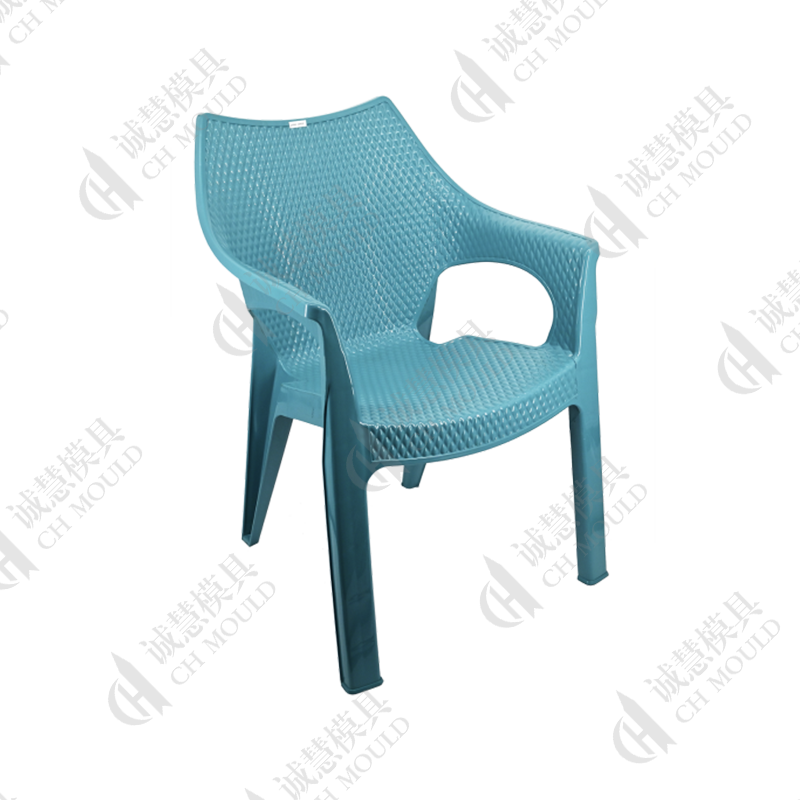
CHENGHUI Plastic Chair Mold 008
Understanding the Role of a Plastic Chair Injection Mold
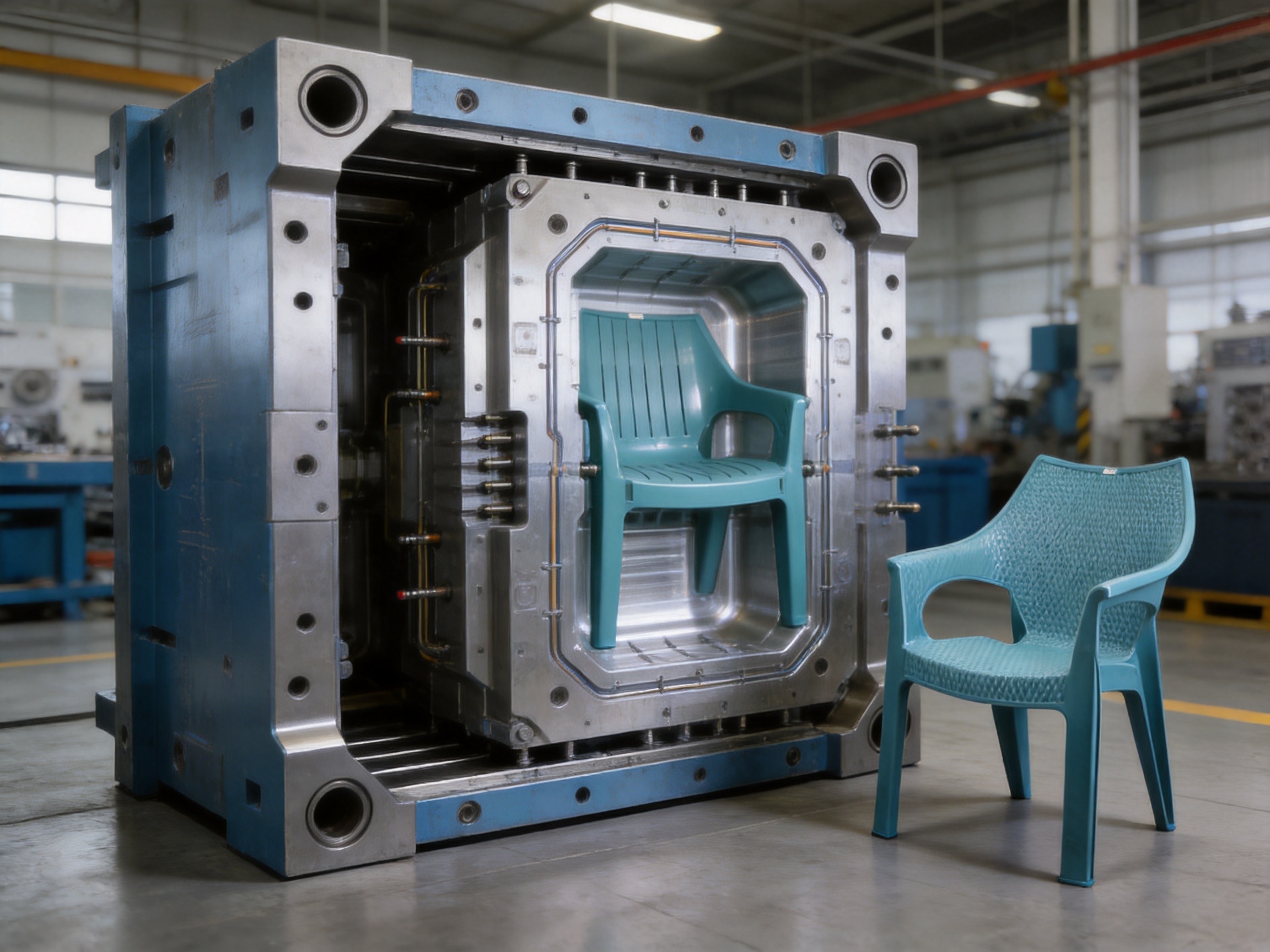
An injection mold is the central tool used to transform molten plastic into a finished product. During production, plastic material is heated until it reaches a flowable condition and is then injected into the mold cavity under controlled pressure. The mold defines the external shape, structural features, dimensions, and visible surface of the chair. After cooling, the molded part is opened, removed, and prepared for the next cycle.
A plastic chair mold is more complex than many smaller household-product molds because a chair normally includes a large overall profile, curved surfaces, reinforcing ribs, legs, a backrest, a seat area, and multiple transitions between thick and thin sections. These features must be balanced so that the plastic fills the cavity evenly and cools with minimal distortion.
The mold must also support practical production requirements. Chair manufacturers may need a product that is lightweight but strong, attractive but economical, and suitable for repeated use. The tooling therefore needs to accommodate material flow, cooling, ejection, surface appearance, and production automation. Every detail in the mold can affect the final chair, including the location of gates, the arrangement of cooling channels, the design of ejector components, the treatment of parting lines, and the accuracy of the cavity surfaces.
For this reason, purchasing a chair mold is not simply a matter of selecting a size or shape. The buyer must consider the intended plastic material, chair design, injection machine, production quantity, expected service life, surface requirements, packaging method, and target market. A professional mold manufacturer helps connect these requirements with a suitable engineering solution.
Product Focus: CHENGHUI Plastic Chair Mold 008
CHENGHUI Plastic Chair Mold 008 is intended for the production of plastic chairs through injection molding. It can be considered for projects involving household seating, commercial furniture, institutional furniture, event seating, and other chair products made from thermoplastic materials. The mold can be developed according to the customer’s product drawings, three-dimensional files, samples, or functional requirements.
Because chair designs vary widely, customization is an important part of the product. A simple home chair, a stackable restaurant chair, a heavy-duty industrial chair, and an outdoor chair may all require different tooling structures. Their differences can include backrest geometry, seat thickness, leg shape, reinforcing ribs, handle openings, stacking features, texture, logo placement, and packaging requirements.
The mold manufacturer’s role is to translate these product characteristics into a mold structure that can be filled, cooled, opened, and ejected efficiently. This process may include design analysis, flow considerations, parting-line planning, shrinkage compensation, draft-angle review, and evaluation of areas that could create undercuts or demolding difficulties.
A customized chair mold also allows the buyer to develop a distinct product rather than relying on a generic design. Furniture distributors and brands can create chair shapes that match their market positioning, while wholesalers can request a cost-effective design adapted to regional preferences. For OEM and ODM customers, the mold becomes the foundation of a product line that can be reproduced consistently over many production runs.
Advantages Over Basic or Low-Quality Chair Tooling
One of the main advantages of a professionally manufactured chair mold is consistency. A chair is a large visible product, so small deviations can become obvious when products are stacked together or displayed side by side. Inconsistent leg height, uneven seat surfaces, mismatched backrests, and variable color or texture can affect the perceived quality of the furniture.
Precision mold manufacturing helps maintain the relationship between different product features. When the cavity and core are machined accurately, the resulting chair can have more consistent dimensions from one cycle to the next. This is especially important for chairs designed to stack, because dimensional differences may prevent smooth stacking or cause instability during storage and transportation.
Another advantage is improved surface quality. The visible surfaces of a chair often represent the product’s commercial appeal. Customers may expect smooth, textured, matte, polished, or patterned finishes depending on the design. A professionally prepared mold surface can reproduce the intended appearance more reliably and reduce the likelihood of visible machining marks, unintended witness lines, or inconsistent texture transfer.
Tooling quality also affects production efficiency. A mold that opens and ejects smoothly can help shorten interruptions and reduce the need for manual adjustment. Properly planned cooling can support a stable production cycle, while a balanced filling arrangement can help reduce local defects. These improvements may contribute to lower production waste and more predictable output over the working life of the mold.
Low-quality tooling may initially appear attractive because of a lower purchase price. However, the total cost can increase if the mold requires frequent repairs, produces excessive rejects, needs repeated adjustments, or cannot achieve the required production rate. A professionally developed mold should therefore be evaluated according to total ownership value rather than purchase price alone.
| Evaluation Area | Basic or Poorly Engineered Tooling | Professionally Developed Chair Mold |
|---|---|---|
| Dimensional consistency | Greater variation may appear between cycles or cavities | Designed for repeatable product dimensions and stable production |
| Surface appearance | May show uneven texture, marks, or visible defects | Prepared to reproduce the required finish more consistently |
| Material filling | Potential for incomplete filling, weld lines, or imbalance | Gate and flow planning can support more uniform filling |
| Demolding | May require excessive manual intervention | Draft, ejection, and parting design are considered together |
| Maintenance | Unexpected repairs may interrupt production | Structured manufacturing and inspection support serviceability |
| Commercial value | Lower initial cost but uncertain long-term performance | Higher focus on reliability, repeatability, and production readiness |
Engineering Considerations for Chair Mold Design
The design stage determines many of the mold’s future characteristics. Before machining begins, engineers need to understand the chair’s shape, intended material, functional requirements, appearance requirements, injection machine, expected output, and target cost. This information helps create a balanced tooling plan.
Product Geometry and Wall Thickness
Chair products often combine broad surfaces with narrow structural elements. The seat may be relatively wide, while the legs and reinforcing ribs are more slender. If the wall thickness changes too abruptly, the material may cool unevenly and create sink marks, warpage, or internal stress. A carefully reviewed design can help identify areas where geometry should be adjusted or reinforced.
Ribs are commonly used to increase strength without making the entire chair excessively thick. However, ribs must be designed with appropriate proportions and draft to support filling and demolding. The mold manufacturer can review whether the ribs are accessible to machining tools, whether they create potential air-trap areas, and whether they may interfere with ejection.
Parting Line Planning
The parting line is the location where mold sections separate to release the molded chair. Its position influences visible marks, tooling complexity, ejection, and product appearance. A well-planned parting line can reduce unwanted witness marks on prominent surfaces and simplify the opening movement of the mold.
For large chair components, the parting line must also account for curved areas, legs, armrests, back openings, and structural details. If the design includes undercuts, sliders, lifters, or other moving components may be required. These elements should be considered early because they affect the size, cost, maintenance, and operating requirements of the mold.
Gating and Material Flow
The gate introduces molten plastic into the mold cavity. Its position and type can affect filling balance, weld-line location, pressure requirements, packing, and surface appearance. A chair mold may require a filling strategy that distributes material across a large cavity while limiting excessive pressure and minimizing visible marks in important areas.
The correct approach depends on the product design, plastic material, machine capabilities, and customer requirements. The manufacturer can assess these factors during mold development and recommend a configuration appropriate for the project. The objective is to achieve reliable filling while supporting the desired product appearance and structural performance.
Cooling and Cycle Stability
Cooling is one of the most important parts of injection molding. Once plastic enters the mold, it must lose heat and solidify sufficiently before the chair can be ejected. Uneven cooling can contribute to warpage or dimensional change, particularly in a broad product with different wall thicknesses.
A well-planned cooling system can help maintain more consistent mold temperature and improve production stability. Cooling design should take into account the shape of the cavity, the distance between channels and molded surfaces, the areas with greater material accumulation, and the need for practical maintenance. Although cooling performance depends on the full molding process, the mold design provides the foundation for stable heat management.
Ejection and Product Release
The chair must be released from the mold without unacceptable deformation or surface damage. Ejection components need to apply force in suitable locations, especially around broad surfaces, ribs, legs, and areas with different levels of adhesion. Poorly positioned ejectors can leave marks, distort the product, or make removal difficult.
Chair mold ejection design is therefore linked to product geometry and material behavior. Draft angles can make release easier, while suitable ejector placement can distribute force more evenly. When the product includes deep features or difficult transitions, the manufacturer may need to consider additional mechanisms or specialized release solutions.
Advanced Manufacturing Capabilities
Zhejiang Chenghui Mould Co., Ltd. has operated in the mold industry since 1994. With more than 30 years of experience, the company has developed capabilities in the design and manufacture of injection molds for daily necessities, household products, furniture, storage products, and industrial applications.
The company operates its own production workshop and has 104 advanced processing machines. This equipment base supports multiple stages of mold manufacturing, including machining, finishing, component preparation, assembly, and quality inspection. In-house production can provide better coordination between departments and help the manufacturer maintain control over key manufacturing activities.
For international buyers, production control is especially important. A mold order may include engineering discussions, drawing confirmation, material decisions, trial arrangements, modifications, and final approval. When the supplier has an integrated workshop and internal processing capabilities, communication between design and manufacturing teams can be more direct.
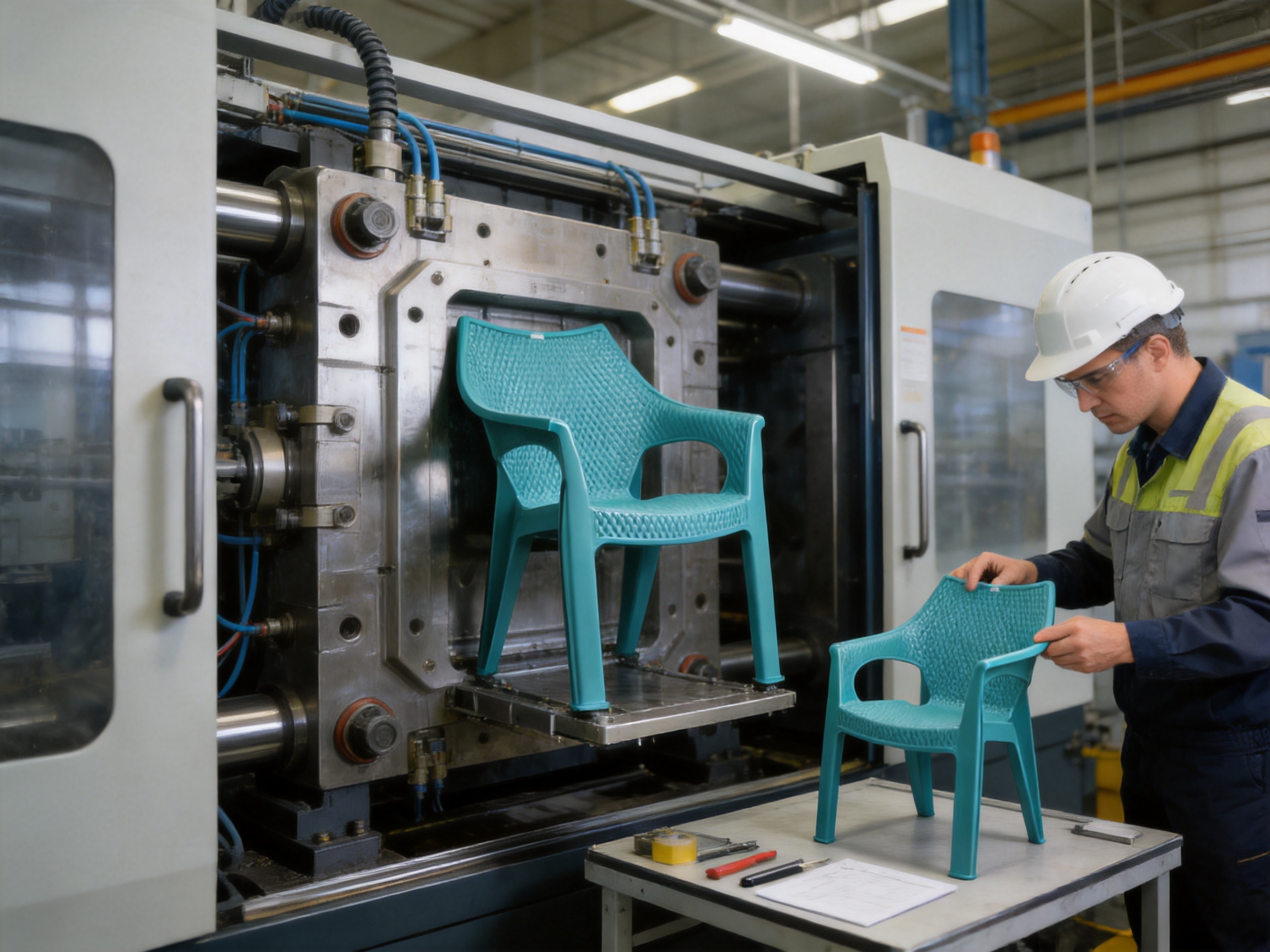
The company also has professional injection molding machines for mold testing. Testing is essential because a mold can appear correct in a drawing or after assembly but still require adjustment when used with real plastic material and production equipment. Trial molding allows the manufacturer to review filling, demolding, surface quality, dimensional performance, and the interaction between the mold and machine.
Testing also creates an opportunity to identify issues before shipment. Depending on the project, the mold may be evaluated for flash, short shots, weld lines, air traps, warpage, ejector marks, or other visible and functional concerns. Corrections can then be made during the manufacturing process rather than after the customer installs the tooling in its own factory.
Standardized Production and Quality Management
A reliable mold depends on more than individual craftsmanship. It also requires standardized processes that reduce avoidable variation. Chenghui Mould emphasizes precision equipment, standardized manufacturing procedures, and strict quality management throughout the mold-making process.
Standardization can begin with design documentation. Product drawings, mold layouts, component details, and revision information should be organized so that all departments work from the correct version. Clear documentation helps prevent errors when a product design changes or when a customer requests modifications during development.
During machining, the production team must maintain attention to dimensions, surface condition, component alignment, and the relationship between moving and fixed mold sections. After machining, mold components require appropriate finishing and preparation before assembly. Assembly accuracy is particularly important for large chair molds because even small alignment issues may affect parting surfaces, flash control, or product dimensions.
Quality inspection should continue through assembly and trial production. Inspection may include dimensional checks, visual review, movement testing, cooling-system verification, ejection checks, and molded-sample evaluation. The exact inspection plan can be adapted to the project and customer requirements.
This process-oriented approach is an advantage over suppliers that focus only on completing the mold as quickly as possible. The goal is not merely to deliver a tool that can open and close, but to deliver tooling that is ready to support the customer’s production objectives.
Capacity for OEM and ODM Projects
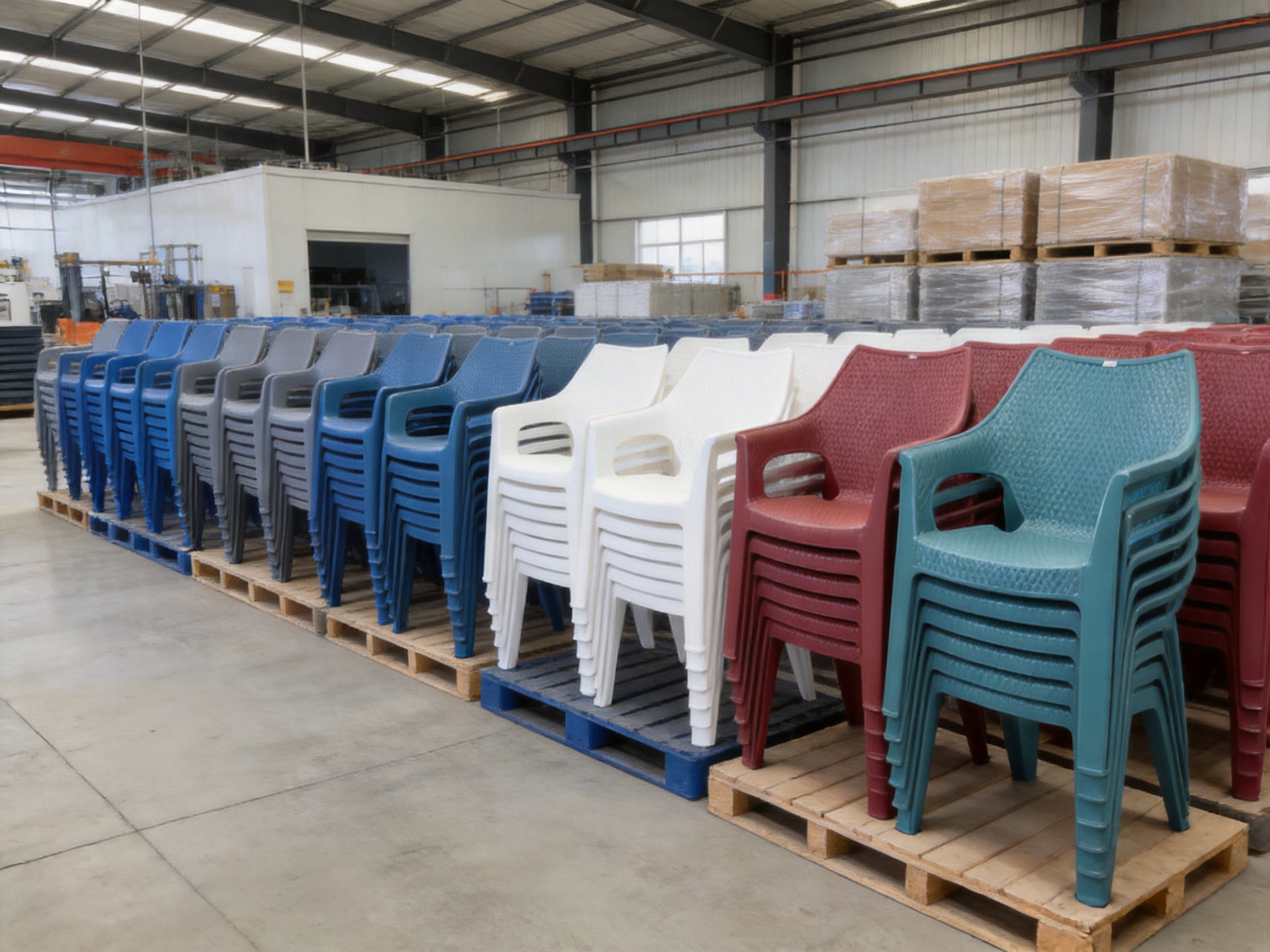
Chenghui Mould reports an annual production capacity of more than 1,500 mold sets. This capacity is relevant to buyers who need a supplier capable of handling repeat orders, multiple product programs, or ongoing mold development. A manufacturer with broad production experience is more likely to understand the practical differences between a prototype tool, a medium-volume mold, and a high-output production mold.
OEM customers may provide their own chair design, drawings, brand requirements, or technical specifications. The manufacturer then develops the mold according to those requirements. ODM customers may seek support in developing a product concept, improving a design, or adapting an existing idea for injection molding. In both cases, close engineering communication is important.
A complete project may include concept review, product drawing, three-dimensional mold design, material and process recommendations, machining, assembly, mold trial, sample approval, and final delivery. The supplier can also provide assistance when the customer needs design adjustments related to draft, wall thickness, ribs, gates, cooling, or ejection.
This service model is useful for distributors and brands that do not maintain a large internal engineering department. It allows them to work with a mold supplier that understands both tooling and the requirements of mass production. It can also reduce the risk of transferring an unverified design directly into expensive manufacturing.
Suitable Applications and Market Opportunities
The plastic chair mold can support several market segments. Household furniture is one obvious application, including chairs for kitchens, dining areas, balconies, gardens, and general home use. The chair design can be adapted to different aesthetic preferences, from simple utility products to more decorative furniture.
Commercial furniture is another important market. Restaurants, cafés, hotels, offices, schools, and event organizers often require large numbers of chairs with consistent dimensions and easy maintenance. Plastic chairs can be attractive in these environments because they are generally lightweight, easy to clean, and available in multiple colors and shapes.
Outdoor applications may require attention to weather exposure, ultraviolet resistance, drainage, and material selection. Although the mold itself does not determine every performance characteristic of the finished product, the mold must accurately reproduce the design features required for outdoor use. These may include smooth surfaces, reinforced legs, stable feet, and areas that limit water accumulation.
Institutional and public-use applications can place additional demands on strength and durability. A chair designed for schools, waiting rooms, or public facilities may need reinforced structural areas and a geometry that supports repeated handling. The tooling can be developed around these functional requirements.
For wholesalers and distributors, a chair mold can also support private-label product programs. A customer may request a specific color, logo, texture, packaging configuration, or dimensional variation. A customized mold gives the buyer greater control over the product identity and helps create differentiation in competitive markets.
Material and Production Compatibility
The final material selection should be considered together with mold design and injection molding conditions. Common thermoplastic materials used in furniture production may offer different combinations of stiffness, impact resistance, appearance, shrinkage, flow behavior, and cost. The appropriate choice depends on the chair’s intended use and the customer’s performance expectations.
Material shrinkage is particularly important for a large molded product. As plastic cools, it contracts. The mold design must account for expected shrinkage so that the finished chair can meet the required dimensions. Different materials and grades may behave differently, which is why material information should be confirmed before finalizing the tooling.
Color and surface texture can also affect the product’s appearance. A chair may be produced in solid colors, translucent shades, or customized color formulations. A textured mold surface can help reduce the visibility of minor marks, while a smoother surface may be selected for a cleaner or more polished appearance. These decisions should be agreed upon during the design stage.
The injection molding machine must also be compatible with the mold. Important considerations can include clamping capacity, injection volume, platen dimensions, mold height, opening stroke, ejector arrangement, and available hydraulic or electrical connections. Providing machine information to the mold manufacturer helps ensure that the tooling is suitable for the customer’s production equipment.
Why Mold Testing Matters Before Delivery
Mold testing is a critical checkpoint between manufacturing and customer production. During a trial, the manufacturer can use the intended or comparable material and evaluate how the mold performs under practical conditions. This stage can reveal issues that may not be visible during assembly inspection.
Trial molding allows the team to examine the first molded samples for completeness, surface quality, dimensional consistency, and ease of removal. The team can also observe whether the mold opens smoothly, whether the ejectors return correctly, and whether the cooling system operates as intended.
If a sample shows a short shot, the team may review the filling path, venting, injection settings, or gate design. If there is flash, the parting surface, clamping condition, or alignment may require attention. If warpage appears, the team may evaluate cooling balance, packing conditions, wall-thickness distribution, or product design.
Not every trial result requires a major tooling modification. Sometimes the solution is a process adjustment. However, identifying the difference between a mold issue and a molding-condition issue requires experience. A supplier with its own injection machines and experienced technicians can provide more meaningful feedback before the mold reaches the customer.
Benefits for International Buyers
International buyers often evaluate mold suppliers based on more than technical capability. They also consider communication, production transparency, delivery coordination, documentation, after-sales support, and the supplier’s ability to understand overseas market requirements.
Chenghui Mould exports to the Middle East, Europe, America, Africa, Southeast Asia, and other regions. This international experience indicates familiarity with different customer expectations and project conditions. Buyers from different markets may have different preferences regarding chair dimensions, surface finishes, packaging, mold standards, replacement parts, and quality documentation.
Clear communication is especially important when the customer and supplier work across different time zones and languages. Technical discussions should confirm product drawings, mold layouts, approved samples, material requirements, machine data, delivery terms, and any special inspection criteria. A structured communication process reduces misunderstanding and helps maintain project progress.
After-sales support is also valuable. Even a properly manufactured mold may require process adjustment after installation because the customer’s machine, material, cooling water, operating conditions, or production environment may differ from the conditions used during testing. A supplier that can provide technical guidance can help the customer reach stable production more efficiently.
Maintenance and Long-Term Tooling Value
The working life of a chair mold depends on many factors, including mold construction, materials, operating conditions, maintenance practices, plastic type, production volume, and handling. Regular maintenance can help preserve accuracy and reduce unexpected downtime.
Basic maintenance may include cleaning the mold surfaces, checking lubrication points, inspecting ejector movement, removing residue, verifying cooling passages, and examining parting surfaces. The exact schedule should be based on the production environment and the manufacturer’s recommendations.
Operators should also monitor changes in the molded product. Gradual flash, increasing ejection resistance, surface marks, unusual noise, or dimensional change may indicate that the mold needs inspection. Early attention can prevent a minor issue from becoming a major repair.
Replacement components and maintenance documentation can further improve long-term value. A professionally organized mold should allow the customer to identify key components and understand the basic service requirements. This is particularly helpful for distributors or manufacturers operating multiple production lines.
The total value of the mold should therefore be considered over its entire service life. A tooling solution that supports stable production, predictable maintenance, and repeatable product quality may provide greater commercial value than a lower-priced alternative that creates frequent problems.
Comparison with Alternative Manufacturing Approaches
Injection molding is generally suited to plastic chair production when the required volume is high and the product must be repeated consistently. Once the mold has been developed and approved, each cycle can reproduce the same basic geometry with limited variation when the process is properly controlled.
Other manufacturing approaches may be appropriate for prototypes, very small quantities, or special materials, but they may not provide the same balance of productivity, unit cost, surface repeatability, and design flexibility for mass-produced plastic chairs. The most suitable method depends on the commercial plan and the expected volume.
A dedicated chair mold can also be more efficient than adapting a general-purpose tool. The mold can be designed specifically around the product’s geometry, material, machine, and expected output. This specialization may improve filling, cooling, ejection, and product consistency.
For companies planning a long-term product line, the investment in a professionally engineered mold can support more predictable manufacturing. It can also provide a foundation for future variations, such as different colors, textures, branding options, or related chair models.
Project Workflow from Concept to Production
The development of CHENGHUI Plastic Chair Mold 008 can follow a structured workflow. The first step is requirement collection. The customer provides available product information, including drawings, three-dimensional files, reference samples, target material, expected quantity, machine information, and appearance requirements.
The next step is product and mold analysis. Engineers review the chair geometry, draft angles, wall thickness, ribs, parting line, gates, cooling, ejection, and potential manufacturing risks. If necessary, they suggest changes that may improve moldability or reduce production difficulty.
After the design is confirmed, the mold structure is developed. The design may include cavity and core arrangements, moving components, cooling channels, ejector systems, mold base details, and other required components. The customer can review the design before machining begins.
Machining and component preparation then take place in the production workshop. The 104 advanced processing machines support the company’s ability to carry out multiple manufacturing operations. Skilled technicians manage finishing, fitting, assembly, and adjustment.
Once the mold is assembled, trial molding is performed on professional injection molding machines. The resulting samples are inspected, and any required corrections are completed. Depending on the project, the customer may review trial samples or approve the mold through an agreed inspection process.
After final inspection, the mold is prepared for shipment. Documentation, spare parts, operating information, and maintenance recommendations can be provided according to the customer’s requirements. Technical support remains important as the buyer installs the mold and begins regular production.
Key Purchasing Questions for Buyers
Before ordering a chair mold, buyers should clearly define the product’s intended use. A chair for indoor household use may have different structural and appearance requirements from a chair for outdoor events or public facilities. Clear use conditions help the manufacturer recommend suitable product geometry and tooling features.
Buyers should also confirm the expected annual production volume. A low-volume project may prioritize flexibility and cost, while a high-volume project may require greater attention to cycle stability, cooling efficiency, automation, and maintenance access.
Machine information should be shared as early as possible. A mold designed without reference to the available injection machine may create installation or production problems. Clamping force, mold dimensions, opening stroke, injection capacity, and ejection configuration should be reviewed before final confirmation.
Appearance expectations should be documented. Terms such as “smooth,” “matte,” “textured,” or “high gloss” can mean different things to different people. Reference samples, texture standards, approved drawings, and clear surface inspection criteria can help align the customer and supplier.
Finally, the buyer should understand the trial and approval process. The quotation or project agreement should clarify whether trial samples are included, how modifications are handled, what inspection standards apply, and how final acceptance will be completed.
| Buyer Requirement | Information to Confirm |
|---|---|
| Product application | Indoor, outdoor, commercial, institutional, household, or industrial use |
| Material | Plastic type, grade, color, additives, and expected shrinkage characteristics |
| Production volume | Estimated monthly or annual output and expected tooling service period |
| Machine compatibility | Clamping force, injection capacity, mold dimensions, opening stroke, and ejection system |
| Surface finish | Polished, matte, textured, patterned, branded, or other appearance requirements |
| Quality standard | Dimensional tolerance, visual criteria, functional tests, and sample approval method |
| Service expectations | Technical support, maintenance guidance, spare parts, and after-sales communication |
Frequently Asked Questions
What is CHENGHUI Plastic Chair Mold 008 used for?
It is a plastic chair injection mold designed for producing chair products through thermoplastic injection molding. The tooling can be customized according to the buyer’s chair design, material, production volume, machine, and surface requirements.
Can the mold be customized for an original chair design?
Yes. The manufacturer provides customized mold design and manufacturing services. Customers can submit product drawings, three-dimensional files, reference samples, or a product concept for engineering review and tooling development.
What types of businesses may need this chair mold?
Potential users include furniture manufacturers, injection molding companies, wholesalers, distributors, retailers, private-label brands, and OEM or ODM customers. The mold can support household, commercial, institutional, event, and outdoor chair projects.
Why is product design review important before mold manufacturing?
Design review helps identify issues related to draft angles, wall thickness, ribs, material flow, cooling, ejection, parting lines, and potential warpage. Addressing these matters before machining can reduce modification costs and improve production readiness.
Does the manufacturer test the mold before delivery?
The company has professional injection molding machines for mold testing. Trial molding can be used to evaluate filling, demolding, surface appearance, dimensions, and other practical production characteristics before shipment.
What is the advantage of working with a supplier that has its own workshop?
An in-house workshop can improve coordination between design, machining, assembly, testing, and inspection teams. It may also provide better control over production progress, modifications, and quality management.
How much experience does the manufacturer have?
Zhejiang Chenghui Mould Co., Ltd. was founded in 1994 and has more than 30 years of experience in injection mold design and manufacturing, particularly for daily necessities, furniture, storage products, and industrial plastic products.
What other products can the company manufacture molds for?
The company manufactures molds for PET storage products, tables, chairs, furniture, storage boxes, turnover boxes, laundry baskets, buckets, storage racks, trash cans, and other household and industrial products.
Can the mold be used for mass production?
The tooling is developed for injection molding applications and can be engineered according to the customer’s expected production volume and machine conditions. The final production capability depends on the mold design, material, molding process, maintenance, and operating environment.
What should a buyer provide when requesting a quotation?
The buyer should provide the product drawing or three-dimensional file, chair dimensions, material information, expected quantity, surface requirements, available injection machine data, preferred delivery schedule, and any special quality or packaging requirements.
How can buyers protect the mold during long-term use?
Regular cleaning, lubrication, inspection, cooling-system maintenance, and careful handling can help protect the mold. Operators should monitor changes in product quality and address flash, difficult ejection, unusual noise, or dimensional variation at an early stage.
Does the company serve overseas customers?
Yes. The company exports molds to the Middle East, Europe, America, Africa, Southeast Asia, and other regions. Its international service scope supports customers seeking a China-based OEM and ODM mold manufacturing partner.
Why This Mold Solution Is Valuable for Competitive Markets
Plastic furniture markets are highly competitive. Buyers compare products according to price, appearance, durability, delivery, color selection, comfort, stacking performance, and brand identity. A dependable mold helps manufacturers control several of these factors at the production level.
Consistent tooling supports consistent products. When chairs are produced with stable dimensions and appearance, manufacturers can reduce sorting, rework, and customer complaints. A well-developed mold can also make it easier to introduce product variations while maintaining a recognizable design language.
Engineering support provides another competitive advantage. The supplier is not limited to machining according to a file; it can participate in the practical development of a product that must eventually be molded, packed, transported, and sold. This is particularly useful for customers entering a new chair category or developing a private-label furniture line.
Production resources also matter. A company with a substantial equipment base, professional testing machines, standardized procedures, and broad product experience can offer a more complete service than a workshop focused on one isolated manufacturing step. This integrated capability helps reduce coordination risks and supports smoother project execution.
Conclusion
CHENGHUI Plastic Chair Mold 008 is a tooling solution for manufacturers that need reliable plastic chair production and professional support from design through testing. Its value comes from the combination of customized engineering, precision machining, controlled assembly, practical mold trials, and quality management.
Zhejiang Chenghui Mould Co., Ltd. brings more than 30 years of industry experience, an in-house production workshop, 104 advanced processing machines, professional injection molding equipment for testing, and an annual capacity of more than 1,500 mold sets. These capabilities support OEM and ODM projects for furniture, houseware, storage products, industrial containers, and other injection-molded applications.
For international wholesalers, distributors, furniture brands, and injection molding companies, the right chair mold can provide benefits that extend beyond the initial tooling order. It can improve product repeatability, support attractive surfaces, reduce production uncertainty, simplify future development, and contribute to a more dependable supply chain.
The best results begin with clear cooperation. Buyers should provide complete product information, confirm materials and machine conditions, define appearance and quality standards, and participate in sample approval. When these requirements are combined with experienced mold engineering and disciplined manufacturing, a plastic chair mold can become a long-term production asset rather than a short-term purchasing decision.
For companies seeking a China plastic injection mold manufacturer capable of handling custom chair tooling and related household or industrial products, this type of integrated manufacturing approach offers a practical foundation for dependable mass production.
References
1. Zhejiang Chenghui Mould Co., Ltd. Company information and product manufacturing profile.
2. General principles of thermoplastic injection molding, mold design, cooling, filling, and ejection.
3. Industrial guidelines for plastic product design, draft angles, ribs, wall thickness, and shrinkage control.
4. Quality management practices for precision mold manufacturing and injection molding production.
5. Technical considerations for OEM and ODM tooling development in household and industrial plastic products.