
 Français
 Español
 عربى
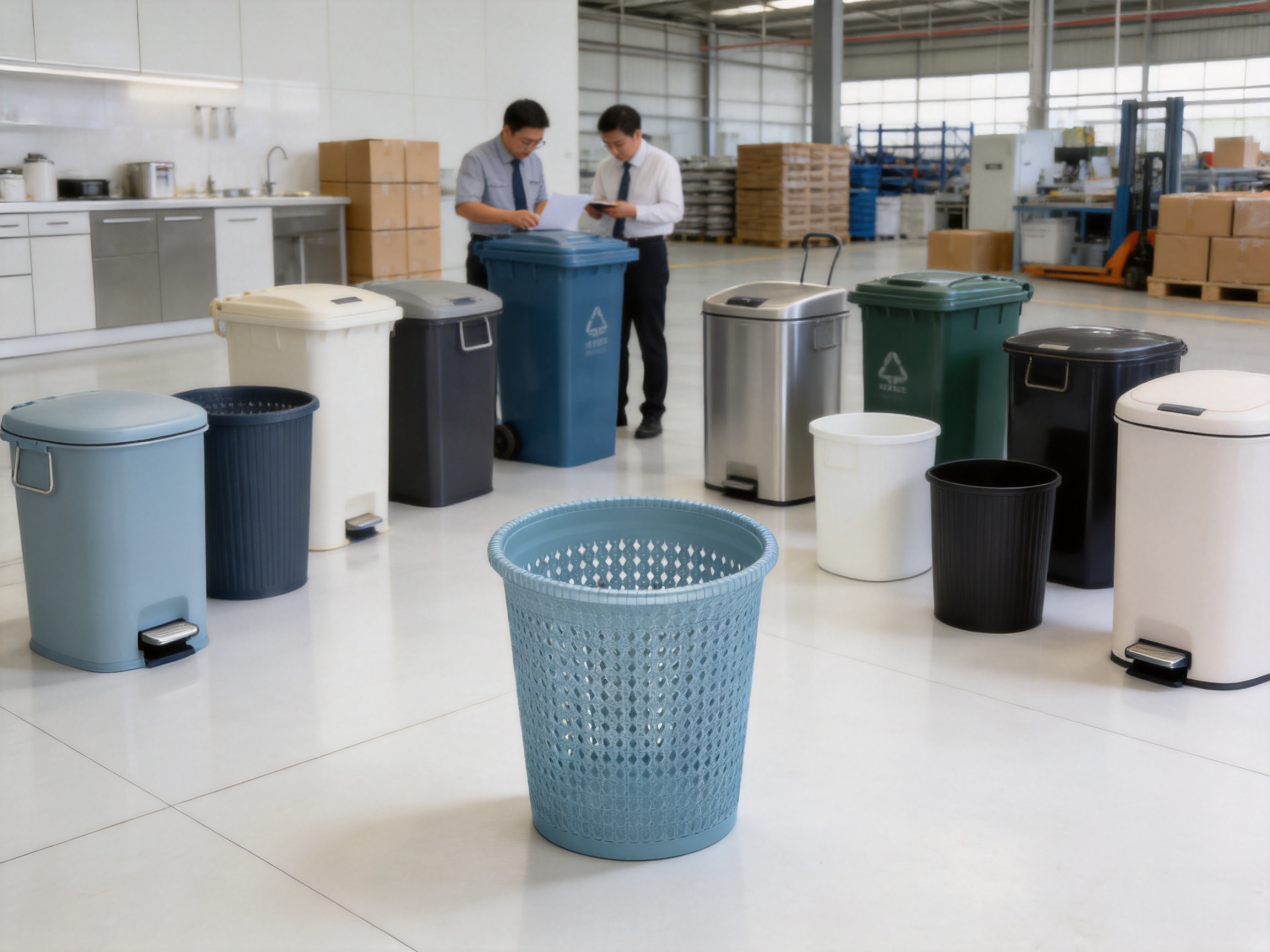
Household waste bins are essential products in homes, offices, commercial buildings, public facilities, hotels, schools, and industrial workplaces. Although a waste bin may appear simple, producing a high-quality plastic bin requires carefully engineered tooling. The mold must create a clean, accurate, durable, and visually consistent product while supporting efficient cycle times and dependable long-term production. A poorly designed mold can lead to warpage, uneven wall thickness, flash, sink marks, difficult ejection, short service life, and unstable output.
The Household Waste Bin Mold 006 is designed for manufacturers, wholesalers, distributors, and product brands seeking dependable tooling for plastic household waste containers. It is suitable for customized injection molding projects in which product appearance, structural strength, production efficiency, and repeatability are all important. The mold can be developed around the customer’s product drawings, three-dimensional data, functional requirements, resin selection, and target production volume.
As a specialized plastic injection mold solution, this tooling is positioned for manufacturers that need more than a basic cavity and core arrangement. The mold development process considers product geometry, draft angles, wall thickness, gate location, cooling performance, ejection balance, mold steel, machining precision, assembly quality, trial molding, and final inspection. These factors help the finished waste bin achieve a professional appearance and allow the mold to operate consistently in mass production.
The product is manufactured by Zhejiang Chenghui Mould Co., Ltd., a Chinese mold manufacturer with more than 30 years of experience in injection molds for daily necessities and industrial products. Founded in 1994, the company has developed capabilities covering product analysis, mold design, CNC machining, electrical discharge machining, wire cutting, mold fitting, polishing, assembly, testing, inspection, and after-sales service. Its production workshop includes 104 advanced processing machines and professional injection molding equipment for mold trials.
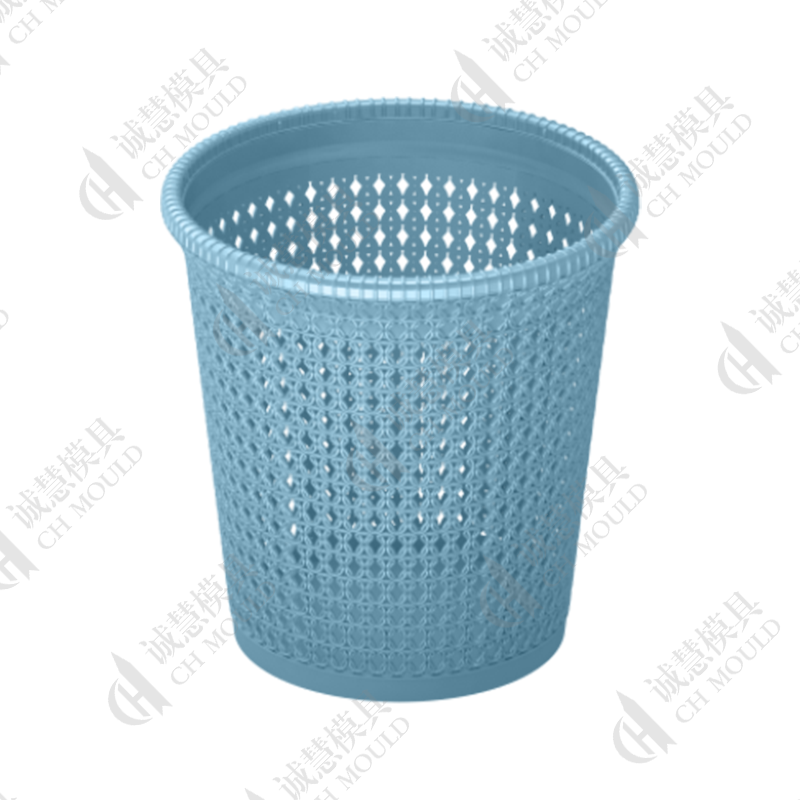
CHENGHUI Household Waste Bin Mold 006
1. Product Overview
The Household Waste Bin Mold 006 is a custom plastic injection mold intended for the production of household waste bins and related plastic containers. The tooling can be adapted to different product sizes, shapes, capacities, lid structures, handle configurations, surface textures, and branding requirements. Depending on the product design, the mold may be engineered for a one-cavity or multi-cavity configuration, with the final arrangement determined by production volume, machine capacity, part size, resin selection, and investment objectives.
A waste bin typically combines broad surfaces, a relatively deep cavity, an open upper rim, reinforced edges, and functional features such as handles, lids, hinge points, or stacking structures. These characteristics create specific design challenges. The mold must provide adequate draft so the part can be released without damage. It must also control shrinkage and cooling to prevent distortion, especially around the rim, base, corners, ribs, and thickened functional areas.
The mold can be developed for commonly used injection molding materials such as polypropylene, high-density polyethylene, acrylonitrile butadiene styrene, or other thermoplastics selected according to the required product performance. Material choice affects shrinkage, cooling behavior, surface finish, impact resistance, chemical resistance, and processing temperature. Therefore, mold design should be completed together with material and product engineering rather than treated as an isolated manufacturing step.
For household waste bins, appearance is often an important selling point. Consumers expect smooth surfaces, clean edges, stable dimensions, and an attractive finish. Commercial buyers may also require color consistency, logo integration, easy cleaning, and resistance to repeated use. The tooling must therefore support both visual quality and practical performance. A well-built mold helps reduce defects that could otherwise increase scrap rates, interrupt production, and weaken the customer’s brand image.
Core Product Characteristics
The main characteristics of this mold solution include customized engineering, compatibility with high-volume production, attention to product release, controlled cooling, precise mold component fitting, and suitability for daily-use plastic products. The mold is not limited to one fixed waste bin specification. Instead, it provides a manufacturing platform that can be developed for a customer’s specific product concept.
The mold may support smooth, textured, matte, or polished product surfaces. Surface treatment can be selected according to the customer’s design and application. A textured surface can help disguise minor visual marks and provide a practical appearance, while a polished surface may be preferred for a modern household product. Logo areas, decorative details, ribs, handles, and other functional features can be integrated into the mold during the design stage.
Where a bin includes a separate lid or additional components, the mold project can be coordinated with the tooling requirements for those parts. This approach helps maintain visual consistency across the product family. For manufacturers offering multiple capacities or models, related molds can also be planned using shared design principles, standardized components, and compatible production processes.
2. Why Waste Bin Mold Quality Matters
The cost of an injection mold is only one part of the total production investment. A mold that produces unstable parts can create larger expenses through scrap, rework, machine downtime, manual trimming, delayed deliveries, and customer complaints. For this reason, mold quality should be evaluated by its total contribution to production rather than by its initial purchase price alone.
A high-quality waste bin mold helps maintain consistent dimensions from the first production batch to later replenishment orders. Consistency is particularly important when the product is sold through retail or distribution channels. If the rim, lid interface, base, or handle position changes between batches, the product may no longer assemble correctly or may appear inconsistent on the shelf.
Good mold design also reduces the risk of common injection molding defects. Inadequate filling can create short shots or weld lines in visible areas. Poor venting can trap air and cause burn marks. Uneven cooling can produce warpage. Incorrect ejection can leave white stress marks or deform the product. Insufficient mold stiffness can lead to parting-line flash. Each defect may be linked to a design or manufacturing decision made before the mold reaches the customer’s factory.
Waste bins are generally expected to withstand repeated handling, impact, cleaning, and exposure to household chemicals. The mold must therefore support a product design with appropriate wall thickness, reinforcement, and material distribution. A mold cannot compensate for every weakness in the product design, but professional mold engineering can identify potential problems early and recommend practical improvements.
3. Advantages Compared with Basic or Poorly Engineered Tooling
More Stable Product Quality
One of the most important advantages of professionally engineered tooling is stable product quality. Precision machining and controlled mold assembly help keep the cavity and core aligned. Consistent alignment supports uniform parting lines, accurate dimensions, and reduced flash. These qualities are particularly important for large visible surfaces and open rims, where defects are easy for end users to notice.
Stable mold performance also helps reduce variation caused by repeated opening and closing. When guiding systems, inserts, slides, and other moving components are correctly fitted, the mold can maintain its operating accuracy over a longer production period. This is more dependable than a low-cost tool assembled without sufficient attention to component tolerances or long-term wear.
Improved Surface Appearance
The finished appearance of a waste bin influences how customers perceive its quality. A professional mold can deliver cleaner surfaces, sharper but safe transitions, better logo definition, and more consistent textures. Surface preparation may include CNC machining, EDM finishing, polishing, texture preparation, or other processes selected according to the product specification.
Appearance control is especially valuable for products used in visible areas such as kitchens, offices, hotels, bathrooms, reception spaces, and public facilities. A mold that creates uniform surfaces reduces the need for secondary finishing and makes production more efficient.
Better Ejection Performance
Deep or wide plastic containers can be difficult to eject if the draft angle, ejection layout, or surface condition is not properly designed. The Household Waste Bin Mold 006 can be engineered with an appropriate ejection system based on the part geometry. Ejector pins, sleeves, stripper structures, or other mechanisms may be selected according to the product’s appearance and functional requirements.
Balanced ejection helps prevent deformation, stress whitening, sticking, and marks on important visible areas. It also reduces the risk that operators will need to remove parts manually or use excessive force. Efficient release contributes directly to shorter cycle interruptions and more reliable automated or semi-automated production.
Efficient Cooling and Cycle Control
Cooling is a major factor in injection molding productivity. A large waste bin may contain broad surfaces and thicker sections that retain heat. If these areas cool unevenly, the part can warp or shrink irregularly. Properly arranged cooling channels help remove heat more evenly and can reduce the time required before ejection.
The cooling design is developed according to the cavity shape, product thickness, expected resin, and mold structure. The goal is not simply to add more channels, but to place them where they can provide useful and balanced thermal control without weakening the mold or interfering with other components. Better thermal management can improve cycle consistency and support higher output.
Lower Long-Term Production Risk
Tooling reliability is valuable when a product is produced for many years. Household waste bins may be sold through ongoing supply programs rather than one-time projects. A mold that is designed, machined, tested, and maintained correctly can support repeat orders with fewer unexpected interruptions.
Long-term reliability depends on mold steel, heat treatment, component design, machining accuracy, surface treatment, lubrication, maintenance access, and operating conditions. Chenghui Mould’s manufacturing process addresses these areas as part of an integrated project rather than treating final assembly as the only quality checkpoint.
4. Engineering Design for Household Waste Bins
Product analysis is the starting point for a successful mold. Before machining begins, engineers review the three-dimensional product model or drawings and assess the areas that may affect molding performance. These areas include wall thickness, draft, corners, ribs, handles, lid interfaces, parting lines, undercuts, logo areas, and ejection locations.
Product design review can identify features that may be difficult to mold or may increase production costs. For example, an internal undercut may require a slide, lifter, collapsible mechanism, or a change in product geometry. An overly sharp corner may create stress concentration and make polishing difficult. A thick section may cause sink marks or extended cooling time. Early engineering discussion allows such issues to be addressed before the mold is manufactured.
Parting Line Planning
The parting line affects product appearance, mold complexity, flash control, and ejection. For a waste bin, the parting line is often considered around the upper rim, body profile, base, or other natural transitions. The best location depends on the design and must balance visual requirements with mold manufacturability.
A carefully positioned parting line can reduce visible mismatch and simplify mold construction. It can also help ensure that the product remains on the intended mold half during opening. When the parting line is placed without adequate analysis, the result may be difficult ejection, excessive flash, or an unwanted line across a prominent surface.
Draft and Release Design
Draft angles allow the molded part to separate from the cavity and core. The required draft depends on the resin, surface texture, depth, shrinkage, and product geometry. Textured surfaces usually require more draft than polished surfaces because the texture can increase friction during release.
For a waste bin with a deep interior, draft must be considered throughout the side walls and around internal ribs or reinforcing features. Adequate draft reduces ejection force and helps protect both the molded product and the mold surface. It also makes production more tolerant of normal variations in material and processing conditions.
Wall Thickness and Structural Features
Uniform wall thickness is generally preferred because it helps manage filling, cooling, and shrinkage. However, practical waste bin designs may require reinforced rims, bases, handles, stacking zones, or hinge supports. These features must be integrated carefully so that they provide strength without creating excessive thick sections.
Ribs can increase rigidity while using less material than a solid thick wall. Their thickness, height, spacing, and connection to the main wall influence both structural performance and molding quality. Poorly designed ribs may cause sink marks, trapped air, or difficult ejection. Professional mold engineering considers these effects during product and tooling review.
Gate and Filling Strategy
The gate introduces molten plastic into the cavity. Its location affects filling balance, weld-line position, visible marks, packing pressure, and overall part quality. A waste bin has a relatively large surface area, so the filling strategy must be selected carefully to avoid hesitation, premature freezing, and uneven pressure distribution.
Depending on the product design and customer requirements, the mold may use a cold runner, hot runner, edge gate, submarine gate, valve gate, or another suitable arrangement. The final choice depends on resin, cavity layout, part appearance, expected production volume, machine conditions, and cost objectives. A professional supplier should explain the trade-offs rather than recommend one system without considering the full application.
Venting
Air must escape from the cavity as plastic fills the mold. Inadequate venting can lead to burn marks, short shots, gas traps, weld-line weakness, and inconsistent surface appearance. Venting is especially important near the end of filling, around ribs, at deep corners, and in areas where air may become trapped.
Vents must be designed to release air without allowing excessive plastic leakage. Their dimensions, locations, and finishing quality are determined according to the material and product geometry. Correct venting supports more stable filling and can reduce the need for excessive injection pressure.
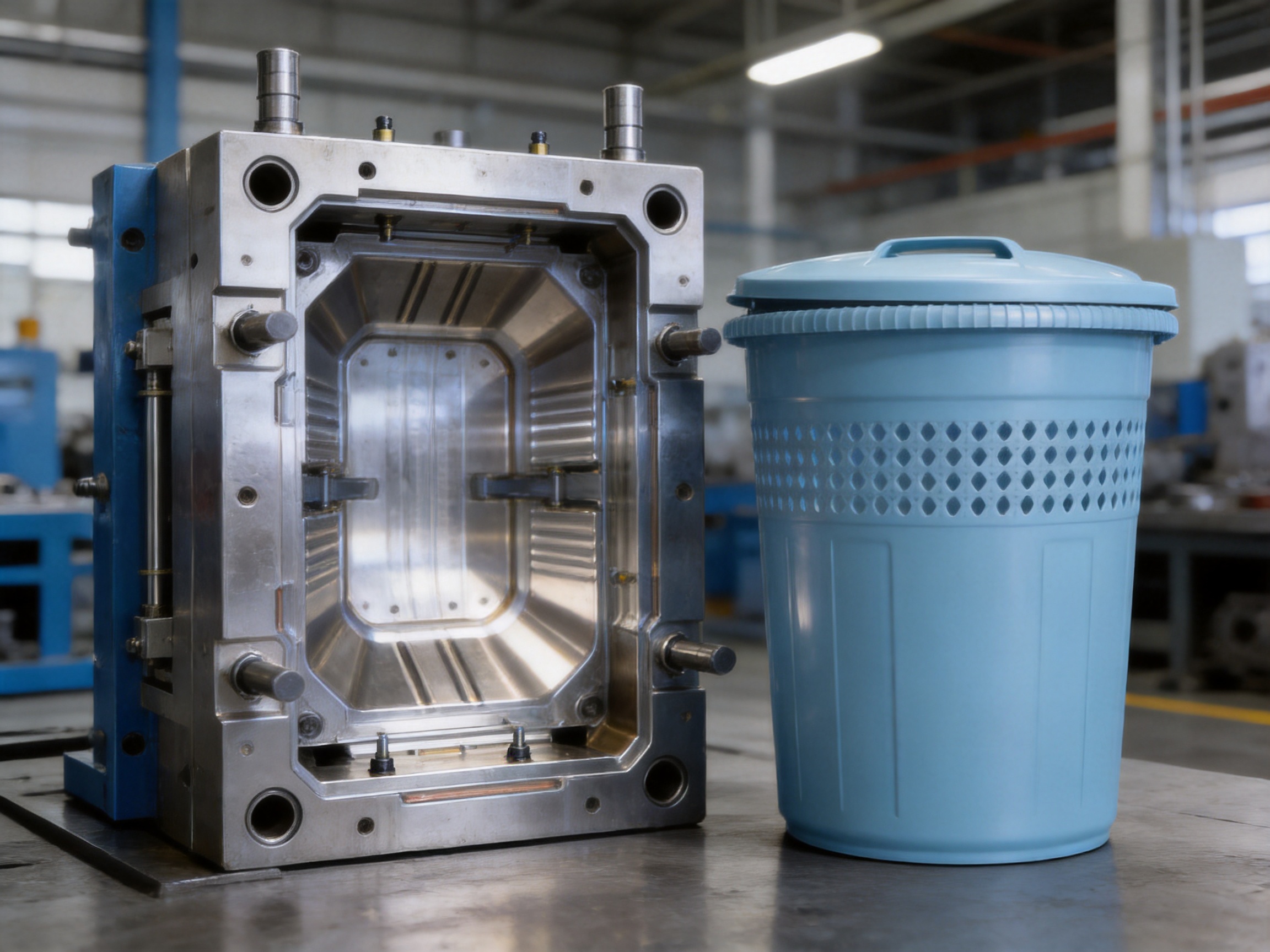
5. Manufacturing Process and Quality Control
Chenghui Mould combines product engineering, mold design, precision machining, assembly, trial molding, and inspection in one manufacturing workflow. This integrated approach allows information to move more efficiently between departments and helps the company control the relationship between design intent and finished tooling.
Design and Moldflow Considerations
After receiving product data, the engineering team reviews the part and prepares the mold structure. The design process considers the selected resin, expected production volume, injection machine parameters, mold base size, cavity arrangement, cooling requirements, ejection method, and maintenance needs.
Where appropriate, filling and cooling behavior can be assessed through engineering analysis. Such analysis helps identify potential pressure concentration, weld-line locations, air traps, unbalanced filling, or cooling differences before machining. Analysis is a support tool rather than a substitute for engineering judgment, but it can improve decision-making during the early stages of development.
Material and Component Selection
Mold durability is strongly influenced by the selection of mold steel and standard components. The appropriate material depends on expected production volume, resin abrasiveness, surface requirements, corrosion risk, cavity size, and maintenance expectations. Steel selection may also influence polishing performance, heat treatment, wear resistance, and repairability.
Guiding components, ejector components, slides, locks, screws, cooling fittings, and other elements must be selected with attention to compatibility and service conditions. Standardized components can simplify maintenance and replacement, while customized inserts may be used where the product geometry requires special treatment.
CNC Machining
CNC machining creates the primary cavity, core, mold base features, inserts, and other precision components. Modern machining equipment helps maintain dimensional accuracy and repeatability. Tool paths are planned according to the geometry, material, surface requirement, and finishing allowance.
For large or complex waste bin surfaces, machining quality affects not only dimensions but also the amount of finishing required later. A stable machining process can reduce manual correction, preserve design details, and improve the consistency of the mold surface.
Electrical Discharge Machining and Wire Cutting
Electrical discharge machining is useful for areas that are difficult to create through conventional cutting tools, including narrow slots, sharp internal details, deep ribs, and complex corner features. Wire cutting can produce accurate profiles in suitable components and inserts.
These processes are selected according to the geometry and required accuracy. Combining CNC machining, EDM, and wire cutting allows the manufacturer to address different features with the most appropriate technology rather than forcing every detail into a single process.
Grinding, Polishing, and Surface Preparation
After rough and precision machining, mold components may undergo grinding and surface preparation. Polishing quality influences product appearance and release performance. For smooth household products, the cavity surface must be prepared carefully to prevent scratches, machining marks, or inconsistent gloss.
If the customer requires a textured finish, the surface must be prepared to provide a reliable foundation for texturing. Texture depth, direction, transition areas, and logo zones should be controlled so the finished product looks intentional and uniform.
Mold Fitting and Assembly
Precision components must be fitted and assembled so that the mold opens, closes, guides, ejects, and cools correctly. Skilled mold fitters check alignment, shutoff areas, parting surfaces, slides, lifters, ejector movement, and component interaction.
Assembly quality is particularly important for large molds because small alignment issues can become more significant across a wide product area. Proper fitting helps reduce flash, uneven wear, sticking, and abnormal noise during operation.
Trial Molding
Before shipment, the mold is tested on injection molding equipment. Trial molding allows engineers to evaluate filling, part release, surface appearance, dimensions, cooling behavior, cycle stability, and any visible defects. The trial process also helps verify that the mold is compatible with the customer’s intended production method.
Test results may lead to adjustments in venting, ejection, gate balance, polishing, cooling, or parting-line fitting. This stage is important because it connects theoretical design with actual molding behavior. A mold should not be considered complete merely because all components have been assembled; it should be validated through practical operation.
Inspection and Documentation
Quality inspection can include dimensional checks, visual inspection, component movement checks, water-pressure testing for cooling circuits, and confirmation of mold opening and ejection functions. Inspection requirements can be aligned with the product drawing, customer specifications, and agreed acceptance criteria.
Clear documentation helps customers understand the mold structure and maintain it correctly. Documentation may include mold drawings, component information, trial records, inspection results, recommended processing conditions, and maintenance guidance, depending on project requirements.
| Manufacturing Stage | Primary Objective | Benefit to Waste Bin Production |
|---|---|---|
| Product and mold design | Review geometry, material, parting, gating, cooling, and ejection | Reduces design risks before machining |
| Precision machining | Create accurate cavity, core, inserts, and mold components | Supports stable dimensions and cleaner surfaces |
| EDM and wire cutting | Produce complex details and precise profiles | Improves feature accuracy in difficult areas |
| Fitting and assembly | Align mold halves and moving components | Reduces flash, sticking, and premature wear |
| Trial molding | Validate filling, release, appearance, and operation | Confirms readiness for mass production |
| Inspection and support | Verify quality and provide technical information | Helps customers operate and maintain the mold |
6. Production Benefits for Manufacturers and Distributors
A well-engineered household waste bin mold can provide benefits across the entire supply chain. For injection molding companies, it supports stable machine operation and reduced scrap. For product brands, it helps protect appearance and delivery schedules. For wholesalers and distributors, consistent product quality reduces returns and strengthens customer confidence.
Support for Mass Production
Household waste bins are often produced in substantial quantities because they are practical, affordable, and regularly replaced. A mold designed for repeated production must withstand regular thermal cycling, clamping force, injection pressure, and mechanical movement. The tooling should also permit routine maintenance without excessive disassembly.
Production volume may influence the number of cavities, mold steel, runner system, cooling arrangement, and automation potential. A supplier with experience in daily-use products can help match the mold structure to the customer’s actual business plan rather than oversizing or undersizing the tooling.
Reduced Manual Finishing
Defects such as flash, gate remnants, mismatch, and inconsistent texture often require manual correction. Excessive manual work increases labor cost and may create variation between units. Accurate mold construction helps minimize these tasks and allows the production team to focus on efficient molding, inspection, packing, and logistics.
Consistent Branding
Logos, raised lettering, recessed lettering, symbols, and other identification features can be integrated into the product design. The mold must reproduce these details clearly and consistently. Good surface preparation and precise machining help ensure that branding remains legible through repeated production cycles.
For distributors offering private-label products, this capability can be important. A customized waste bin can support a retailer’s brand identity, a cleaning service’s equipment program, a hotel group’s product standard, or a municipal waste-management initiative.
Flexible Product Development
Customers may require different capacities, colors, handles, lids, or surface finishes for different markets. A custom mold manufacturer can help evaluate whether a new model requires a completely new mold, interchangeable inserts, a modified cavity, or a separate tool. Early planning can reduce development time and make it easier to expand a product range.
7. Company Manufacturing Strengths
Zhejiang Chenghui Mould Co., Ltd. has operated in the mold industry since 1994 and has accumulated more than three decades of experience in plastic injection tooling. Its product experience covers household and industrial categories, including PET storage products, tables, chairs, furniture, storage boxes, turnover boxes, laundry baskets, buckets, storage racks, trash cans, and other daily-use products.
This broad product background is valuable because many household products share common engineering challenges. Large plastic surfaces, deep containers, reinforcing ribs, functional edges, handles, lids, and high-volume production requirements all demand practical tooling knowledge. Experience across related categories helps engineers recognize potential issues and select suitable mold structures.
The company operates its own production workshop with 104 advanced processing machines and professional injection molding machines for mold testing. Having machining and trial capabilities within the company can improve project coordination and shorten the feedback loop between design, manufacturing, and testing.
Its service covers concept evaluation, product drawing review, sample development, mold design, machining, assembly, mold trials, quality inspection, and after-sales support. This full-service model is useful for overseas customers that prefer to coordinate with one experienced tooling partner instead of managing separate design, machining, and testing suppliers.
Chenghui Mould reports an annual production capacity of more than 1,500 mold sets. Its molds are exported to the Middle East, Europe, America, Africa, Southeast Asia, and other regions. International project experience can help the company understand different customer expectations related to drawings, inspection, packaging, shipping, mold documentation, and communication.
The company’s manufacturing philosophy emphasizes precision, integrity, customer commitment, advanced manufacturing, skilled craftsmanship, and continuous improvement. These principles are especially relevant to custom molds, where successful delivery depends on both technical accuracy and consistent project management.
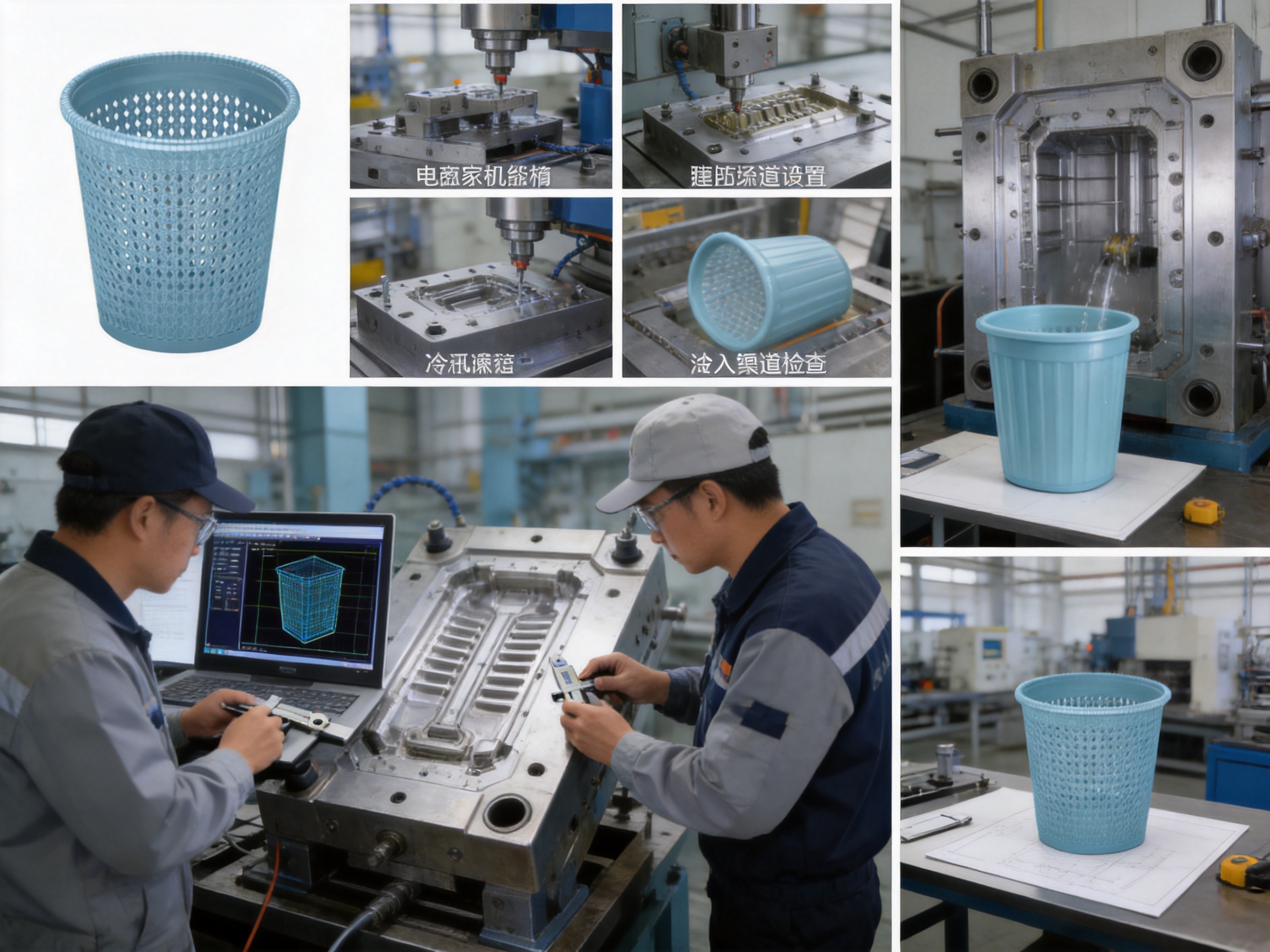
8. Customization Options
The Household Waste Bin Mold 006 can be customized according to the customer’s product requirements. Customization begins with the product concept and continues through mold construction and trial validation. Customers may provide a three-dimensional model, two-dimensional drawing, physical sample, sketch, reference image, or a combination of these materials.
Product Dimensions and Capacity
The mold can be developed for the required length, width, height, and capacity of the waste bin. Dimensional planning should include product function, available injection machine size, packaging method, shipping limitations, and market expectations. The final mold dimensions are confirmed after engineering review.
Lids, Handles, and Accessories
Waste bins may include swing lids, hinged lids, removable covers, carrying handles, side grips, foot pedals, or other components. Each feature affects mold structure and assembly. The supplier can review whether features should be molded as part of the main body or produced as separate components.
Colors and Surface Finishes
Plastic color is generally controlled through the selected resin and masterbatch during injection molding, while the mold determines the shape and surface finish. Smooth, matte, polished, or textured surfaces can be considered according to the desired market position and cleaning requirements.
Branding and Identification
Custom logos, product numbers, recycling marks, capacity indicators, warning text, and ownership identification can be incorporated into suitable areas. The location and depth of these details should be selected to maintain readability while avoiding unnecessary filling or ejection problems.
Runner and Automation Choices
The runner system can be selected according to product size, production volume, resin, machine conditions, and acceptable gate marks. Customers may also discuss automated demolding, conveyor collection, robotic handling, or insert arrangements if these are relevant to the factory’s production line.
9. Selecting the Right Mold Supplier
Choosing a mold supplier should involve more than comparing quotations. The buyer should evaluate engineering ability, production equipment, quality-control procedures, trial-molding capacity, communication, delivery planning, and after-sales support.
The supplier should be able to explain how the product will be filled, cooled, ejected, and inspected. It should also identify possible risks in the customer’s design and recommend solutions before production begins. A supplier that simply accepts drawings without reviewing manufacturability may create problems later.
Customers should ask about the proposed mold material, expected service life, cavity arrangement, runner system, cooling method, ejection structure, standard components, spare parts, maintenance requirements, and trial process. These questions help clarify the total value of the tooling.
Communication is also important for international projects. Drawings, revision control, sample approval, inspection standards, packaging, shipping arrangements, and corrective actions should be documented clearly. Professional project management reduces the chance of misunderstanding and helps maintain schedule control.
10. Maintenance and Service Life
Even a high-quality mold requires regular maintenance. Maintenance may include cleaning the cavity and core, lubricating moving components, checking ejector movement, inspecting cooling circuits, removing residue, verifying fasteners, and protecting steel surfaces from corrosion.
The frequency of maintenance depends on production volume, resin, additives, cycle conditions, water quality, mold steel, and factory environment. Abrasive or corrosive materials may require more frequent inspection. Proper maintenance helps preserve surface quality, reduce unexpected downtime, and extend service life.
Operators should avoid using unsuitable tools or excessive force when removing residue or correcting minor issues. Mold surfaces can be damaged by careless cleaning, and small scratches may affect product appearance or make release more difficult. Maintenance records can help identify patterns and schedule preventive work before a failure occurs.
After-sales technical support is valuable when the customer begins production. The supplier may assist with mold installation, trial parameters, part-quality analysis, maintenance questions, and improvement suggestions. Chenghui Mould provides after-sales support as part of its custom mold service, helping customers continue using the tooling effectively after delivery.
11. Application Areas
The mold is suitable for waste bins intended for many application environments. Household kitchens may require compact bins with easy-clean surfaces and attractive colors. Offices may prefer medium-sized containers with simple, professional styling. Hotels, schools, hospitals, retail stores, and public buildings may require larger capacities, durable construction, and consistent branding.
Industrial and commercial users may need bins that tolerate frequent handling and exposure to cleaning chemicals. Municipal or institutional projects may require standardized dimensions, identification marks, and long-term supply continuity. By adjusting the product design and mold structure, the same general tooling expertise can support different market requirements.
Waste bins can also be developed as part of a broader household product range. Matching storage boxes, laundry baskets, buckets, racks, and containers can share color systems, textures, branding, and design language. A mold manufacturer experienced in daily necessities can help customers coordinate these product families.
12. Frequently Asked Questions
What product is this mold designed to produce?
The mold is designed for injection-molded household waste bins and related plastic containers. The exact dimensions, capacity, shape, surface finish, and functional features can be customized according to the customer’s product requirements.
Can the mold be customized for a private-label product?
Yes. Product dimensions, logos, text, symbols, surface finishes, handles, lid interfaces, and other design details can be developed for private-label or OEM projects. The customer should provide product drawings or reference information for engineering review.
Which plastic materials can be used?
The suitable material depends on the product’s required strength, flexibility, appearance, chemical resistance, cost, and processing conditions. Common injection molding materials may include polypropylene, high-density polyethylene, and other thermoplastics. The final material should be confirmed during product and mold engineering.
Can the mold support mass production?
Yes. The mold is intended for dependable injection molding production and can be configured according to the required output. Cavity quantity, mold steel, cooling, runner design, and component selection should be matched to the customer’s expected production volume.
How does the mold reduce warpage and deformation?
Warpage control depends on product design, material, processing parameters, cooling balance, wall thickness, gate location, and ejection. The mold design addresses cooling and release behavior, while trial molding helps identify and correct issues before shipment.
Can the mold include a textured surface?
Yes. Textured, matte, polished, or other surface treatments can be considered. The desired finish should be identified during the design stage because texture affects draft requirements, ejection force, appearance, and surface preparation.
How is mold quality tested before delivery?
The mold can be tested through trial molding and inspection. Engineers evaluate filling, product release, appearance, dimensions, cooling performance, ejection movement, and mold operation. Adjustments may be completed before final approval.
Does the manufacturer provide mold design services?
Yes. The service includes product review, mold design, sample development, machining, assembly, trial molding, quality inspection, and after-sales support. Customers can begin with a product idea, drawing, sample, or three-dimensional model.
What information should a customer provide for a quotation?
Useful information includes product drawings or three-dimensional files, material preference, product dimensions, expected annual quantity, target machine information, surface requirements, branding details, delivery expectations, and any special functional requirements.
Can related molds be developed for lids or accessories?
Yes. Separate components such as lids, handles, pedals, or inserts can be reviewed as part of a complete product project. Coordinated tooling helps maintain appearance and assembly compatibility across the product.
Where are the molds supplied?
The manufacturer exports molds to the Middle East, Europe, America, Africa, Southeast Asia, and other international markets. Shipping, packaging, documentation, and delivery arrangements can be discussed during project planning.
What maintenance is recommended after delivery?
Regular cleaning, lubrication, cooling-circuit checks, corrosion protection, ejector inspection, and visual examination of parting surfaces are recommended. Maintenance frequency should be adjusted according to production volume and material conditions.
13. Conclusion
The Household Waste Bin Mold 006 is a practical tooling solution for manufacturers seeking reliable production of customized plastic waste bins. Its value comes from the combination of product-focused engineering, controlled manufacturing processes, precision machining, mold assembly, trial molding, and technical support.
Compared with basic tooling, professionally engineered mold construction can provide more stable dimensions, cleaner surfaces, better release performance, improved cooling control, reduced manual finishing, and lower long-term production risk. These advantages are important for household products that must be attractive, durable, economical, and suitable for repeated mass production.
Zhejiang Chenghui Mould Co., Ltd. brings more than 30 years of experience, an in-house production workshop, 104 advanced processing machines, professional injection molding equipment, and an annual capacity of more than 1,500 mold sets. Its experience with waste bins, storage products, furniture, turnover boxes, baskets, buckets, racks, and other daily necessities supports a practical understanding of plastic product manufacturing.
For wholesalers, distributors, product brands, and injection molding companies, the right mold partner can influence product quality, production efficiency, delivery reliability, and future product development. By combining customized design with precision manufacturing and complete project support, this waste bin mold provides a strong foundation for dependable plastic production in domestic and international markets.
References
1. Injection Molding Handbook, fundamentals of plastic part design, mold construction, filling behavior, cooling, and ejection.
2. Plastics Design Library, guidelines for thermoplastic material selection, shrinkage, wall thickness, ribs, draft, and molding performance.
3. Mold Engineering Principles, technical practices for cavity and core design, gating, venting, cooling, parting lines, and mold maintenance.
4. International Organization for Standardization, general principles related to quality management and manufacturing process control.
5. Society of Plastics Engineers, reference materials on injection molding technology, polymer processing, tooling, and production optimization.
6. Zhejiang Chenghui Mould Co., Ltd., company information, product capabilities, manufacturing equipment, service scope, and export experience provided for this article.