
 Français
 Español
 عربى
Plastic stools are widely used in homes, schools, offices, restaurants, retail stores, workshops, public facilities, and outdoor environments. Although a stool may appear to be a simple product, its mold must coordinate many technical requirements at the same time. The tooling must support attractive appearance, stable dimensions, adequate strength, efficient molding, easy demolding, repeatable cycle performance, and long service life. A small weakness in any of these areas can affect product quality, production cost, and customer satisfaction.
Plastic Stool Mold 007 is designed as a professional injection mold solution for manufacturers that need dependable tooling for plastic stool production. Developed by Zhejiang Chenghui Mould Co., Ltd., the mold reflects more than three decades of experience in the design and manufacture of injection molds for daily-use plastic products. It is suitable for customized OEM and ODM projects in which buyers require consistent production results, controlled manufacturing standards, and technical support from initial concept through mass production.
The value of a stool mold is not determined only by its appearance or initial purchase price. A reliable mold should help the injection molding machine run steadily, reduce adjustment time, minimize defective parts, and maintain product consistency over a long production period. It should also be designed around the customer’s selected material, machine capacity, product structure, expected output, and market requirements. Plastic Stool Mold 007 is therefore best understood as a complete tooling solution rather than simply a steel cavity and core.
For wholesalers, distributors, furniture brands, household product manufacturers, and industrial buyers, the mold offers a practical foundation for producing stools with a balance of durability, usability, visual quality, and manufacturing efficiency. Its design can be developed according to the required stool shape, wall structure, surface texture, color, material, packaging method, and sales market.
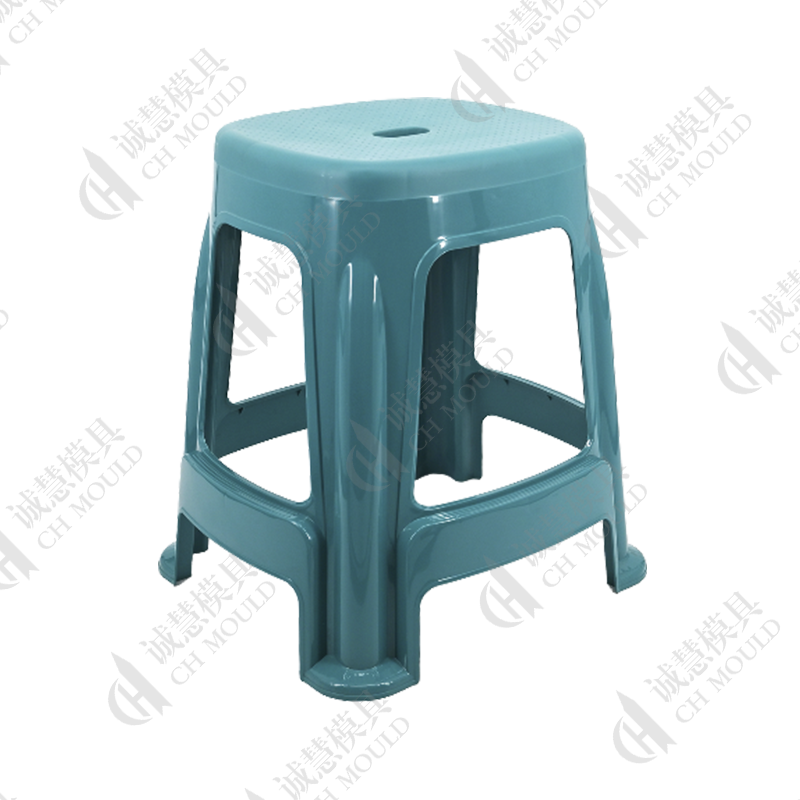
CHENGHUI Plastic Stool Mold 007
Why Stool Mold Quality Matters
Plastic stools are exposed to repeated loading, movement, impact, temperature changes, cleaning agents, and everyday handling. A stool used in a household may be moved many times each day. A stool used in a commercial environment may experience even more frequent use. For this reason, the mold must help the final product achieve an appropriate balance between rigidity and controlled flexibility.
Injection molding performance depends heavily on the quality of the tooling. If the mold cavity is not accurately machined, the finished stool may show uneven walls, dimensional variation, flash, sink marks, short shots, weld-line weakness, or difficult ejection. These problems can lead to higher scrap rates and additional labor. In contrast, a well-engineered mold supports more predictable filling, cooling, ejection, and inspection.
Tooling quality also influences the visual impression of the stool. Consumers often judge a product by its surface finish, edge treatment, symmetry, and overall cleanliness. A stool with visible mismatch lines, rough gate marks, inconsistent texture, or distorted legs may be perceived as low quality even when it remains functional. Professional mold design helps manufacturers produce a more refined product that is easier to market and more consistent across production batches.
For large-volume production, the economic influence of the mold becomes even more significant. A mold that runs smoothly can help reduce downtime and stabilize cycle times. It can also lower the need for manual trimming and rework. When a mold is properly maintained, the manufacturer can continue using the same tooling for an extended period while preserving product accuracy and appearance.
Product Overview
Plastic Stool Mold 007 is a custom injection mold category intended for the production of molded plastic stools. The product can be adapted to the customer’s design requirements, including stool height, seat shape, leg arrangement, support ribs, stacking features, anti-slip details, surface texture, and branding elements.
The mold can be developed for common injection-molded materials selected according to the intended application. Depending on the design and performance requirements, customers may consider materials such as polypropylene, high-density polyethylene, acrylonitrile butadiene styrene, or other suitable thermoplastics. Material selection should be confirmed through a technical review because resin flow behavior, shrinkage, stiffness, impact resistance, surface finish, and processing temperature all affect mold design.
The stool mold may be configured for different production objectives. Some buyers prioritize low unit cost and high output for mass-market household stools. Others require enhanced structural strength for commercial or industrial use. Some brands focus on a modern appearance, stackability, lightweight construction, or a premium surface texture. A professional mold supplier must translate these priorities into appropriate part geometry, gate placement, cooling design, ejection arrangement, and steel selection.
Because stool products vary significantly in size and shape, Plastic Stool Mold 007 should be treated as a customizable platform rather than a fixed universal specification. The final technical proposal can be prepared after reviewing the customer’s three-dimensional design, product drawings, material information, annual demand, injection machine parameters, and quality standards.
| Evaluation Area | Importance for Stool Production | Tooling Consideration |
|---|---|---|
| Structural strength | The stool must support repeated loads without excessive deformation. | Rib design, wall thickness, corner transitions, material selection, and cooling balance. |
| Surface appearance | Clean surfaces improve perceived quality and reduce finishing work. | Polishing, texturing, parting-line control, gate position, and venting. |
| Dimensional stability | Consistent dimensions support assembly, stacking, packaging, and quality inspection. | Steel accuracy, shrinkage compensation, cooling layout, and process validation. |
| Production efficiency | Stable cycles help lower unit cost in large-volume manufacturing. | Runner balance, cooling performance, ejection efficiency, and automation readiness. |
| Mold service life | Longer service life improves return on tooling investment. | Appropriate mold steel, heat treatment, wear-resistant components, and maintenance access. |
| Customization | Different markets may require unique shapes, colors, logos, and functions. | Replaceable inserts, texture options, logo areas, and adaptable mold architecture. |
Key Advantages of Plastic Stool Mold 007
Purpose-Built for Practical Stool Structures
A stool is not merely a flat seat supported by several legs. The seat, leg junctions, ribs, reinforcing features, and contact points must work together as a stable structure. Plastic Stool Mold 007 can be engineered around these relationships so that the final part has a practical balance between material usage and mechanical performance.
Careful attention to transitions is particularly important. Sharp internal corners can create stress concentration and may also make mold machining, polishing, and material flow more difficult. Properly designed radii can improve resin flow and help distribute stress more evenly. Reinforcing ribs can add stiffness without requiring an unnecessarily thick wall, supporting a lighter product while preserving functional strength.
The mold design can also account for the way users handle the stool. Hand holes, underside recesses, foot supports, stacking stops, and anti-slip contact zones may be integrated when required. These features should be reviewed together because adding a functional detail can affect ejection, cooling, mold opening, or the location of the parting line.
Improved Consistency Across Production Batches
One of the most important advantages of professionally manufactured tooling is repeatability. A stable mold helps manufacturers produce stools with consistent dimensions and appearance from the beginning of a production run to the end. This is especially important for distributors and brands that need products from different batches to look and perform alike.
Repeatability depends on many factors, including machining precision, component alignment, cooling uniformity, venting, ejection balance, and process validation. Chenghui Mould uses precision processing equipment and standardized production procedures to control these factors. The mold is assembled and tested before delivery so that potential issues can be identified and corrected during the manufacturing stage rather than after the tooling reaches the customer.
Consistent production also makes quality inspection easier. When dimensions and surface conditions remain stable, the manufacturer can establish clearer inspection limits and reduce unnecessary manual judgment. This helps production teams identify real process changes more quickly.
Support for Efficient Injection Molding
Production efficiency is closely linked to mold design. A stool mold with balanced filling, effective cooling, and smooth ejection can help reduce cycle interruptions and shorten the time required for process adjustment. Although the final cycle time depends on the part design, resin, machine, mold temperature, and other variables, good tooling provides a stronger foundation for efficient production.
Cooling is particularly important for larger plastic products. Uneven cooling can cause warpage, dimensional changes, internal stress, or visible surface defects. A carefully planned cooling system helps remove heat more evenly from the cavity and core. This supports dimensional stability and can reduce the time required before the molded stool is safely ejected.
Ejection must also be considered from the beginning. A stool may have deep legs, ribs, recessed areas, or complex underside geometry. The ejection system should release the part without excessive marks, deformation, or localized stress. A balanced arrangement of ejector pins, sleeves, lifters, or other mechanisms can help protect both the product and the mold.
Adaptability for OEM and ODM Projects
Different customers may require different stool designs even when the basic product category is the same. A household retailer may request a compact stacking stool. A commercial customer may need a wider seat and stronger legs. A children’s product brand may prioritize rounded edges and bright colors. An industrial buyer may require a high-load structure with reinforced contact points.
Plastic Stool Mold 007 can be developed within an OEM or ODM workflow to accommodate these differences. Customers can provide product drawings, sketches, samples, or reference products. Chenghui Mould can then support design review, mold flow considerations, engineering feedback, machining, assembly, trial molding, and final inspection.
This flexibility gives buyers greater control over product differentiation. Instead of selecting a generic stool from an existing catalog, a customer can develop a product that matches its own brand positioning, target market, price level, and sales channel.
Attention to Appearance and Branding
Modern plastic stools often compete not only on function but also on design. Surface texture, color, logo placement, edge shape, and visual proportions can influence purchasing decisions. The mold can be prepared with suitable surface treatment, texture, polished areas, or logo details according to the product concept.
Branding features should be planned carefully because they affect both appearance and mold construction. A logo may be engraved, formed as an embossed feature, or integrated through a replaceable insert. The selected method depends on the desired visual effect, production volume, product material, and future design flexibility.
Good surface treatment can also provide practical benefits. A controlled texture may help conceal minor handling marks and improve grip. A polished surface may be preferred for a smooth, clean appearance. The correct finish should be selected according to the product’s intended use and the customer’s quality expectations.
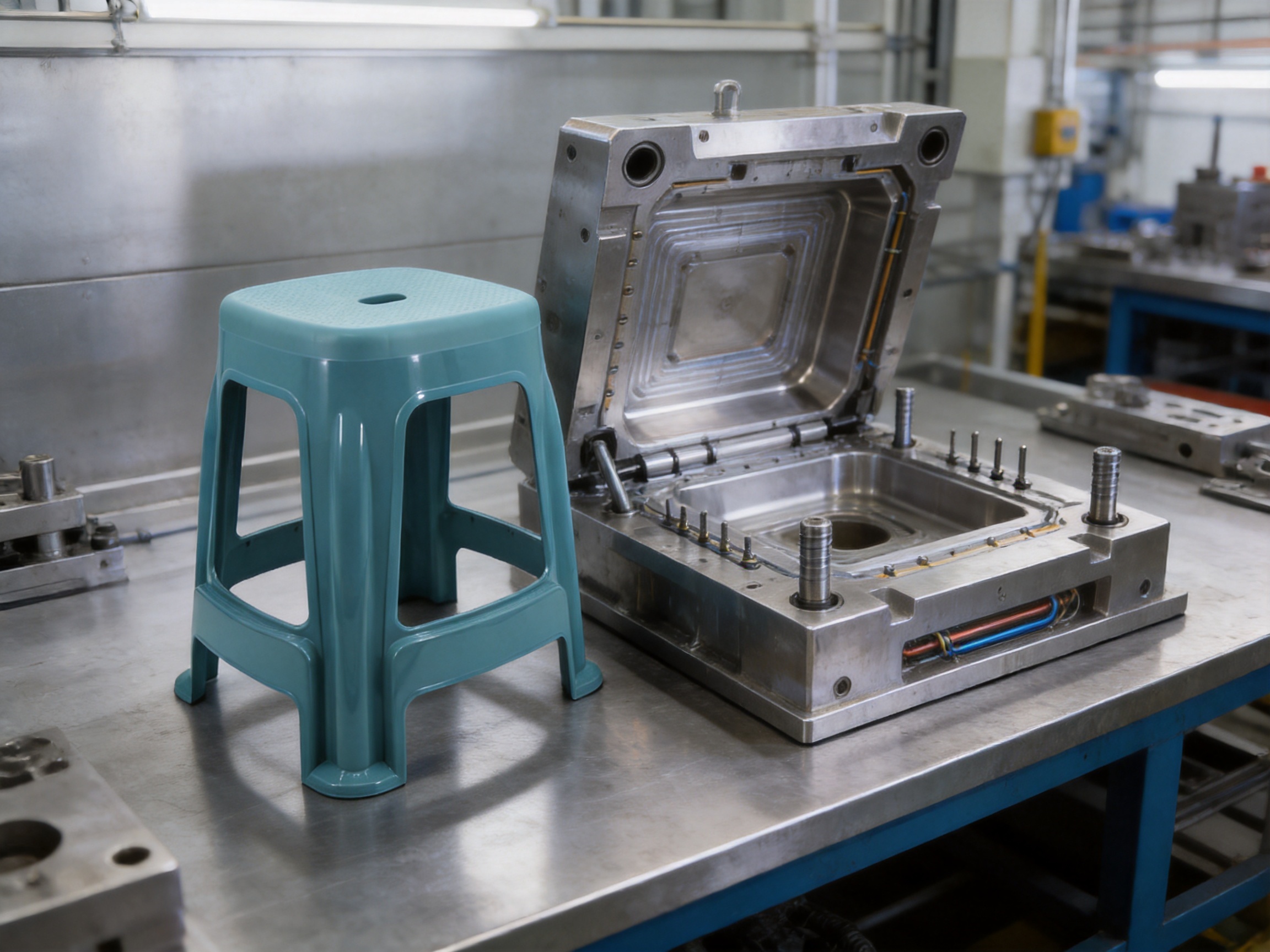
Advanced Manufacturing Capabilities
Experienced Mold Engineering
Chenghui Mould was founded in 1994 and has more than 30 years of experience in injection mold design and manufacturing. This background supports a practical understanding of daily-use plastic products, where the tooling must be attractive, functional, durable, and suitable for cost-sensitive mass production.
Experience is valuable because many mold problems are related to the interaction between product design and manufacturing conditions. A feature that appears simple on a drawing may create a difficult filling pattern, an ejection problem, a cooling imbalance, or a high-risk area for wear. Experienced engineers can identify these risks earlier and suggest changes that improve the mold’s overall performance.
The engineering process can include design analysis, draft evaluation, parting-line planning, gate selection, cooling layout, ejection review, steel selection, and manufacturability assessment. These steps help reduce avoidable changes after machining begins.
In-House Production Workshop
Chenghui Mould operates its own production workshop, allowing the company to coordinate design, machining, assembly, testing, and quality control within an integrated manufacturing environment. In-house production can improve communication between departments and make it easier to respond to technical issues during the project.
The company operates 104 advanced processing machines and professional injection molding machines for mold testing. This equipment base supports a broad range of manufacturing activities, including precision machining, component production, mold fitting, surface treatment preparation, assembly, and trial molding.
Keeping key operations within one organized workshop can also improve production traceability. Engineering changes, machining results, assembly conditions, and trial feedback can be reviewed together. This is particularly useful when a mold requires adjustments to improve part appearance, filling balance, ejection behavior, or dimensional performance.
Precision Machining and Component Control
Precision machining is fundamental to mold quality. The cavity and core must match the approved product geometry, while inserts, slides, lifters, ejectors, guide components, and cooling channels must work together accurately. Small errors in alignment or surface preparation can become visible defects on the finished stool.
Modern processing equipment helps create accurate mold components, but equipment alone is not enough. Manufacturing quality also depends on programming, workholding, tool selection, process sequencing, measurement, and operator skill. Chenghui Mould combines advanced processing equipment with standardized procedures and professional personnel to control these stages.
After machining, components must be inspected and fitted correctly. Proper fitting helps reduce flash, mismatch, premature wear, and uneven movement. It also supports smoother mold opening and closing, which can improve operational stability on the customer’s injection molding machine.
Professional Mold Trial Procedures
Mold trials are an essential part of the manufacturing process. A mold may appear complete after assembly, but trial molding provides practical information that cannot be obtained from machining inspection alone. During a trial, the team can evaluate filling, packing, cooling, ejection, product dimensions, surface quality, and cycle behavior.
Trial results help determine whether the mold is ready for delivery or requires refinement. Possible adjustments may involve gate conditions, venting, ejection timing, cooling flow, polishing, texture correction, or minor dimensional changes. Conducting these checks before shipment gives the customer greater confidence in the tooling.
Trial molding can also help establish initial processing guidance. The customer may receive information related to suitable material, approximate molding conditions, product inspection points, and recommended operating considerations. Final parameters should always be confirmed on the customer’s own machine because equipment, resin batches, ambient conditions, and production objectives can vary.
Standardized Quality Management
A mold is a long-term production asset, so quality management must cover more than final appearance. It should include material verification, component inspection, machining accuracy, assembly condition, movement checks, trial results, and documentation. Standardized processes reduce the risk of inconsistent work between projects.
Quality management also supports communication with overseas customers. When inspection records, trial samples, drawings, and technical information are organized clearly, customers can review the project more efficiently. This is important for buyers that must coordinate mold approval with product development, purchasing, quality, and production teams.
Chenghui Mould’s manufacturing approach is built around precision, integrity, customer commitment, and continuous improvement. These principles are especially relevant to custom tooling, where every project may involve different product shapes, materials, production volumes, and inspection requirements.
Design Considerations for a High-Performance Stool Mold
Product Geometry and Draft Angles
Draft angles help the molded stool release from the cavity and core without unnecessary friction or damage. The correct draft depends on the surface texture, depth, material, shrinkage, and product geometry. Textured surfaces generally require more draft than polished surfaces because the texture can increase resistance during ejection.
Draft should be reviewed across the entire part, including the seat, legs, underside ribs, recesses, handles, and stacking features. Insufficient draft may cause drag marks, scuffing, deformation, or difficult ejection. Excessive draft may alter the intended appearance or functional dimensions. A balanced design review helps protect both product quality and mold performance.
Wall Thickness and Rib Design
Uniform wall thickness is desirable because large variations can lead to uneven cooling, sink marks, warpage, and internal stress. However, a stool often requires ribs or reinforced areas to achieve sufficient stiffness. The challenge is to add structural support without creating excessively thick sections.
Ribs should generally be designed with suitable thickness, height, spacing, and connection geometry. Their arrangement can influence filling and cooling, so they must be reviewed alongside the gate and runner system. Properly designed ribs can help reduce material usage while maintaining structural performance.
The final wall and rib dimensions should be determined through product engineering, material analysis, and practical testing. The best solution depends on the stool’s size, expected load, resin, mold layout, and target market.
Gate and Runner Arrangement
The gate introduces molten plastic into the cavity, making its position a major factor in filling behavior and surface quality. A suitable gate location can help achieve more balanced filling, reduce weld-line risk in critical areas, and place gate marks where they are less visible or easier to manage.
The runner system must also support stable material flow. For larger stool designs, filling imbalance may produce differences between legs, uneven packing, or distortion. The mold engineer should consider flow length, pressure requirements, gate freeze behavior, and the customer’s intended production process.
Hot runner and cold runner solutions may both be appropriate depending on the product, material, machine, cost target, and maintenance preference. The selected system should be discussed during the engineering stage rather than chosen only after the main mold design is complete.
Venting and Air Management
Air trapped inside the cavity can cause burn marks, short shots, weld-line weakness, or incomplete filling. Proper venting allows displaced air and gases to escape as the plastic fills the cavity. Vent locations should be considered near flow-end areas, deep ribs, corners, and other regions where air may accumulate.
Vents must be designed carefully. They should be effective enough to release air but controlled enough to avoid excessive flash. Venting may be supported by parting-line vents, ejector clearances, vent inserts, or other suitable methods. The final approach depends on the product structure and molding conditions.
Cooling and Warpage Control
Cooling is one of the most important factors affecting cycle time and dimensional stability. A stool mold has multiple legs, structural ribs, and broad surfaces that may cool at different rates. If heat is not removed evenly, the product may warp or develop dimensional differences between sections.
Cooling channels should be positioned to support the major heat zones while preserving mold strength. The design may include separate circuits for different regions, allowing the operator to manage cooling more effectively. Water flow, temperature control, channel cleanliness, and connection design also influence real-world performance.
Warpage control begins with product design and continues through mold construction and process adjustment. Balanced filling, uniform wall design, appropriate packing, effective cooling, and controlled ejection all contribute to a more stable result.
Ejection and Part Protection
The ejection system must remove the stool without damaging visible surfaces or deforming functional areas. Ejector pin positions should be selected according to the underside structure, rib layout, and expected release force. If a stool has deep legs or recessed features, special ejector solutions may be needed.
Balanced ejection is important because uneven force can cause tilting, stress, or sticking. The system should also be easy to inspect and maintain. Wear on ejector components can eventually affect movement and product quality, so accessible maintenance design can reduce service difficulty.
Advantages Compared with Basic or Low-Cost Tooling
Low-cost molds may appear attractive during the purchasing stage, but the initial quotation does not always represent the total cost of ownership. Tooling that requires frequent adjustment, produces high scrap, or wears quickly may create additional expenses throughout production.
Plastic Stool Mold 007 is positioned around a more comprehensive value proposition. The emphasis is on accurate engineering, controlled machining, practical testing, and support for long-term production. This approach can help customers reduce the operational risks associated with inconsistent tooling.
Compared with basic molds, professionally engineered tooling can offer better alignment, more controlled surfaces, more stable ejection, and improved compatibility with the customer’s production process. It may also provide more flexibility for customized design details, branding, texture, and product development.
Another advantage is communication. A supplier with experience in export mold projects can help customers identify design risks before manufacturing begins. Early technical discussion can prevent expensive changes later, especially when the mold is intended for a specific machine, material, or production target.
| Comparison Point | Basic Low-Cost Tooling | Professionally Engineered Stool Mold |
|---|---|---|
| Initial design review | May be limited to basic geometry confirmation. | Can include draft, structure, flow, cooling, ejection, and manufacturability review. |
| Production consistency | May vary depending on machining and assembly control. | Supported by precision processing, inspection, fitting, and mold trials. |
| Customization | Often limited after the mold structure is finalized. | Can be developed around OEM and ODM requirements. |
| Surface quality | May require more post-processing or manual correction. | Planned through polishing, texturing, parting-line control, and trial evaluation. |
| Long-term operation | May involve greater risk of wear, flash, or repeated adjustment. | Designed with material, component, maintenance, and service-life considerations. |
| Project support | May focus mainly on mold delivery. | Can include design, sampling, testing, inspection, and after-sales support. |
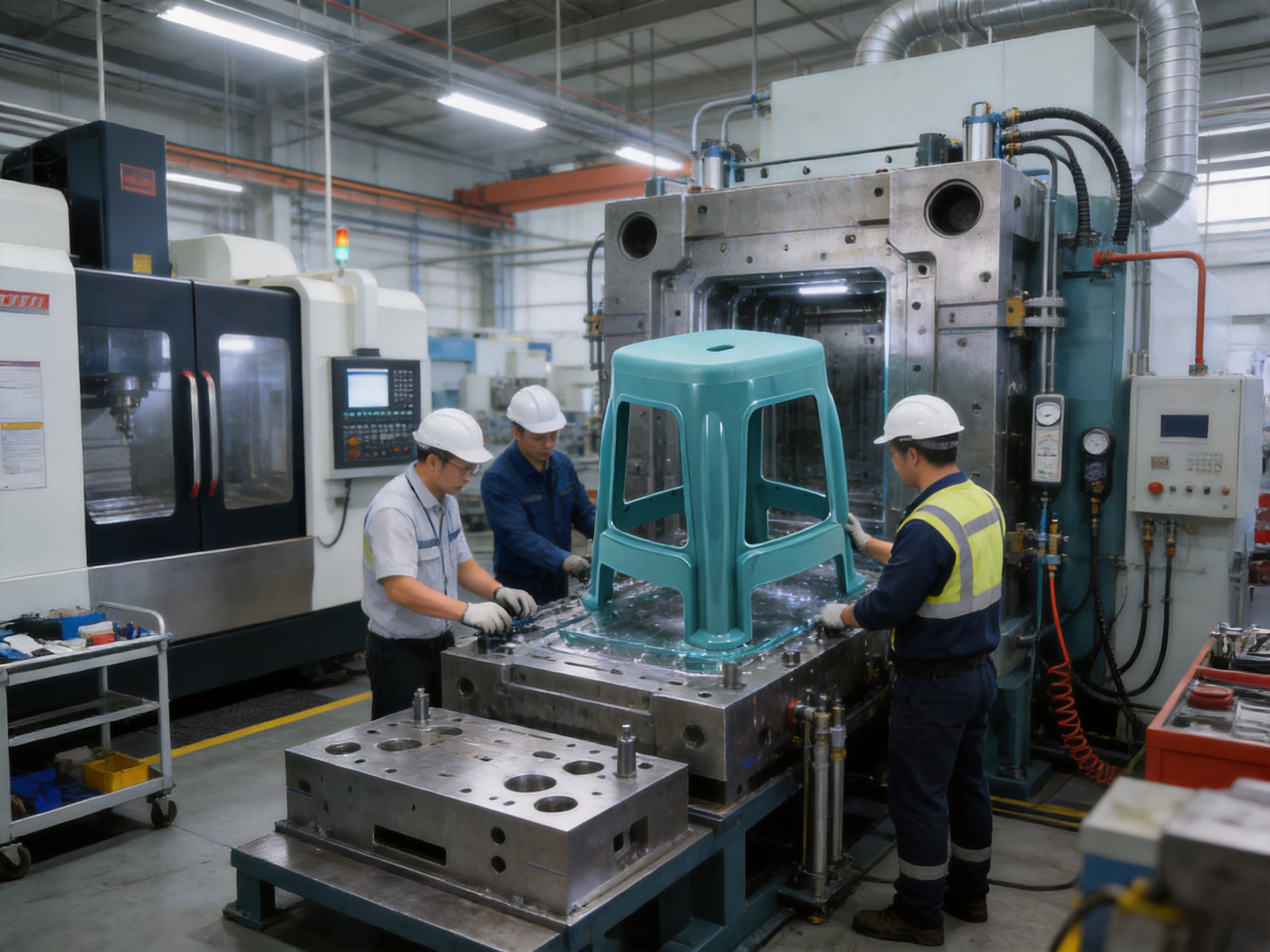
Manufacturing Workflow from Concept to Delivery
Step One: Requirement Collection
The project begins with a detailed understanding of the customer’s product and business objectives. Important information may include product drawings, three-dimensional files, reference samples, target material, annual output, injection machine model, expected cycle time, surface requirements, color plan, packaging method, and destination market.
Customers should also identify special requirements such as logo placement, stacking function, anti-slip feet, handle openings, reinforced areas, or regulatory considerations. Clear requirements at the beginning help the engineering team develop a more suitable mold proposal.
Step Two: Product and Mold Design Review
After receiving the technical information, the mold team reviews product geometry and identifies potential manufacturing risks. This may include checking draft angles, wall thickness, ribs, parting lines, gate locations, ejector positions, cooling space, and mold opening direction.
If changes are recommended, the supplier can explain the reason and expected benefit. For example, a small change to a rib transition may improve filling and reduce stress. A revised parting line may make flash control easier. A modified gate location may improve appearance or reduce weld-line risk.
Step Three: Mold Design and Approval
Once the product direction is confirmed, the mold structure is developed in greater detail. The design includes the cavity and core, mold base, runner or hot runner system, cooling circuits, ejection system, guide components, inserts, slides, lifters, and other necessary mechanisms.
Design approval is an important control point. Customers can review the proposed mold arrangement and confirm that it matches the product concept and production plan. Changes are generally easier and more economical at this stage than after major machining has been completed.
Step Four: Steel Preparation and Machining
Suitable mold steel and component materials are selected according to the production volume, resin characteristics, surface requirements, and expected service conditions. The components are then processed using precision equipment and controlled manufacturing procedures.
Machining may involve roughing, semi-finishing, finishing, drilling, electrical discharge machining, wire cutting, grinding, polishing, and texture preparation. The exact sequence depends on the mold structure and the required accuracy.
Step Five: Assembly and Fitting
After machining, mold components are inspected and assembled. The fitting stage ensures that the cavity, core, inserts, slides, ejectors, guides, and other moving parts operate correctly together. Alignment, shutoff areas, parting surfaces, and movement clearances are checked carefully.
Good fitting reduces the risk of flash and mismatch while helping the mold open and close smoothly. It also supports more reliable operation during repeated injection cycles.
Step Six: Trial Molding and Adjustment
The completed mold is tested on an injection molding machine. Trial samples are examined for filling, appearance, dimensions, ejection, warpage, weld lines, gate marks, and other quality conditions. If improvements are needed, the mold can be adjusted and tested again.
This process allows the manufacturer to verify the relationship between the mold and the selected material. It also provides a practical opportunity to optimize process settings and identify any issue that was not apparent during design review.
Step Seven: Final Inspection and Delivery
Before delivery, the mold is checked for appearance, movement, component condition, trial results, and documentation. The customer may receive samples, inspection information, mold drawings, maintenance recommendations, and other technical materials according to the project agreement.
Clear packaging and shipment preparation are also important because molds are heavy precision tools. Proper protection helps reduce the risk of corrosion, impact, contamination, or movement during transportation.
Production Benefits for Different Buyers
For Household Product Brands
Household brands often need stools that combine attractive design, reasonable pricing, and dependable everyday performance. A custom mold allows the brand to develop a distinctive product shape instead of competing only through price. Surface texture, color combinations, logo details, and ergonomic features can support stronger product recognition.
A stable mold also helps the brand maintain consistent quality across multiple production orders. This is valuable when products are distributed through retail stores, e-commerce channels, or regional wholesalers.
For Wholesalers and Distributors
Wholesalers and distributors usually need products that are easy to sell, stack, package, transport, and replenish. A stool mold can be developed with attention to stackability, packaging dimensions, product weight, and visual appeal. These factors may influence warehouse efficiency and shipping cost as well as the final selling price.
Reliable tooling reduces the risk of receiving products with inconsistent dimensions or visible defects. This supports smoother purchasing decisions and fewer quality disputes between suppliers and distribution partners.
For Commercial and Institutional Buyers
Commercial users may require stools for restaurants, schools, workshops, public venues, cleaning areas, or service environments. These applications can involve frequent use and repeated handling. The mold can be engineered to support reinforced structures, easy-clean surfaces, stable feet, and suitable dimensions for the intended environment.
Product requirements should be confirmed through application testing. Mold quality is important, but the final stool’s performance also depends on resin selection, wall design, processing conditions, and product validation.
For Industrial Product Manufacturers
Industrial customers may use plastic stools in factories, warehouses, laboratories, utility areas, or maintenance locations. They may prioritize strength, chemical resistance, dimensional stability, or specialized functional features. A custom tooling project allows these requirements to be discussed before production begins.
Chenghui Mould’s broader experience with industrial and household products supports the development of tooling for different types of plastic products. This cross-category experience can be useful when a stool shares design principles with storage products, furniture components, bins, or other molded items.
Quality, Maintenance, and Service Life
Even a well-manufactured mold requires proper maintenance. Routine cleaning, lubrication, inspection, and corrosion prevention help preserve performance. The customer should establish a maintenance schedule based on production volume, resin type, cycle conditions, and environmental factors.
After production, plastic residue should be removed from appropriate areas, and the mold should be protected before storage. Cooling channels should be monitored for blockage or scale when water quality may create deposits. Ejector systems, slides, guides, and other moving components should be inspected for wear or abnormal resistance.
Unexpected product changes should also be reviewed carefully. A new resin grade, different color masterbatch, altered machine setting, or higher production speed may affect filling, cooling, and wear. Process changes should be validated rather than introduced without technical review.
Chenghui Mould provides after-sales support as part of its custom mold service. Customers can communicate production concerns and seek technical assistance when adjustments or maintenance decisions are required. Effective support is especially valuable for overseas buyers that need a reliable manufacturing partner rather than a one-time tooling transaction.
Global Supply and Project Support
Chenghui Mould exports molds to customers in the Middle East, Europe, America, Africa, Southeast Asia, and other regions. International mold projects require more than manufacturing capability. They also require clear technical communication, organized documentation, suitable packaging, shipment coordination, and an understanding of different customer expectations.
The company supports projects through the stages of concept development, drawing review, sample production, machining, assembly, mold trial, quality inspection, delivery, and after-sales communication. This integrated service can simplify coordination for customers that do not have a local engineering team near the mold factory.
For international buyers, it is useful to prepare a complete project brief before requesting a quotation. Product files, material information, expected production quantity, machine specifications, surface requirements, and quality standards can help the supplier provide a more accurate proposal. It is also helpful to define the approval process, sample requirements, inspection method, and shipment documentation in advance.
How to Start a Plastic Stool Mold Project
The first step is to define the product purpose. Buyers should identify where the stool will be used, the expected load, required service life, environmental conditions, target price, and sales market. These factors influence material, geometry, reinforcement, texture, and mold structure.
The second step is to prepare product information. A three-dimensional model is ideal, but sketches, samples, photographs, and dimensional drawings can also support an initial discussion. If the product is still under development, the customer should explain which features are fixed and which features remain open to engineering improvement.
The third step is to discuss production conditions. The customer should provide available machine information, expected annual output, preferred runner system, material choice, color requirements, automation plans, and quality standards. A mold designed without production context may not deliver the expected result on the customer’s equipment.
The fourth step is to review the mold proposal. Customers should examine parting lines, gate marks, ejector marks, cooling connections, maintenance access, steel selection, trial requirements, and estimated production schedule. Open technical communication at this stage can prevent misunderstanding later.
The final step is to approve samples and documentation before mass production. Trial samples should be checked for appearance, dimensions, function, weight, stacking behavior, and other agreed requirements. Once the mold and sample are approved, the customer can move forward with production planning and supply-chain preparation.
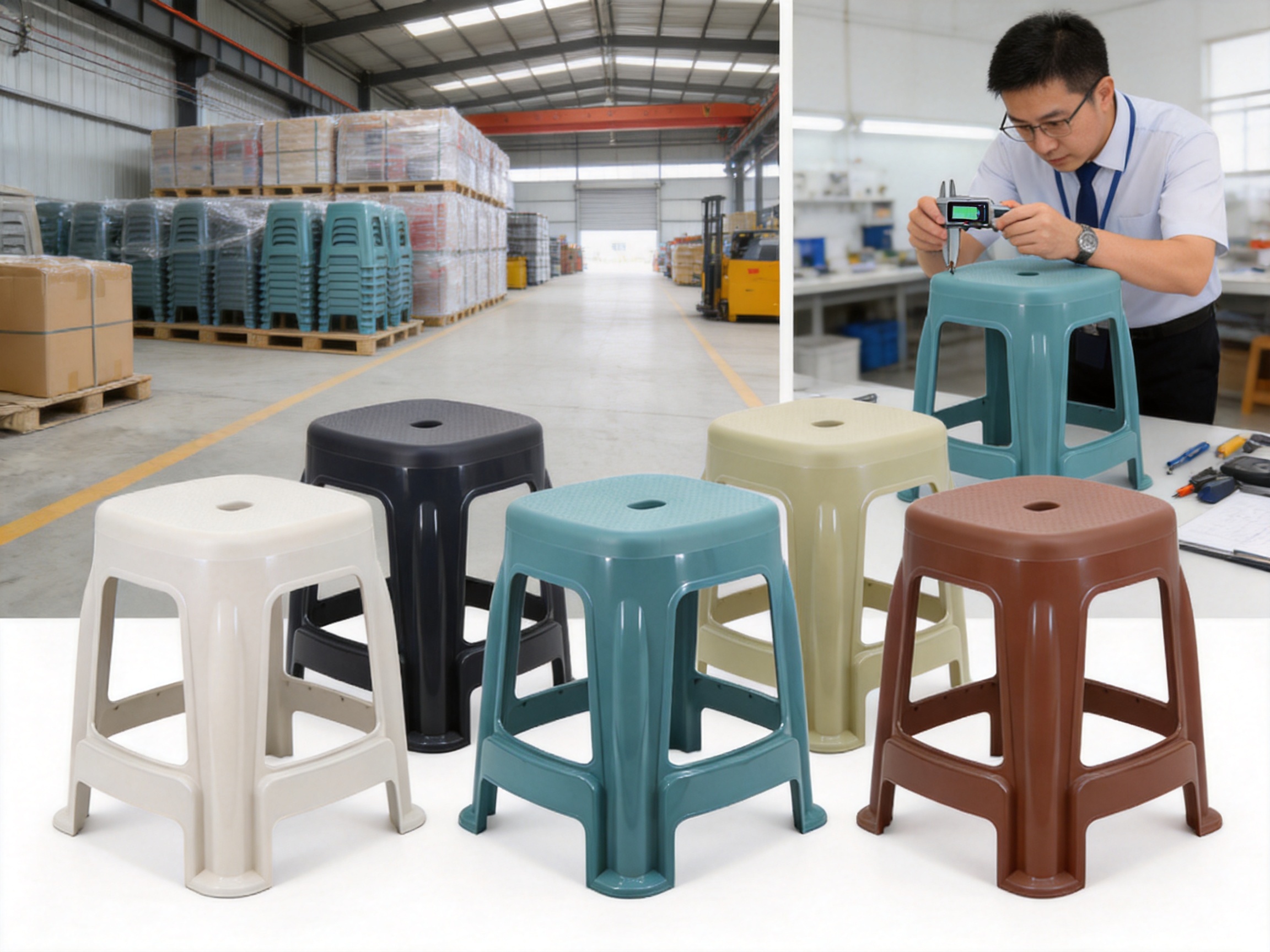
Frequently Asked Questions
What type of product is Plastic Stool Mold 007 designed to manufacture?
Plastic Stool Mold 007 is designed for injection-molded plastic stools. The final product structure can be customized according to the required size, shape, material, surface finish, branding, strength, and functional details.
Can the mold be customized for OEM and ODM projects?
Yes. The mold can be developed for OEM and ODM projects. Customers may provide drawings, three-dimensional files, samples, sketches, or product concepts. The engineering team can review the design and develop the tooling around the customer’s product and production requirements.
Which plastic materials can be used?
Potential materials include polypropylene, high-density polyethylene, acrylonitrile butadiene styrene, and other suitable thermoplastics. The correct material depends on the stool’s strength, impact, appearance, environmental, and cost requirements. Material selection should be confirmed during the engineering review.
How does the mold help improve production efficiency?
The mold can support production efficiency through appropriate gate design, balanced filling, effective cooling, controlled ejection, accurate alignment, and trial-based adjustment. Actual cycle time depends on the product, material, machine, process settings, and production conditions.
Can the stool include a logo or special texture?
Yes. Logo details, engraved or embossed features, polished areas, and surface textures can be considered during mold design. The preferred method depends on the desired appearance, product material, production volume, and future design requirements.
Why is mold trial molding important?
Trial molding verifies how the completed mold performs with plastic material. It helps evaluate filling, cooling, ejection, dimensions, surface appearance, warpage, gate marks, and other conditions. Trial results allow necessary adjustments before the mold is delivered for mass production.
What information should a buyer provide when requesting a quotation?
Useful information includes product drawings or three-dimensional files, stool dimensions, material, annual output, injection machine information, surface requirements, logo details, color plan, quality standards, and destination country. The more complete the information, the more accurately the tooling proposal can be prepared.
Does the supplier provide after-sales support?
Chenghui Mould provides after-sales support for its custom mold projects. Customers can communicate production questions, maintenance concerns, and potential mold adjustments after delivery.
How can customers protect the mold during long-term use?
Customers should follow a regular maintenance plan covering cleaning, lubrication, corrosion prevention, cooling-channel inspection, ejector inspection, guide-component inspection, and storage protection. Maintenance frequency should match production volume and operating conditions.
What makes this mold different from a low-cost basic mold?
The main difference is the emphasis on engineering review, precision machining, standardized manufacturing, professional assembly, trial molding, quality inspection, customization, and after-sales support. These factors can help reduce production instability and improve the long-term value of the tooling.
Conclusion
Plastic Stool Mold 007 provides a professional foundation for manufacturers seeking dependable tooling for high-volume stool production. Its value comes from the combination of product-focused design, customizable engineering, precision manufacturing, controlled assembly, practical mold trials, and ongoing technical support.
The mold can help customers address the key requirements of modern plastic stool production: structural reliability, attractive appearance, dimensional consistency, efficient molding, manageable maintenance, and adaptable product development. It can be configured for different materials, market positions, production volumes, and design concepts.
Zhejiang Chenghui Mould Co., Ltd. brings more than 30 years of experience, an in-house production workshop, 104 advanced processing machines, professional mold testing equipment, and an annual production capacity of more than 1,500 mold sets. These capabilities support a complete workflow from concept and drawing review to machining, assembly, trial molding, inspection, delivery, and after-sales service.
For brands, wholesalers, distributors, and industrial manufacturers, selecting the right mold supplier is an important production decision. A well-designed stool mold can influence product quality, operating cost, delivery stability, and long-term competitiveness. With a focus on precision, reliability, and customer commitment, Plastic Stool Mold 007 is a practical solution for companies developing durable and market-ready plastic stool products.
References
1. General principles of plastic injection mold design, including draft, parting-line planning, runner balance, cooling, venting, and ejection.
2. Standard engineering practices for thermoplastic product development and injection molding process validation.
3. Technical guidance on mold steel selection, component wear, corrosion prevention, and routine tooling maintenance.
4. Industry practices for dimensional inspection, surface-quality evaluation, trial molding, and mass-production approval.
5. Product and company information supplied for Plastic Stool Mold 007 and Zhejiang Chenghui Mould Co., Ltd.