
 Français
 Español
 عربى
Introduction
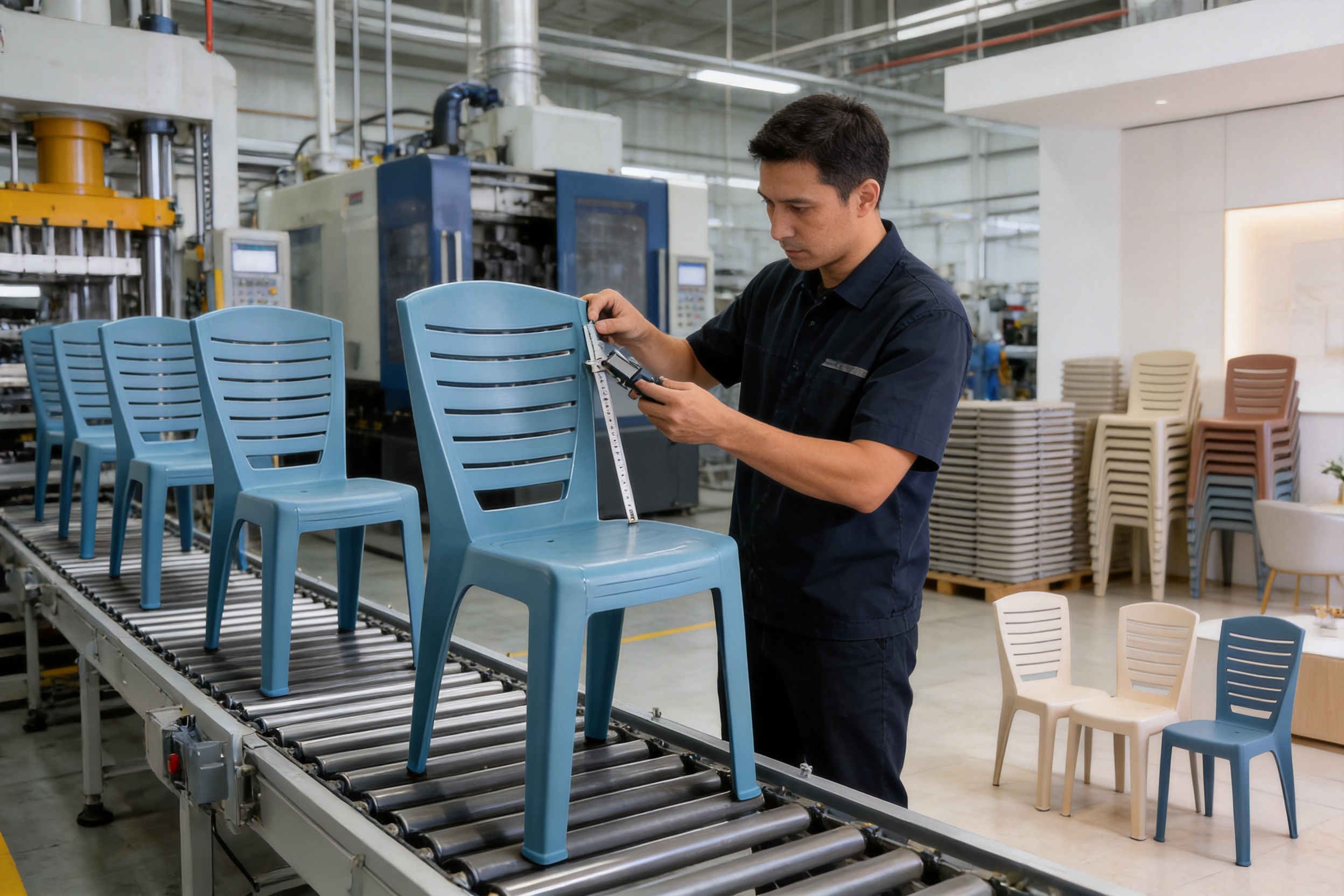
Plastic chairs are widely used in homes, schools, offices, restaurants, outdoor venues, public facilities, event spaces, and commercial environments. Their popularity comes from a combination of affordability, light weight, easy maintenance, corrosion resistance, and flexible design. However, producing a plastic chair that is comfortable, stable, attractive, and durable requires more than a suitable plastic material and an injection molding machine. The quality of the injection mold has a direct influence on the chair’s appearance, dimensional accuracy, structural performance, cycle time, production cost, and long-term consistency.
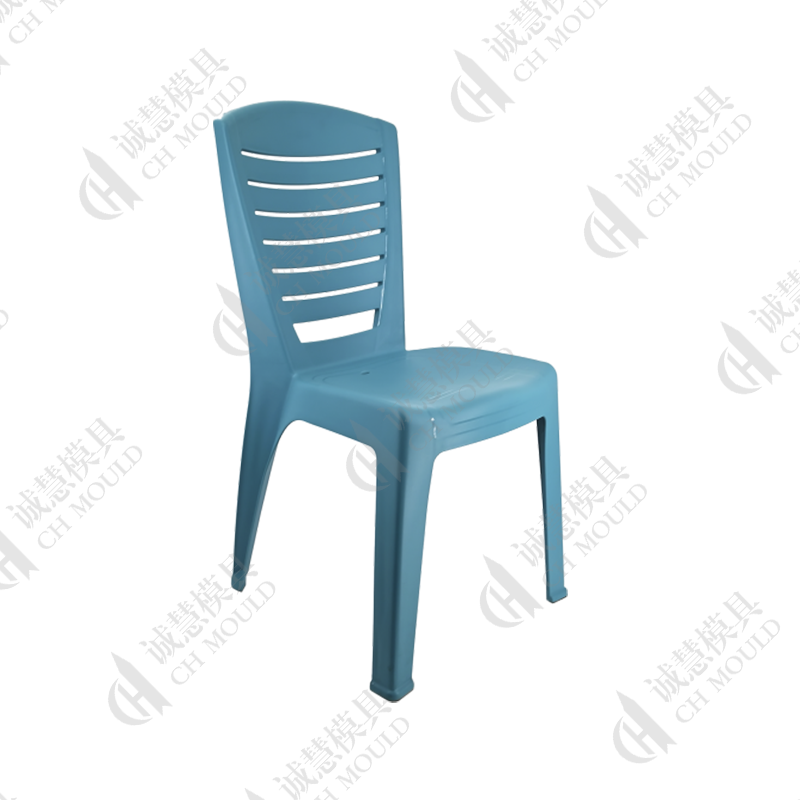
The CHENGHUI Plastic Chair Mold 005 is a plastic chair injection mold developed for manufacturers that require dependable tooling for mass production. It is designed to support the production of molded plastic chair components with consistent dimensions, controlled surface quality, efficient demolding, and reliable repeatability. As part of a professional mold manufacturing program, the product reflects the importance of engineering analysis, precision machining, careful assembly, mold testing, and quality inspection.
For chair manufacturers, wholesalers, distributors, and product developers, selecting the right mold supplier is a strategic decision. A mold is a long-term production asset rather than a short-term purchase. A well-designed tool can support stable production for many years, while an improperly engineered mold may create flash, warpage, sink marks, short shots, uneven wall thickness, difficult ejection, or frequent maintenance problems. The purpose of the Plastic Chair Mold 005 is to provide a practical and production-oriented tooling solution for customers seeking dependable plastic chair manufacturing.
This article explains the product’s main value, its manufacturing considerations, the advantages of professional mold production, the production process used by Zhejiang Chenghui Mould Co., Ltd., and the factors that buyers should evaluate before ordering a chair mold.
CHENGHUI Plastic Chair Mold 005
Product Overview
The Plastic Chair Mold 005 belongs to the category of plastic chair injection molds. It is intended for the injection molding of chair parts or complete chair structures, depending on the final product design and mold configuration selected by the customer. The mold can be customized to support different chair styles, dimensions, surface textures, material requirements, and production targets.
Chair molds are often more demanding than simple household product molds because a chair must combine visual appeal with mechanical strength. A chair may need to support a person’s weight, resist impact, tolerate repeated handling, and remain stable under different temperatures and environmental conditions. The mold therefore has to reproduce structural ribs, support areas, curved surfaces, edges, legs, backrest sections, and decorative details accurately.
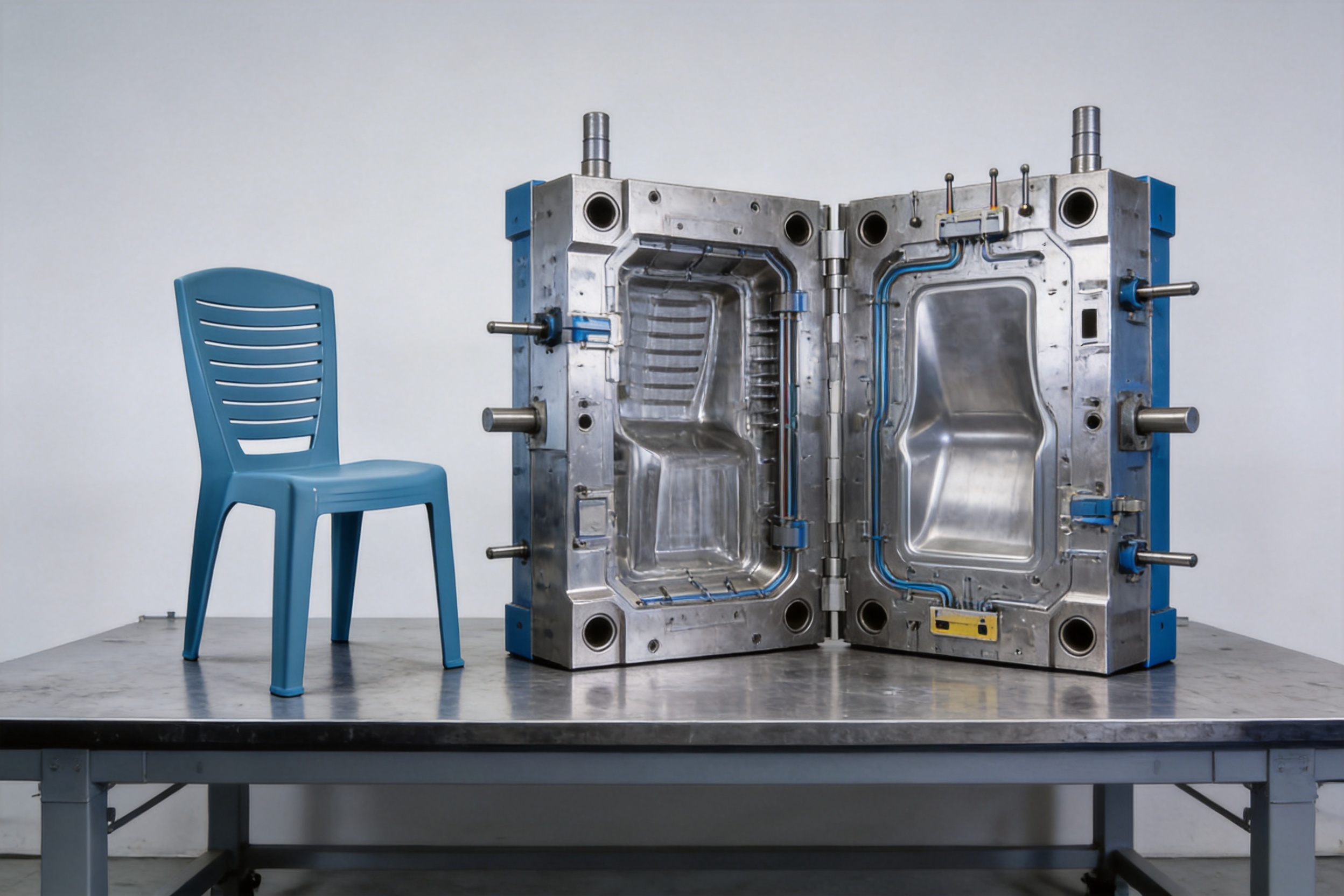
The Plastic Chair Mold 005 can be developed around the customer’s chair drawing, three-dimensional model, sample, or product concept. During the design stage, the mold engineering team reviews the product geometry and identifies areas that may affect filling, cooling, ejection, parting, and mold service life. This review helps transform a chair design into a manufacturable injection-molded product.
Depending on the chair design and production requirements, the mold may be engineered with features such as balanced filling channels, suitable gate locations, cooling circuits, guide systems, replaceable wear components, ejector arrangements, polished surfaces, textured surfaces, and reinforced mold bases. The final configuration should always be determined by the product structure, selected plastic resin, injection machine, expected output, and customer quality requirements.
Typical Product Applications
Plastic chair molds may be used to manufacture dining chairs, school chairs, office guest chairs, restaurant chairs, garden chairs, stacking chairs, banquet chairs, children’s chairs, waiting-room chairs, and other molded seating products. The same general tooling principles may also apply to stools, chair shells, armrests, backrests, seat panels, and related furniture components.
Because different markets require different styles, the mold should be adaptable to the customer’s intended sales channel. A chair designed for household use may prioritize comfort and appearance, while a commercial chair may focus on stacking, impact resistance, easy cleaning, and high production volume. Outdoor products may require weather-resistant materials and surfaces that reduce dirt accumulation. The mold design must accommodate these priorities from the beginning.
Design Customization
Customization is essential in chair mold manufacturing. A buyer may specify the chair’s overall height, seat width, backrest angle, leg geometry, armrest structure, surface texture, logo position, color requirements, stackability, and packaging method. The mold manufacturer must consider each of these requirements when creating the tool.
Customization may also include the number of cavities, mold steel selection, hot runner or cold runner configuration, ejection method, cooling layout, mold life target, surface finish, and compatibility with the customer’s injection molding machine. These choices influence initial investment, cycle time, maintenance needs, production capacity, and unit cost.
Why Mold Quality Matters in Plastic Chair Production
A chair mold has a direct relationship with the finished product. Even when the same resin and injection machine are used, two molds can produce noticeably different results. Differences in cooling efficiency, venting, parting line control, gate design, and cavity precision can affect the appearance and performance of every chair produced.
One of the most important requirements is dimensional consistency. Chair components must fit together correctly when the product is assembled. If the seat, backrest, armrest, or legs vary beyond acceptable tolerances, assembly may become difficult or the chair may become unstable. Consistent dimensions also help automatic or semi-automatic production lines operate more smoothly.
Surface appearance is another important factor. Consumers often judge furniture products by their visible finish. Flow marks, weld lines, burn marks, excessive gate traces, scratches, and uneven textures can reduce perceived value. A carefully designed and polished mold helps create a more attractive surface and can reduce the amount of secondary finishing required.
Structural performance is equally important. Many chairs contain reinforcing ribs, gussets, hollow sections, or curved support areas. These features must be filled properly and cooled evenly. If the mold does not support balanced filling and uniform cooling, the finished chair may show warpage, distortion, internal stress, or weak weld areas.
Production efficiency also depends on mold construction. A mold that opens smoothly, ejects the part reliably, and cools effectively can reduce cycle times and improve machine utilization. In high-volume chair production, even a small reduction in cycle time can create meaningful annual savings.
| Evaluation Area | Effect on Chair Production | Value of Professional Mold Engineering |
|---|---|---|
| Dimensional accuracy | Supports correct assembly and product stability | Precision machining and inspection help maintain repeatable dimensions |
| Surface quality | Improves appearance and perceived product value | Controlled polishing, texturing, venting, and parting surfaces reduce defects |
| Cooling performance | Influences cycle time, warpage, and dimensional stability | Purpose-designed cooling channels support more uniform heat removal |
| Ejection reliability | Reduces sticking, deformation, and production interruptions | Engineered ejector systems support smooth and controlled release |
| Service life | Affects long-term production cost and maintenance frequency | Appropriate steel, heat treatment, and replaceable components improve durability |
| Production consistency | Helps maintain quality across large orders | Testing, inspection, and standardized processes reduce variation |
Key Advantages of the Plastic Chair Mold 005
Purpose-Built for Furniture Production
The Plastic Chair Mold 005 is focused on the specific requirements of plastic furniture production. Chair parts are not simple flat household components. They often include large curved surfaces, complex transitions, long flow paths, thin and thick sections, integrated ribs, and areas that must remain comfortable to the user. A tool designed with these factors in mind can provide better results than a basic mold approach.
Purpose-built engineering helps control how the plastic flows through the cavity. The gate position, runner layout, and filling direction can be evaluated according to the chair’s geometry. This reduces the risk of unbalanced filling and helps place visible flow marks or weld lines in less noticeable areas where possible.
Support for High-Volume Production
Plastic chairs are commonly produced in large quantities, particularly for institutional projects, hospitality businesses, furniture distributors, and retail supply chains. A production mold must therefore be capable of repeated opening, closing, filling, cooling, and ejection cycles.
The Plastic Chair Mold 005 is manufactured within a production system that emphasizes precision, process control, and mold testing. These factors help the tool meet the demands of regular manufacturing. The customer can also discuss expected output and mold life targets with the engineering team so that the mold structure, materials, and components are selected appropriately.
Improved Dimensional Repeatability
Repeatability is one of the main advantages of working with an experienced mold manufacturer. Precision machining equipment and formal inspection procedures help ensure that cavity surfaces, inserts, slides, guide components, and other critical elements are produced according to approved drawings and models.
Better repeatability can reduce variation among chair batches. This is especially important for customers supplying chain stores, government projects, hospitality groups, or international distributors, where product consistency is often a purchasing requirement.
Flexible Surface Treatment
Plastic chairs may require a high-gloss surface, a fine matte finish, a leather-like texture, a wood-inspired pattern, or another decorative treatment. The mold surface can be polished, etched, textured, or processed according to the product design.
A suitable surface treatment can improve both appearance and functionality. Textured areas may help reduce visible scratches and fingerprints, while smooth surfaces may support easier cleaning. The appropriate finish should be selected according to the resin, product use, brand positioning, and customer expectations.
Efficient Demolding
Large chair components may have deep surfaces, curved areas, undercuts, or features that make demolding difficult. A properly designed ejection system helps release the molded part without excessive stress or deformation.
Possible ejection methods include ejector pins, ejector plates, sleeves, lifters, air assistance, or other mechanisms selected according to the product shape. The goal is to distribute ejection force appropriately and avoid visible marks in critical areas. Smooth demolding also helps reduce production stoppages and operator intervention.
Maintenance-Oriented Construction
Maintenance should be considered before the mold is manufactured. Components exposed to wear, such as guide elements, inserts, slides, or shut-off surfaces, may be designed for inspection, adjustment, replacement, or repair. This approach can help reduce long-term downtime.
Clear mold documentation, component identification, and standardized assembly procedures further support maintenance. When the customer has access to appropriate drawings and service information, routine cleaning, lubrication, inspection, and troubleshooting can be completed more efficiently.
Advanced Manufacturing Strengths
More Than Thirty Years of Industry Experience
Zhejiang Chenghui Mould Co., Ltd., also known as Chenghui Mould or CH Mould, was founded in 1994. With more than 30 years of experience, the company has developed expertise in designing and manufacturing injection molds for daily necessities, household products, storage products, furniture, and industrial items.
This experience is relevant to chair mold production because many practical tooling decisions are learned through repeated product development and production support. Mold performance depends not only on software or machinery but also on the ability to recognize potential problems before they become expensive manufacturing issues.
An experienced mold team can assess draft angles, wall thickness transitions, rib proportions, parting lines, ejection risks, gate positions, cooling requirements, and likely deformation areas during the design stage. Early problem identification helps reduce later modifications and can shorten the path from design approval to stable production.
Own Production Workshop
The company operates its own production workshop rather than depending entirely on external processing. This provides greater control over machining schedules, assembly procedures, quality checkpoints, and communication between engineering and production personnel.
Internal production can also improve project coordination. When design, machining, assembly, trial molding, and inspection are connected within one manufacturing organization, feedback can move more quickly between departments. If a trial reveals a filling problem, ejection issue, or parting-line concern, the team can assess the issue and make the required adjustment through an organized process.
Advanced Processing Equipment
Chenghui Mould operates 104 advanced processing machines. A substantial equipment base supports different stages of mold manufacturing, including rough machining, precision milling, drilling, grinding, electrical discharge machining, wire cutting, polishing, and related operations.
Different mold features require different processing methods. Large mold bases may require stable heavy-duty machining, while detailed cavity features may require high-precision milling or electrical discharge machining. Small inserts, deep ribs, narrow slots, and complex corner areas may benefit from specialized equipment and carefully controlled processes.
Equipment alone does not guarantee quality, but appropriate equipment combined with skilled operators, standardized procedures, and inspection creates a stronger manufacturing foundation. The company’s production capacity allows it to manage tooling projects for different product categories while maintaining an organized workflow.
Professional Injection Molding Machines for Mold Testing
Mold testing is a critical part of the manufacturing process. A mold should not be considered complete merely because its mechanical components have been assembled. It must be tested under practical molding conditions to confirm filling, cooling, ejection, parting, and overall operation.
Chenghui Mould has professional injection molding machines for mold trials. During testing, the team can evaluate whether the cavity fills properly, whether the mold opens and closes smoothly, whether the part ejects without damage, and whether the molded sample meets the approved design requirements.
Trial molding can also reveal issues related to short shots, flash, sink marks, weld lines, burn marks, warpage, shrinkage, gate appearance, or cycle time. The results provide useful information for mold correction and process recommendations before shipment to the customer.
Annual Production Capacity
The company has an annual production capacity of more than 1,500 mold sets. This capacity demonstrates an established manufacturing system capable of handling multiple projects and product categories. It also indicates that the company has experience organizing production schedules, sourcing standard components, managing assembly resources, and completing inspection and delivery procedures.
For buyers, production capacity can be valuable when several related molds are required. A customer may need a chair mold together with molds for stools, tables, armrests, storage boxes, or other household products. Working with a supplier that understands a broader product range may simplify project communication and supplier management.
Engineering Process for Chair Mold Development
1. Product Requirement Review
The development process begins with an understanding of the customer’s product requirements. The customer may provide a two-dimensional drawing, three-dimensional data, physical sample, reference image, or early product concept. The mold manufacturer reviews the information and confirms critical details such as chair dimensions, material, expected output, injection machine, surface finish, mold life, cavity number, and quality standards.
At this stage, it is important to identify whether the chair will be produced as one complete molded piece or as several components assembled after molding. The answer affects mold size, parting strategy, ejection design, machine requirements, packaging, and assembly planning.
2. Product Design for Manufacturability
Before mold construction, the chair design should be reviewed for injection molding suitability. Draft angles are evaluated to ensure that the product can be released from the cavity. Wall thickness should be considered carefully because significant variations may lead to sink marks, uneven cooling, or internal stress.
Ribs and reinforcement features must be designed to provide strength without creating excessive thickness. Corners may require appropriate radii to improve plastic flow and reduce stress concentration. The mold engineer also examines undercuts, logo details, parting lines, and areas where ejector marks may appear.
3. Mold Flow and Filling Analysis
For larger or more complex chair components, mold flow analysis may be used to study filling behavior, pressure requirements, weld lines, air traps, cooling balance, and possible warpage. The analysis can support decisions about gate placement, runner layout, injection direction, and venting.
While simulation is not a replacement for practical experience, it can help identify potential problems earlier. Combining digital analysis with engineering judgment and trial molding provides a more complete approach to tooling development.
4. Mold Structure Design
After the product design is confirmed, the mold structure is developed. This includes the mold base, cavity and core, inserts, sliders, lifters, guide components, ejector system, cooling channels, runner system, gates, and safety features.
The design must also consider the available injection machine. Mold dimensions, opening stroke, clamping force, injection volume, ejector position, and nozzle alignment should be compatible with the customer’s equipment. Confirming machine compatibility early helps avoid installation or production problems later.
5. Material and Component Selection
Mold steel and standard components should be selected according to production volume, resin characteristics, surface requirements, and expected service life. Higher production targets may justify more durable steel grades, hardened inserts, replaceable wear plates, or other reinforced components.
Plastic resin is also important. Common chair materials may include polypropylene, high-impact polystyrene, acrylonitrile butadiene styrene, nylon, or other engineering and general-purpose plastics, depending on the product requirements. Each material has different flow, shrinkage, cooling, and molding characteristics.
6. Precision Machining
Once the design and material decisions are approved, the mold components enter the machining stage. Rough machining removes excess material efficiently, while semi-finishing and finishing operations create the required cavity geometry.
Complex details may require electrical discharge machining or wire cutting. Grinding and polishing are used for suitable surfaces, and textured areas may be processed through controlled etching or other approved techniques. Dimensional checks are performed at relevant stages to identify deviations before final assembly.
7. Mold Assembly
During assembly, the machined components are fitted together and checked for alignment, movement, contact, and clearance. Guide pillars and bushes must operate smoothly. Sliders and lifters must move without interference. Parting surfaces must close correctly, and shut-off areas must provide reliable sealing.
The assembly team also installs the cooling system, ejector components, runner system, sensors or connectors where applicable, and other standard parts. Careful assembly is essential because even accurately machined components can perform poorly if they are incorrectly fitted or adjusted.
8. Trial Molding
Trial molding confirms how the completed mold performs under injection conditions. The team examines the molded samples and records observations related to filling, appearance, dimensions, ejection, cooling, cycle time, and mold operation.
If the sample reveals a problem, the engineering and production teams identify the likely cause. A correction may involve polishing, vent adjustment, gate modification, dimensional change, ejector adjustment, cooling improvement, or process parameter optimization. Several trial stages may be required for demanding products.
9. Final Inspection and Delivery
Before delivery, the mold is cleaned, inspected, lubricated where necessary, and prepared for shipment. The customer may receive trial samples, inspection information, mold drawings, spare parts, operating instructions, and maintenance recommendations according to the agreed project scope.
Proper packaging is also important because molds are heavy precision tools. Protection against impact, moisture, corrosion, and contamination helps preserve the mold condition during transportation and storage.
Production Performance Considerations
Cycle Time
Cycle time includes mold closing, filling, packing, cooling, opening, ejection, and any necessary handling. Cooling often represents a significant portion of the cycle, particularly for large chair components. A well-planned cooling circuit can remove heat more evenly and help reduce unnecessary cooling time.
Reducing cycle time must not compromise part quality. If the part is ejected before it has sufficient rigidity, deformation may occur. The best result comes from balancing cooling efficiency, mold temperature, injection parameters, material behavior, and product requirements.
Warpage Control
Warpage can be caused by uneven shrinkage, inconsistent wall thickness, unbalanced filling, non-uniform cooling, residual stress, or unsuitable processing conditions. Chairs with large flat or curved surfaces may be particularly sensitive to distortion.
Mold engineers can help reduce warpage through balanced gate placement, suitable cooling-channel layouts, improved part geometry, controlled ejection, and proper support during molding. The injection molding process must also be optimized through appropriate pressure, speed, temperature, and cooling settings.
Venting
Air trapped inside the cavity can create burn marks, short shots, weld-line weakness, or filling problems. Proper venting allows air and gases to escape as the molten plastic advances through the cavity.
Vents should be positioned according to the filling pattern and product geometry. They must be deep enough to provide effective gas release but controlled carefully to avoid flash. Vent maintenance is also important because contamination can reduce venting performance over time.
Gate and Runner Design
The gate is the point where molten plastic enters the product cavity. Its position influences filling balance, weld lines, packing, gate marks, and stress distribution. For a chair component, the gate should be selected with consideration for both product appearance and structural performance.
The runner system delivers plastic from the machine nozzle to the gate. A balanced runner layout helps distribute material consistently, especially in multi-cavity molds. Depending on the project, the customer and mold manufacturer may select a cold runner, hot runner, valve gate, or another configuration.
Surface and Cosmetic Requirements
A chair’s appearance can influence its market success. The mold surface should match the approved product sample or design specification. Cosmetic areas may require special attention to polishing direction, texture continuity, parting lines, ejector positions, and gate placement.
It is useful for the customer to approve a surface standard before mold completion. Clear approval reduces misunderstandings and gives the mold manufacturer a defined reference for polishing, texturing, and sample evaluation.
Advantages Compared with Less Specialized Mold Suppliers
When comparing mold suppliers, buyers should evaluate more than the initial quotation. The lowest purchase price may not result in the lowest total cost if the mold requires repeated corrections, produces inconsistent parts, or has a short service life.
A supplier with experience in household and industrial injection molds can offer practical advantages. Such a supplier is more likely to understand large molded surfaces, common furniture resins, high-volume production, visual requirements, and the balance between mold investment and production efficiency.
Chenghui Mould’s experience with tables, chairs, furniture, storage boxes, turnover boxes, laundry baskets, buckets, storage racks, trash cans, and other daily-use products supports a broad understanding of injection tooling. This product knowledge can be useful when customers require related molds or need advice about design adjustments.
Another advantage is the combination of design, machining, assembly, testing, inspection, and after-sales support within one service system. When these activities are coordinated, responsibility is clearer and communication can be more efficient than in a fragmented supply chain.
| Comparison Factor | Basic or Fragmented Supplier Model | Integrated Professional Mold Manufacturing Model |
|---|---|---|
| Engineering communication | May involve multiple independent parties | Design and production teams can coordinate directly |
| Process control | Quality may vary between subcontractors | Internal workflow supports standardized checkpoints |
| Trial molding | May be limited or arranged separately | Professional injection machines support in-house testing |
| Correction management | Responsibility can be unclear | Engineering and manufacturing teams can review issues together |
| Product range knowledge | May focus on a narrow mold category | Experience covers household, furniture, storage, and industrial products |
| After-sales support | May focus mainly on delivery | Can include troubleshooting, maintenance guidance, and production support |
These advantages do not eliminate the need for customer participation. The buyer must still provide accurate product data, approve designs and samples promptly, communicate quality standards, and use the mold according to recommended procedures. Successful tooling is normally the result of cooperation between the mold factory and the product manufacturer.
Materials and Product Compatibility
The selection of plastic material should be made according to chair performance, appearance, cost, processing conditions, and market requirements. Polypropylene is commonly selected for many household and furniture products because of its light weight, chemical resistance, and practical balance of cost and performance. Other materials may be selected when higher impact resistance, stiffness, surface quality, or temperature performance is required.
The mold design should reflect the selected resin’s shrinkage and flow characteristics. Different materials may require different gate sizes, cooling conditions, venting strategies, and processing parameters. If the customer changes the resin after the mold has been completed, the mold may require process adjustments or, in some cases, engineering modifications.
Colorants, recycled content, glass fibers, flame retardants, and other additives can also affect molding behavior. Filled materials may increase wear on the mold and may require more durable tooling surfaces. Recycled material can vary in flow and moisture content, making process control especially important.
Before final mold approval, the customer should communicate the intended material grade and any regulatory or performance requirements. This information allows the engineering team to make more appropriate decisions about the mold and trial process.
Quality Control and Inspection
Incoming Material Control
Quality control begins with the materials and components used to manufacture the mold. Steel certificates, standard components, electrical parts, cooling fittings, and other items should be checked according to the project requirements. Proper material control helps ensure that the mold is built from suitable and traceable components.
Machining Inspection
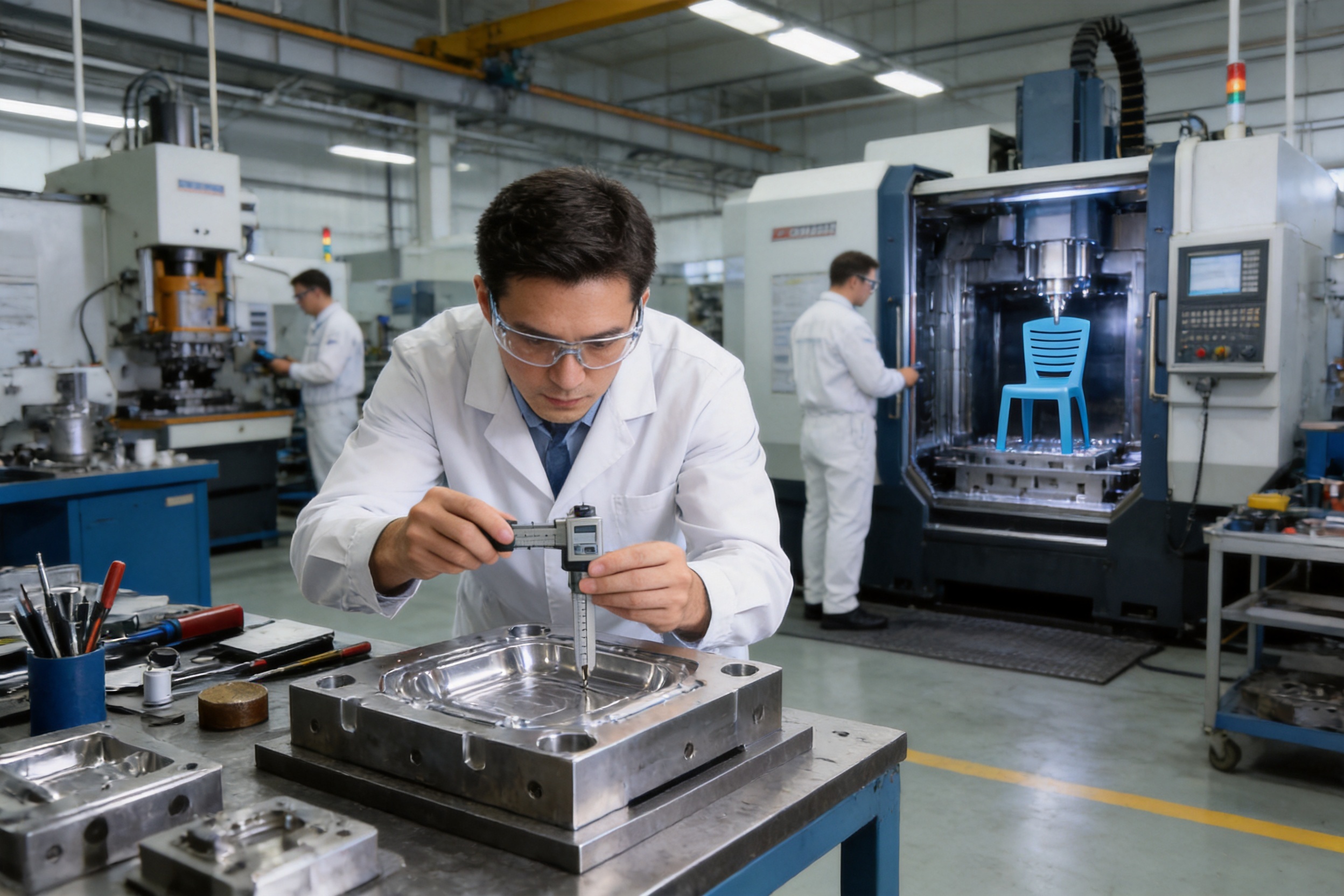
Critical dimensions should be inspected during machining rather than only after the mold has been assembled. Early inspection can identify errors while correction remains easier and less expensive. Measurement methods may include coordinate measuring equipment, precision gauges, tool presetting, visual checks, and process documentation.
Assembly Inspection
Assembly inspection focuses on alignment, movement, shut-off conditions, ejector operation, cooling connections, and overall mold safety. The mold should open and close smoothly, and moving mechanisms should operate without abnormal resistance or interference.
Sample Inspection
Trial samples are inspected for dimensions, appearance, weight, surface texture, gate quality, flash, warpage, and other product requirements. Where necessary, samples can be compared with approved drawings, reference samples, or customer specifications.
Inspection should consider the actual application of the chair. For example, a visual defect in a hidden area may have a different significance from the same defect on a visible backrest. Similarly, a dimensional variation in a non-functional edge may be less critical than variation in a leg or joint area. Quality standards should therefore be defined according to product function and customer expectations.
After-Sales Support and Long-Term Cooperation
A mold supplier’s responsibility should not end when the tool leaves the factory. Installation, commissioning, process adjustment, maintenance, and spare-part support can all influence the customer’s long-term experience.
Chenghui Mould provides customized mold design and manufacturing services covering concept development, drawing review, sample development, machining, assembly, mold trials, quality inspection, and after-sales support. This complete service approach is particularly useful for overseas customers that may need technical assistance after receiving the mold.
After-sales communication may address issues such as ejection marks, cooling leakage, flash, gate wear, surface changes, cycle-time optimization, or replacement of standard components. Clear records of mold structure and maintenance requirements help the customer operate the tool more effectively.
Regular maintenance should include cleaning cavity and core surfaces, checking vents, inspecting guide components, lubricating moving parts, confirming cooling passages, examining ejector pins, and protecting the mold against corrosion during storage. The frequency of maintenance depends on production volume, resin type, mold design, operating conditions, and environmental factors.
How Buyers Can Prepare for a Chair Mold Project
Provide Complete Product Information
Customers should provide the latest product drawings or three-dimensional data and identify which version is approved for mold development. Uncontrolled design changes can create confusion and may lead to additional costs or delays.
Define the Production Target
The customer should estimate annual production volume, expected order size, target cycle time, and desired mold life. These figures influence the cavity number, steel selection, component quality, cooling design, and overall investment.
Confirm the Injection Machine
Information about the customer’s injection molding machine should include clamping force, tie-bar spacing, platen size, maximum mold height, opening stroke, injection volume, nozzle dimensions, and ejector specifications. This information helps ensure that the mold can be installed and operated correctly.
Approve Appearance Standards
Surface finish, texture, color, acceptable weld lines, gate-mark location, parting-line position, and allowable cosmetic defects should be discussed before trial molding. A clear appearance standard makes sample approval more objective.
Discuss Packaging and Logistics
Large chair molds can be heavy and require careful transportation planning. The customer should confirm shipping terms, packaging requirements, export documents, delivery schedule, and any special handling instructions at the beginning of the project.
Commercial Value for Wholesalers and Distributors
Wholesalers and distributors often require stable supply, consistent appearance, competitive pricing, and reliable delivery. A well-engineered chair mold supports these commercial objectives by helping manufacturers maintain consistent production and reduce unexpected interruptions.
When a distributor sells chairs in multiple markets, product consistency becomes especially important. Retail customers may expect every batch to have the same dimensions, color distribution, surface texture, and assembly quality. Mold repeatability contributes directly to this consistency.
A reliable mold can also support product differentiation. By changing surface texture, color, backrest design, leg profile, logo detail, or accessory configuration, manufacturers may develop several product versions for different customer groups. The original mold strategy should be discussed carefully if future variants are expected.
Lower production waste is another commercial advantage. Defective chairs consume resin, machine time, labor, energy, packaging, and transportation resources. Improvements in filling balance, cooling, venting, and ejection can help reduce rejection rates and improve overall material efficiency.
For international buyers, supplier communication and technical support are also important. Chenghui Mould exports molds to the Middle East, Europe, America, Africa, Southeast Asia, and other regions. Experience with international customers can help the company understand different communication practices, documentation requirements, shipping arrangements, and product standards.
Environmental and Efficiency Considerations
Plastic chair production can be made more efficient through appropriate material selection, stable processing, reduced scrap, optimized cycle time, and durable tooling. A mold that supports repeatable production can help manufacturers avoid unnecessary waste caused by dimensional variation or cosmetic defects.
Durable molds also support longer production programs and reduce the need for premature tool replacement. Proper maintenance extends tool service life and helps preserve product quality. Customers should establish procedures for cleaning, lubrication, water-quality management, rust prevention, and storage.
Recycled or partially recycled materials may be considered for certain chair applications, subject to product performance and market regulations. When such materials are used, the molding process may require additional monitoring because material consistency, moisture, contamination, and shrinkage can vary.
Energy efficiency may be improved through shorter stable cycles, effective cooling, suitable machine settings, and reduced rework. Mold design alone cannot determine total energy consumption, but it can create conditions that support more efficient production.
Project Communication and Delivery Workflow
Effective communication is an important part of mold quality. A typical project workflow may include initial inquiry, product data review, quotation, technical discussion, design approval, mold manufacturing, trial molding, sample confirmation, final inspection, shipment, and after-sales support.
At each stage, both parties should maintain clear records. Important documents may include product drawings, mold layout, steel specifications, surface standards, trial reports, inspection reports, packing lists, and maintenance instructions.
Design approval should be treated as a significant milestone. Once the customer approves the mold design, later changes may affect cost, schedule, or tool structure. If a product revision becomes necessary, the impact should be evaluated before machining begins.
Sample approval should also be based on agreed criteria. The customer may assess dimensions, visual appearance, assembly fit, weight, strength, and molding performance. When feedback is specific and documented, corrections can be completed more efficiently.
Frequently Asked Questions
What is the Plastic Chair Mold 005 used for?
The Plastic Chair Mold 005 is used for injection molding plastic chair components or chair structures. The exact product configuration can be customized according to the customer’s drawing, three-dimensional model, sample, material, machine, and production requirements.
Can the mold be customized for different chair designs?
Yes. Chair molds are normally customized because chair dimensions, backrest shapes, leg structures, surface textures, armrests, logos, and functional requirements vary between products. The customer should provide accurate product information so the engineering team can develop the correct cavity, core, parting, ejection, and cooling design.
Which plastic materials can be used?
Many plastic materials may be suitable, including polypropylene and other resins selected according to chair performance, appearance, cost, impact resistance, stiffness, temperature requirements, and regulatory conditions. The selected resin should be confirmed before final mold design because shrinkage and flow behavior affect tooling decisions.
How does mold quality affect chair quality?
Mold quality influences dimensions, surface appearance, warpage, flash, weld lines, ejection marks, cycle time, and production repeatability. A high-quality mold helps the manufacturer produce chairs that are more consistent and easier to assemble while reducing defects and downtime.
Does the company test the mold before delivery?
Chenghui Mould has professional injection molding machines for mold testing. Trial molding allows the team to evaluate filling, cooling, ejection, appearance, dimensions, and mold operation before shipment. Corrections or adjustments may be made when required by the trial results.
What manufacturing equipment is available?
The company operates 104 advanced processing machines for mold manufacturing. These machines support different operations, including machining, drilling, grinding, precision processing, and other processes used to manufacture and finish injection molds.
What is the company’s experience in mold manufacturing?
Zhejiang Chenghui Mould Co., Ltd. was founded in 1994 and has more than 30 years of experience. Its product range includes molds for PET storage products, tables, chairs, furniture, storage boxes, turnover boxes, laundry baskets, buckets, storage racks, trash cans, and other household and industrial products.
Can the mold be designed for high-volume production?
Yes. High-volume production requirements can be considered through cavity configuration, steel selection, cooling design, runner layout, ejection structure, replaceable components, and mold life targets. The expected annual output should be communicated before the mold design is finalized.
How should a chair mold be maintained?
Maintenance generally includes cleaning cavity and core surfaces, checking vents, inspecting ejector pins and moving mechanisms, lubricating suitable components, monitoring cooling channels, protecting steel surfaces from corrosion, and storing the mold in a clean and dry condition. Maintenance frequency should be based on production volume and operating conditions.
Can the supplier support overseas customers?
Chenghui Mould exports its molds to the Middle East, Europe, America, Africa, Southeast Asia, and other regions. The company provides customized mold services and after-sales support for international customers, subject to the agreed project scope and delivery terms.
What information should be included in a mold inquiry?
A useful inquiry should include the product drawing or three-dimensional model, plastic material, annual output, expected mold life, cavity requirement, injection machine information, surface finish, color and texture requirements, target delivery date, and destination. More complete information helps the supplier provide a more accurate technical proposal and quotation.
Conclusion
The Plastic Chair Mold 005 is a production-oriented tooling solution for manufacturers seeking reliable plastic chair injection molding. Its value is connected not only to the mold’s physical structure but also to the engineering, machining, assembly, testing, inspection, and service systems behind it.
Plastic chairs require accurate dimensions, attractive surfaces, effective structural support, smooth demolding, and consistent high-volume production. A professional mold must address these requirements through suitable product design, mold flow planning, cooling, venting, ejection, material selection, and precision manufacturing.
Zhejiang Chenghui Mould Co., Ltd. brings more than three decades of experience, an internal production workshop, 104 advanced processing machines, professional injection molding machines for mold trials, and an annual capacity of more than 1,500 mold sets. Its experience across furniture, household products, storage products, and industrial molds provides a broad foundation for customized chair tooling.
For wholesalers, distributors, furniture manufacturers, and product developers, the most important benefit of a well-engineered chair mold is dependable production. When the mold is designed around the product, machine, material, and market requirements, it can help reduce defects, improve repeatability, support efficient cycles, and create a stronger foundation for long-term manufacturing.
Customers considering a plastic chair mold should evaluate technical capability, quality control, testing resources, communication, maintenance support, and total production value rather than comparing only the initial mold price. With clear requirements and coordinated engineering, the Plastic Chair Mold 005 can serve as a practical foundation for stable and scalable plastic chair production.
References
1. Society of Plastics Engineers, Injection Molding Fundamentals and Processing Principles.
2. International Organization for Standardization, Plastics — Injection Moulding of Test Specimens and Related Quality Considerations.
3. International Organization for Standardization, Plastics — Determination of Shrinkage and Dimensional Behavior.
4. American Society of Mechanical Engineers, Guidelines for Engineering Design and Manufacturing Documentation.
5. Rosato, D. V., Rosato, M. G., and Rosato, D. V., Injection Molding Handbook.
6. Malloy, R. A., Plastic Part Design for Injection Molding.
7. General principles of mold design, polymer processing, cooling optimization, venting, ejection, and quality inspection used in industrial injection molding practice.