
 Français
 Español
 عربى
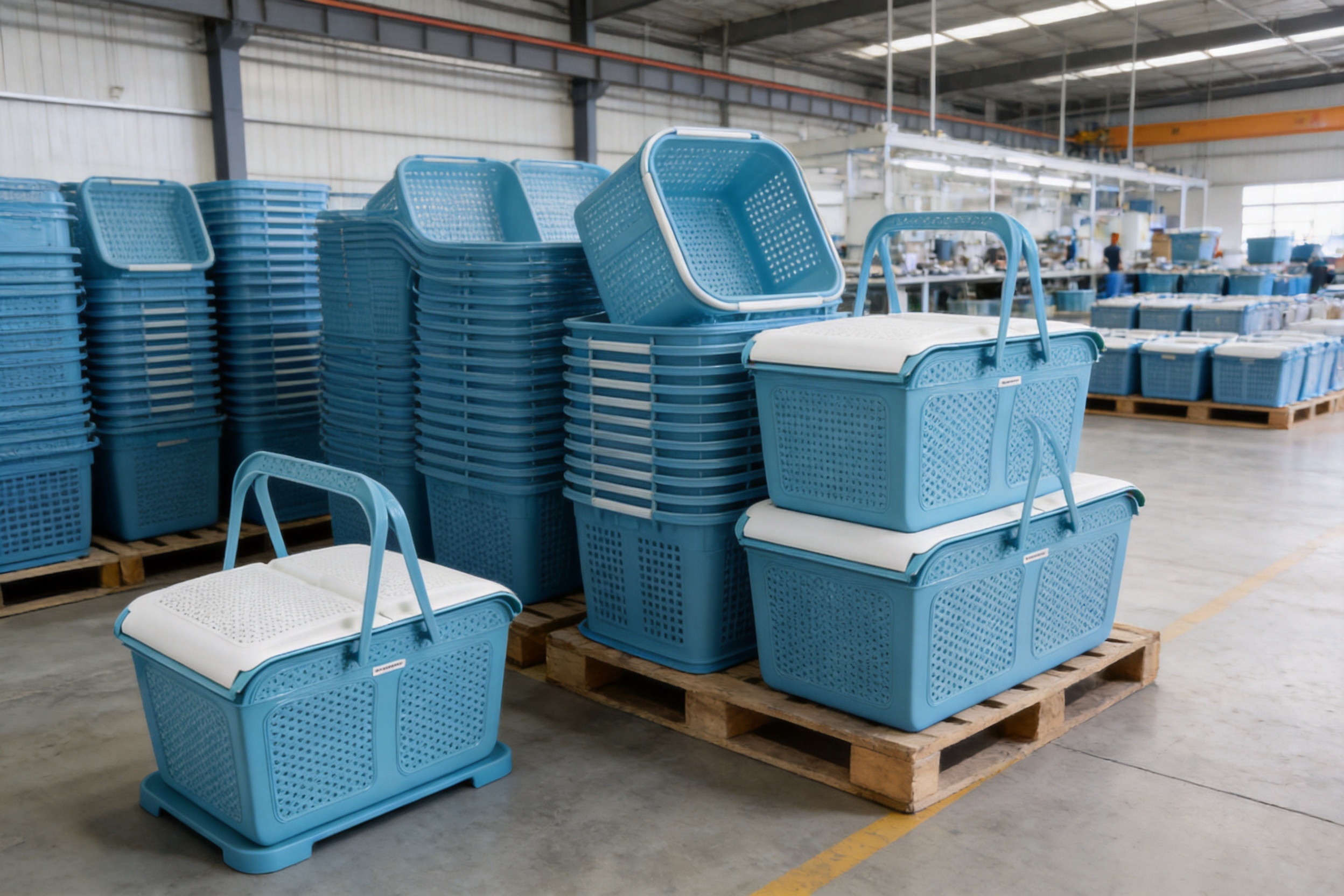
Plastic baskets are essential products in household storage, retail organization, agriculture, logistics, commercial cleaning, and industrial handling. Their simple appearance hides a demanding manufacturing process. A basket must be lightweight, strong, easy to clean, stackable, attractive, and economical to produce. These requirements place significant pressure on the injection mold used to manufacture it. If the mold is poorly designed or inadequately processed, the finished basket may suffer from uneven walls, weak corners, flash, difficult demolding, poor stacking, or inconsistent dimensions.
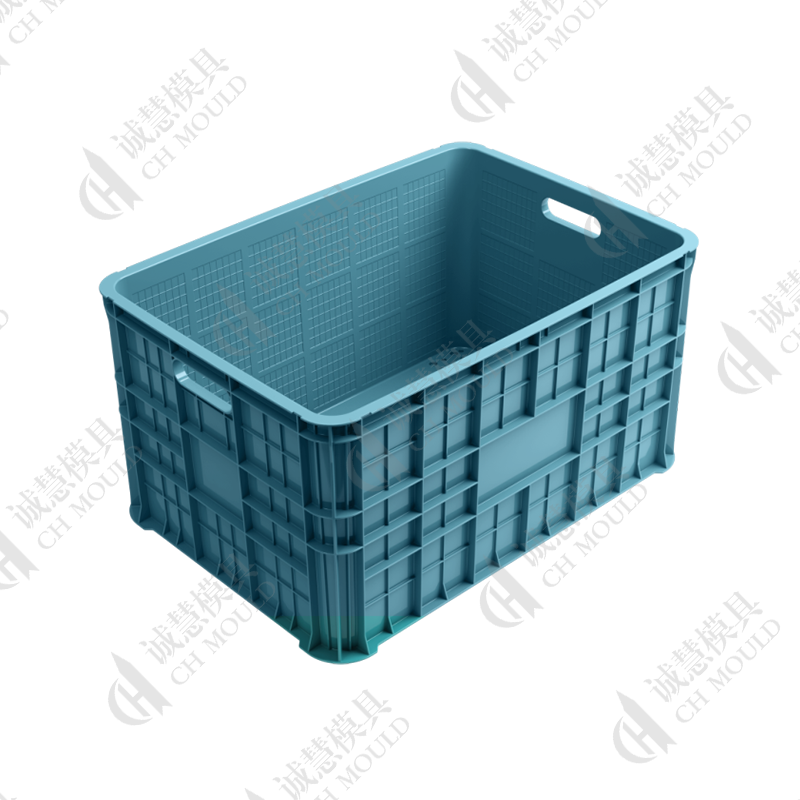
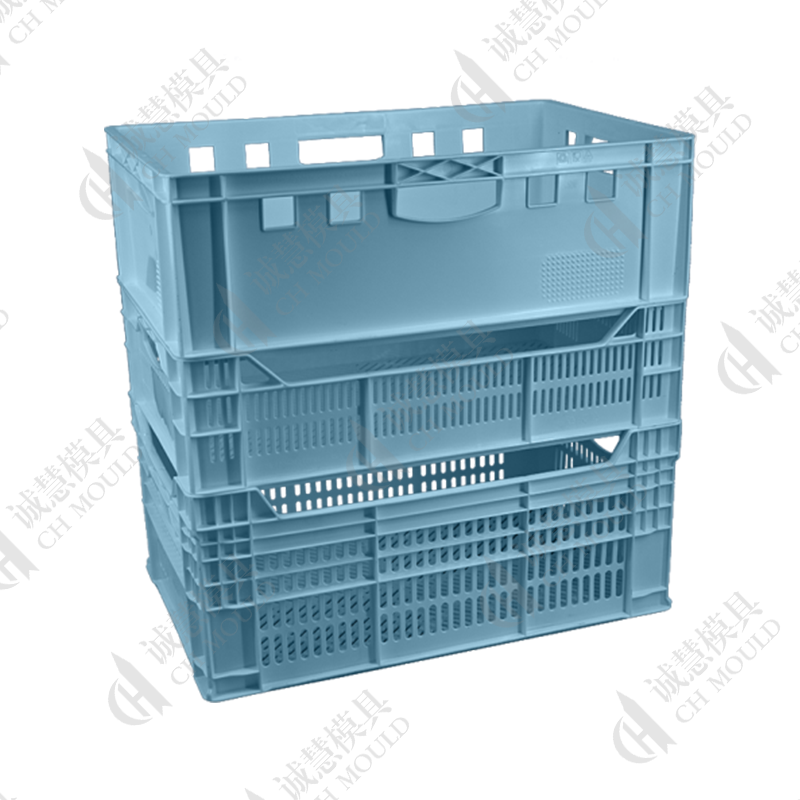
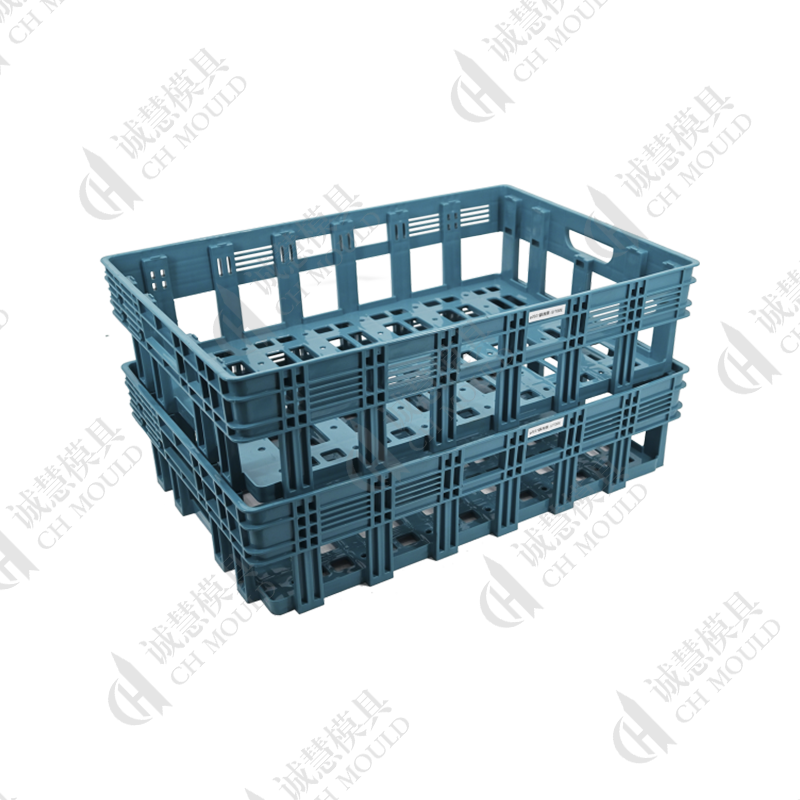
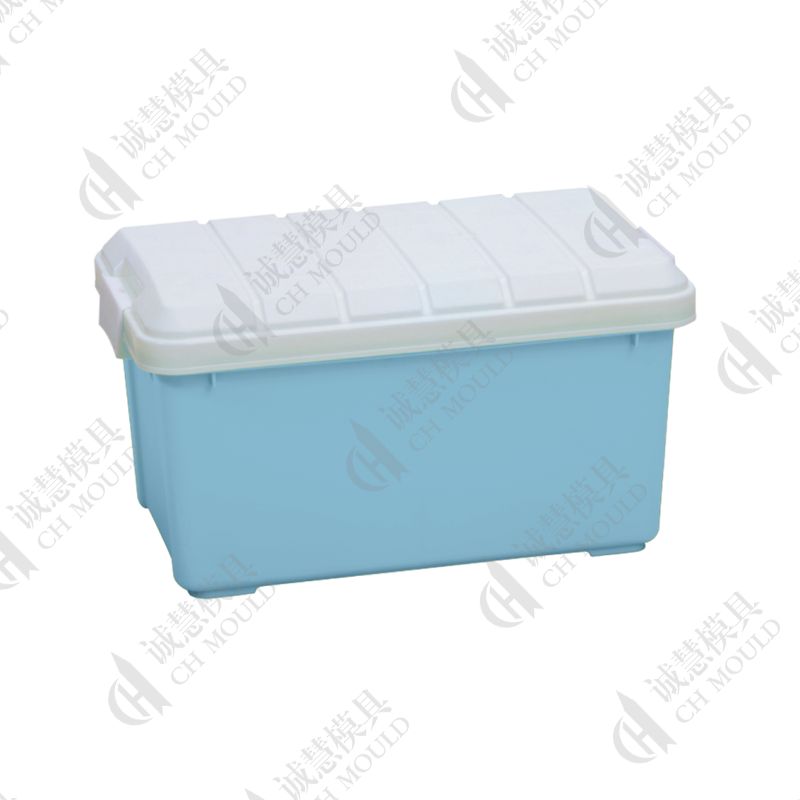
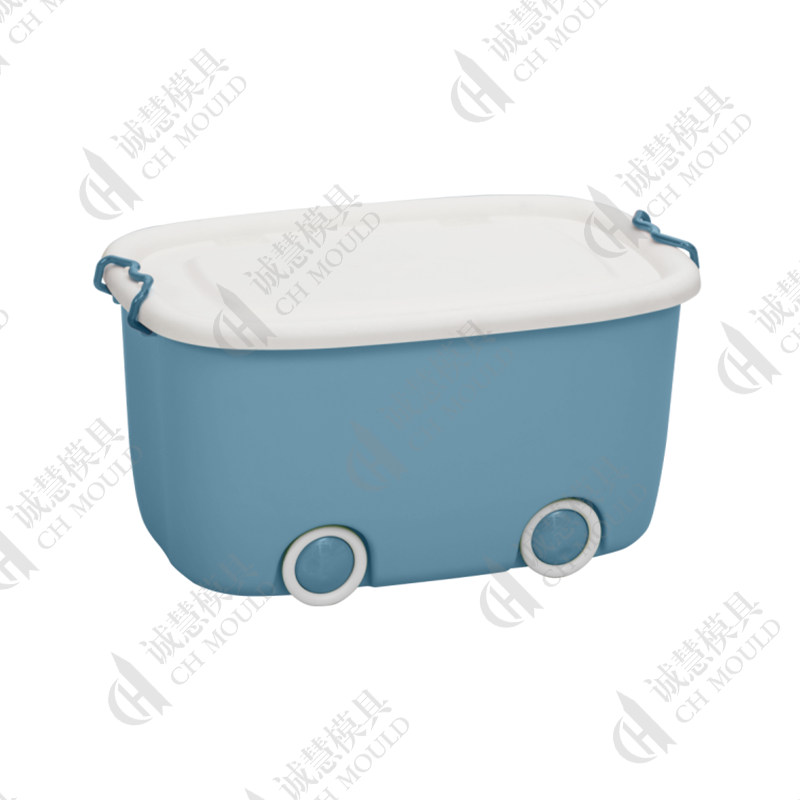
The CHENGHUI Plastic Basket Mold 010 is developed for manufacturers that require dependable tooling for plastic basket production. It belongs to the plastic basket mold category and is suitable for customized injection molding projects involving household baskets, storage baskets, laundry baskets, turnover baskets, and related industrial or logistics containers. Supported by Zhejiang Chenghui Mould Co., Ltd., the mold benefits from more than 30 years of experience in injection mold design and manufacturing.
This article examines the product’s value, the engineering considerations behind a high-performance basket mold, the manufacturing capabilities of Chenghui Mould, and the reasons why professional buyers may select this tooling solution over lower-cost alternatives. It also explains the customization process, quality control methods, mold testing procedures, maintenance requirements, and purchasing considerations for wholesalers, distributors, and injection molding companies.
1. Product Overview
The CHENGHUI Plastic Basket Mold 010 is a custom injection mold solution for producing durable plastic baskets with repeatable quality. Its application is not limited to a single market. Depending on the customer’s product drawings, resin selection, basket dimensions, handle arrangement, perforation pattern, and stacking requirements, the mold can support a wide range of basket designs.
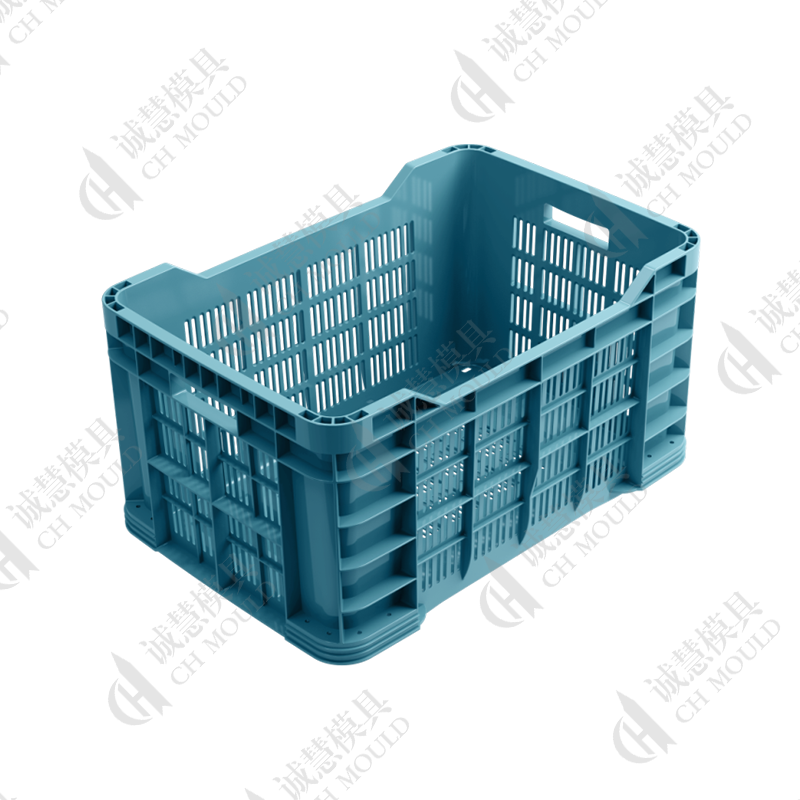
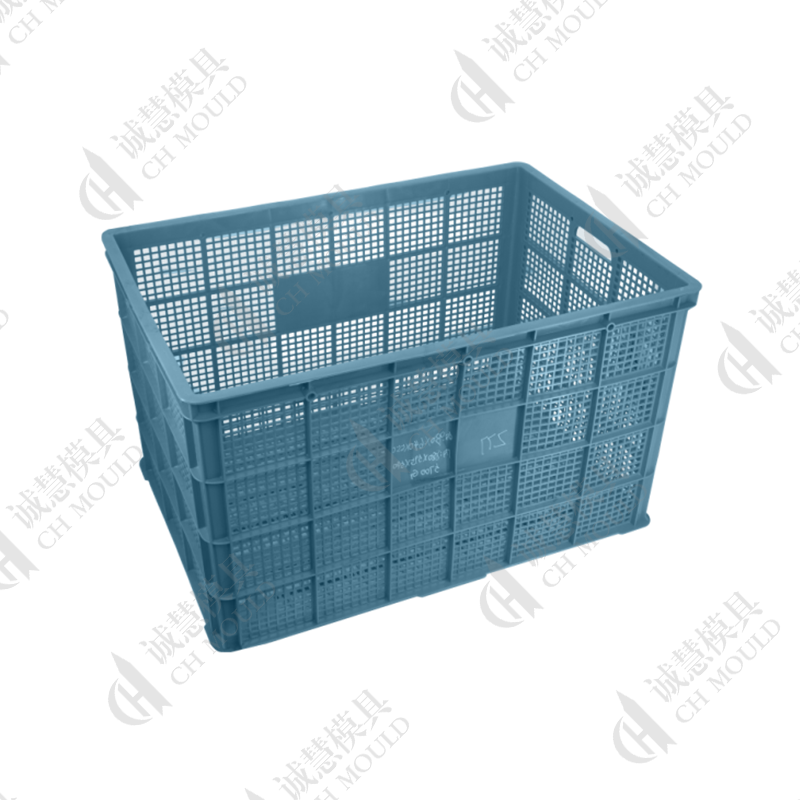
Plastic baskets normally include a combination of open-grid walls, reinforced rims, handles, ribs, feet, corner structures, and stacking features. Each of these elements affects the mold design. Openings must be formed accurately while maintaining sufficient steel around the core and cavity components. Thin wall sections must fill evenly. Long ribs must demold without damage. Handles must remain strong but comfortable to use. The upper rim must be stable because it often carries the load when baskets are stacked or lifted.
For this reason, a plastic basket mold is more than a basic cavity and core assembly. It is a coordinated tooling system that includes product analysis, parting-line planning, gate and runner design, cooling, ejection, venting, mold-base construction, component machining, assembly, trial molding, and final inspection.
The CHENGHUI Plastic Basket Mold 010 is intended for customers seeking a balance between product appearance, structural reliability, production efficiency, and long-term tooling value. It can be developed according to the customer’s product concept or existing technical drawings, making it appropriate for OEM and ODM projects.
2. Why Plastic Basket Mold Quality Matters
A basket is often manufactured in large quantities, which means even a small tooling problem can create substantial losses. A dimensional error of only a small amount may prevent nesting or stacking. A weak handle may generate complaints in retail or commercial use. Excessive flash increases trimming labor and can make the product uncomfortable or unsafe to handle. Uneven cooling can cause warpage, leading to unstable placement on shelves, floors, or pallets.
The mold also influences cycle time. A well-balanced cooling system can shorten the time required for the molded part to reach sufficient rigidity before ejection. Efficient ejection reduces the risk of deformation and supports stable automated or semi-automated production. A properly designed gating system helps maintain consistent filling and reduces visible defects.
Tooling quality also affects material consumption. If a basket is designed with optimized ribs and wall thicknesses, the manufacturer may be able to achieve the required strength without excessive plastic usage. However, these lightweight structures are more sensitive to filling, cooling, and shrinkage. The mold must therefore be manufactured accurately and tested carefully.
For distributors and wholesalers, consistent mold performance is especially important. They may place repeat orders over many years and expect the same basket dimensions, color, fit, and stacking behavior. A stable mold helps protect product identity and reduces variation between production batches.
3. Product Advantages
3.1 Application Flexibility
The CHENGHUI Plastic Basket Mold 010 can be adapted for a variety of basket applications. Household users may need baskets for laundry, toys, food storage, cleaning supplies, or general organization. Industrial users may require baskets for parts handling, warehouse sorting, agricultural collection, or internal material movement.
Different applications require different product characteristics. A laundry basket may prioritize ventilation, a comfortable handle, and a smooth surface. A logistics basket may require reinforced corners, nesting capability, and resistance to repeated handling. A household storage basket may emphasize appearance, color options, and compatibility with furniture or shelving systems. Custom mold development allows these priorities to be incorporated into the product design.
3.2 Structural Strength with Efficient Material Use
Basket strength is typically achieved through a combination of wall sections, ribs, edge reinforcement, corner geometry, and load distribution. A professional mold manufacturer analyzes these features before machining the tool. The purpose is not simply to make every section thicker. Excessive thickness can increase material cost, cooling time, sink marks, and product weight.
Instead, the product should be engineered so that the material is placed where it contributes most effectively to rigidity. Reinforced rims can support stacking and lifting. Corner transitions can reduce stress concentration. Properly positioned ribs can improve stiffness while preserving an open and lightweight structure. The mold must reproduce these details consistently across the complete production surface.
3.3 Accurate Openings and Perforation Patterns
Many plastic baskets use a grid or perforated pattern to reduce weight and improve airflow. These openings must be accurately formed because their size, alignment, and spacing influence both appearance and strength. Poorly produced openings may have uneven edges, excessive flash, incomplete filling, or local deformation.
The mold design must also provide sufficient support for the thin steel sections that form the openings. These areas can be vulnerable during machining, polishing, assembly, and long-term production. Careful component design and precision processing help maintain the intended pattern over repeated molding cycles.
3.4 Reliable Demolding
Basket products frequently include deep walls, ribs, handles, and interlocking or stacking features. These details can create resistance during ejection. If the mold lacks suitable draft angles or the ejection system is not properly balanced, the basket may stick, deform, or show ejection marks.
Chenghui Mould’s design and trial process considers the relationship between product geometry and demolding behavior. Ejection arrangements can be planned to distribute force across suitable areas of the product. Draft, parting lines, sliders, lifters, and other tooling elements may be evaluated according to the customer’s product structure.
3.5 Consistent Appearance
Household baskets are often purchased based on appearance as well as function. A clean surface, uniform texture, smooth edges, and consistent color presentation can influence customer perception. The mold surface must therefore be processed according to the required finish, whether the final basket uses a polished, textured, matte, or other surface treatment.
Uniform appearance also supports brand consistency for private-label products. When the same mold is used and maintained correctly, different production batches can maintain a similar visual standard. This is important for wholesalers and distributors that supply multiple retail channels.
3.6 Suitability for Mass Production
The product is intended to support industrial injection molding rather than small-scale manual production. Its value is measured by the combination of mold precision, repeatability, cycle stability, serviceability, and expected production life. A reliable mold helps reduce unplanned downtime, rejected parts, and manual correction work.
The final mold configuration depends on the customer’s machine, resin, output target, product design, and budget. Chenghui Mould can assess these factors during the design stage so that the tooling is aligned with the intended production environment.
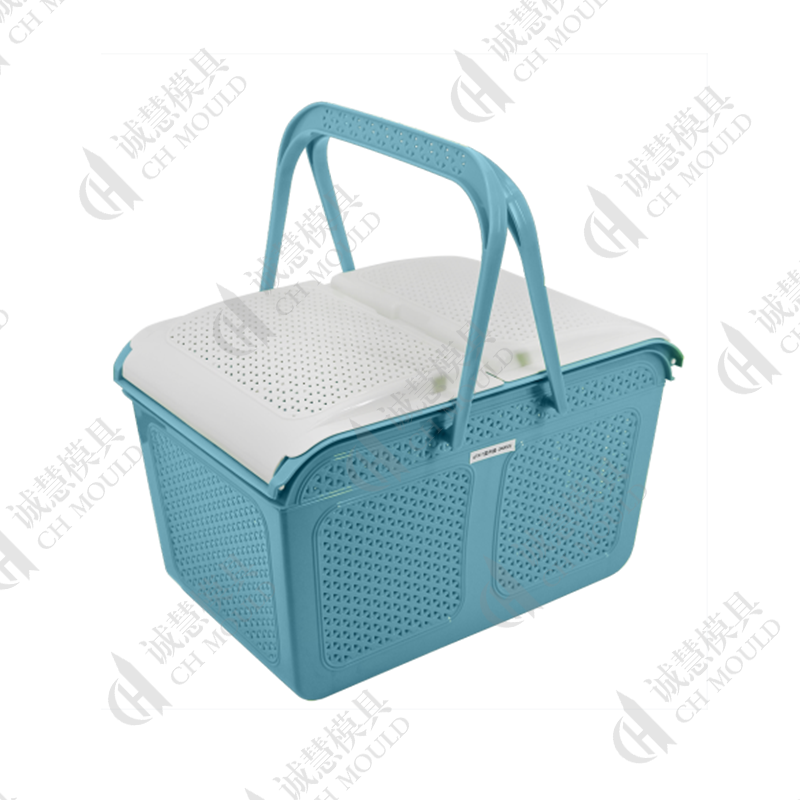
CHENGHUI Plastic Basket Mold 010
4. Engineering Design Considerations
4.1 Product Design Review
Before mold construction begins, the product drawing should be reviewed for manufacturability. This review may cover wall thickness, draft angles, corner radii, ribs, handles, openings, undercuts, parting-line locations, ejection areas, and expected shrinkage. The objective is to identify potential problems before steel is cut.
A basket designed without sufficient draft may be attractive in a digital model but difficult to eject in production. A handle that transitions abruptly into the side wall may create stress or filling concerns. A very thin grid section may not fill consistently under the selected molding conditions. A professional design review helps turn the product concept into a stable manufacturing solution.
4.2 Parting-Line Strategy
The parting line separates the mold halves and directly affects the product surface, flash risk, and mold complexity. For basket molds, the parting line must be considered together with the rim, openings, handles, stacking features, and any undercuts.
A well-planned parting line can simplify mold construction and reduce visible marks on important surfaces. It can also make inspection, cleaning, and future repairs more manageable. If the product requires side actions or special inserts, these elements must be integrated into the overall mold layout rather than added as an afterthought.
4.3 Gating and Filling Balance
Plastic baskets may have relatively large projected areas and complex open structures. The filling pattern must be considered carefully to reduce short shots, weld-line weakness, hesitation, and uneven packing. Gate selection depends on the product size, resin, machine, expected appearance, and production plan.
A suitable runner and gate arrangement can help the melt reach different areas at a balanced rate. It may also influence gate vestige, automation requirements, material waste, and cycle efficiency. The optimum design should be determined through product analysis and practical molding trials.
4.4 Cooling System Design
Cooling is one of the most important factors in injection mold performance. A basket with long walls and numerous openings may cool unevenly if the mold temperature is not controlled effectively. Uneven cooling can contribute to warpage, shrinkage variation, dimensional instability, and longer cycles.
Cooling channels should be positioned with consideration for the product geometry and the areas that generate or retain heat. The goal is to support uniform heat removal without weakening important mold components. Cooling performance should be verified during trial molding by observing cycle stability, product dimensions, surface quality, and deformation.
4.5 Ejection and Automation
The ejection system must remove the finished basket without damaging the rim, wall, openings, handles, or visible surfaces. Ejector pins, plates, sleeves, lifters, or other mechanisms may be considered depending on the design. The system should apply force as evenly as practical.
For customers planning automated production, mold design should also consider robot access, part release, gate removal, and safe handling. A stable ejection sequence can support faster production and reduce the need for operators to manually remove or correct parts.
4.6 Venting
Air trapped in a mold cavity can cause burns, incomplete filling, silver streaks, gas marks, or other defects. Basket molds contain many narrow sections and enclosed flow areas where air may become trapped. Proper venting allows displaced air and gases to escape while limiting plastic leakage.
Venting is closely related to the filling pattern, parting line, insert arrangement, and product geometry. It should be considered during mold design and adjusted during trials if the molded product indicates an air evacuation problem.
5. Manufacturing Strength of Zhejiang Chenghui Mould Co., Ltd.
5.1 More Than 30 Years of Industry Experience
Chenghui Mould was founded in 1994 and has accumulated more than 30 years of experience designing and manufacturing injection molds for daily necessities and related products. This long operating history provides practical knowledge of product development, mold construction, injection testing, quality control, and customer service.
Experience is particularly valuable for products such as baskets because they often appear simple but contain multiple manufacturing challenges. A mature mold manufacturer can identify common failure points earlier, recommend practical design adjustments, and organize the project around actual production requirements.
5.2 Integrated Workshop Capability
The company operates its own production workshop, allowing key manufacturing activities to be coordinated within the organization. This supports communication between design, machining, assembly, trial molding, inspection, and after-sales teams.
Integrated manufacturing can reduce delays caused by excessive outsourcing and makes it easier to trace issues back to a specific process. When a trial reveals a mismatch, flash problem, dimensional concern, or surface defect, the relevant technical teams can review the condition and plan a correction more efficiently.
5.3 Advanced Processing Equipment
Chenghui Mould operates 104 advanced processing machines. This equipment base supports the precision machining and finishing operations required for injection mold production. Different mold components require different processes, and the availability of suitable machinery helps the company manage complex parts and production schedules.
Precision equipment is important for basket tooling because the mold may include thin ribs, repeated openings, deep surfaces, inserts, sliders, and components that must fit together accurately. Machining quality affects the final dimensions, surface condition, mold movement, and serviceability.
5.4 Professional Injection Molding Machines for Mold Testing
The company has professional injection molding machines for mold testing. Trial molding is an essential step because a mold cannot be fully evaluated only by looking at drawings or individual components. The complete system must be tested under practical conditions.
During a mold trial, technicians can examine filling behavior, ejection, cooling, flash, weld lines, surface quality, dimensional results, and cycle stability. Trial parts also provide useful information for final adjustments. This reduces the risk that the customer receives a mold that has been machined but not adequately validated.
5.5 Annual Capacity of More Than 1,500 Mold Sets
Chenghui Mould has an annual production capacity of more than 1,500 mold sets. This capacity indicates an established production organization capable of handling multiple projects and product categories. It also supports customers that require repeat tooling, related mold families, or multiple sizes of baskets and containers.
Production capacity alone does not determine quality, but when combined with standardized procedures, experienced personnel, inspection, and testing, it can help the company manage commercial projects with defined delivery and quality expectations.
6. Manufacturing Process
6.1 Requirement Collection
The project begins with the collection of customer requirements. These may include product drawings, three-dimensional files, target dimensions, plastic resin, color, texture, annual output, injection machine information, expected cycle time, mold life, delivery requirements, and budget.
Customers that do not yet have a completed design can discuss their intended use and product concept with the technical team. The mold manufacturer can then help identify suitable structural features and manufacturing considerations before final approval.
6.2 Moldflow and Manufacturability Analysis
Where appropriate, the product can be analyzed for filling, cooling, shrinkage, warpage, and potential weak areas. The purpose of analysis is to improve the design before detailed manufacturing. It may reveal that a gate should be relocated, a wall should be adjusted, a rib should be modified, or an ejection area should be strengthened.
Analysis is most valuable when it is combined with practical tooling experience. Software predictions should be interpreted alongside the actual product material, machine conditions, mold structure, and customer production goals.
6.3 Mold Structure Design
After product approval, the mold structure is developed. The design may include the mold base, cavity and core, inserts, sliders, lifters, ejection mechanism, runner system, gates, cooling channels, guide components, locating elements, and safety features.
The design should balance performance and maintainability. A highly complicated mold may achieve a specific product geometry but create unnecessary maintenance or cost. A simplified structure may be economical but fail to support the product’s functional requirements. The best design is one that provides stable production while remaining practical to operate and service.
6.4 CNC and Precision Machining
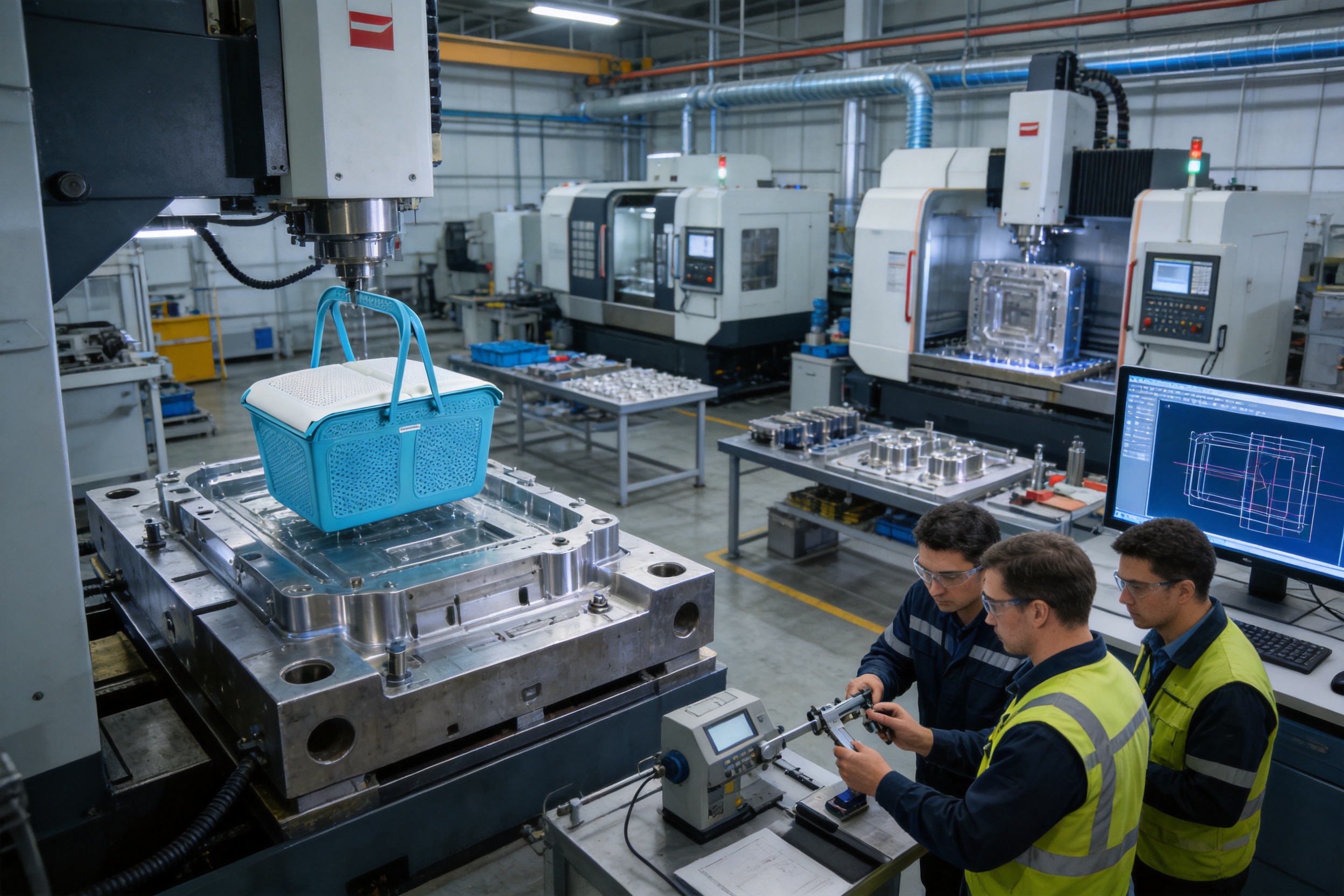
Approved components are manufactured using suitable processing equipment. CNC machining, precision milling, drilling, grinding, electrical discharge machining, and other operations may be selected according to the component requirements.
Basket molds often require careful machining of repeated openings and narrow structural features. The accuracy of these areas directly affects the finished basket. Machining must therefore be controlled not only for overall dimensions but also for alignment, edge condition, surface quality, and fit between moving components.
6.5 Assembly and Fitting
After machining, components are assembled and fitted. This stage confirms that mold halves align correctly, moving parts operate smoothly, inserts seat properly, and ejection and cooling systems are installed as planned.
Fitting is a skilled process. Even accurately machined parts may require careful adjustment to achieve the correct contact, movement, clearance, and sealing condition. Proper assembly helps reduce flash, wear, sticking, and unexpected maintenance problems during production.
6.6 Trial Molding
The completed mold is tested on professional injection molding equipment. Trial molding checks whether the mold can produce a basket with the required shape, appearance, dimensions, and release behavior.
Trial conditions may be adjusted according to the selected material and product design. Technicians evaluate the filling pattern, holding pressure, cooling, ejection, cycle time, and visible defects. If necessary, modifications are made to the mold or process before final acceptance.
6.7 Quality Inspection and Delivery
Quality inspection may include checking mold dimensions, component movement, cooling passages, ejection operation, product dimensions, surface condition, and trial samples. Documentation and sample approval help establish a common reference between the mold manufacturer and the customer.
Before delivery, the mold should be prepared for safe transportation and future use. Customers may also receive operating recommendations, maintenance guidance, spare-part information, and after-sales support according to the project arrangement.
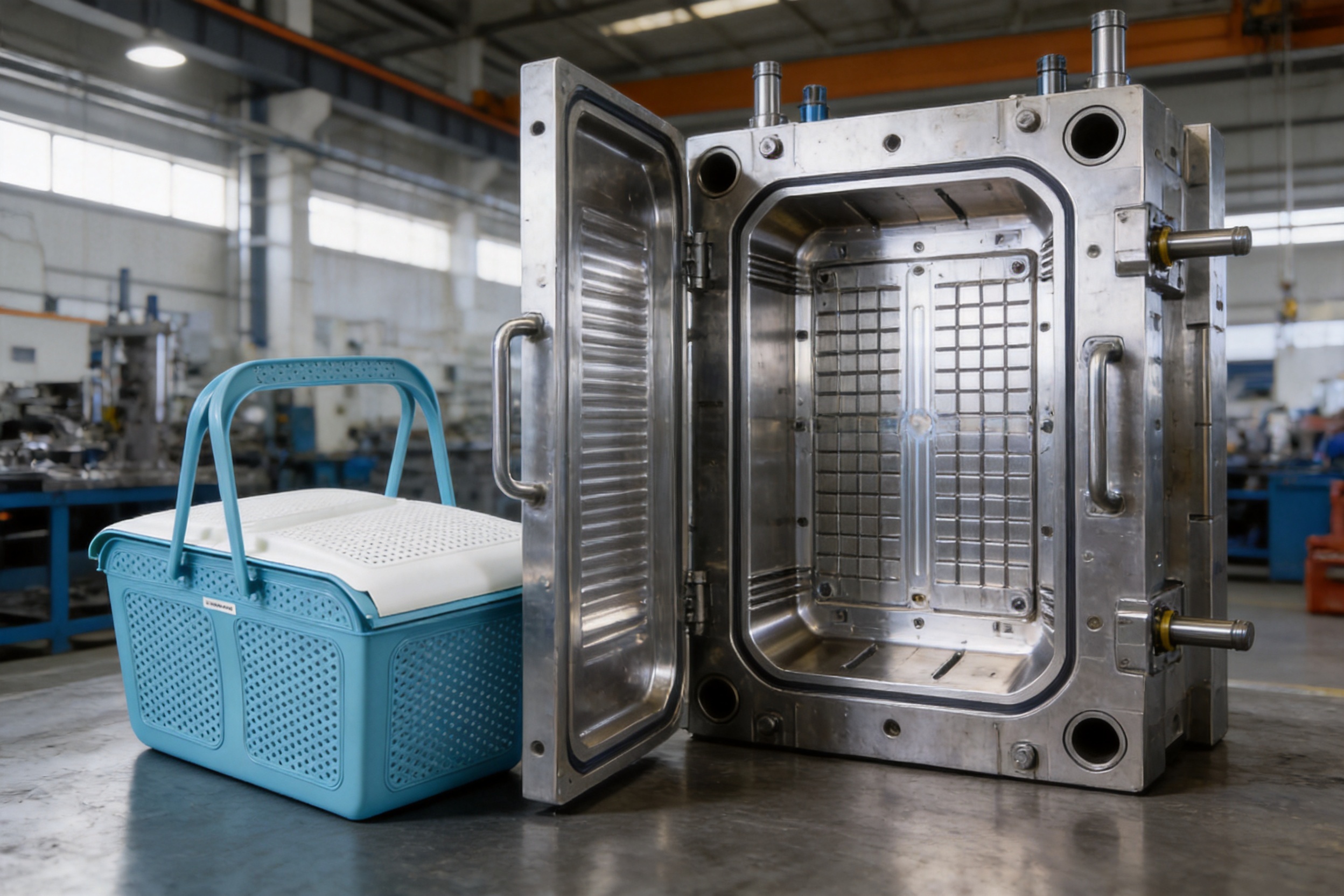
7. Comparison with Lower-Quality or Low-Cost Alternatives
Price is an important purchasing factor, but the lowest initial quotation does not always represent the lowest total cost. A basket mold that is inexpensive to purchase may generate higher expenses through longer commissioning, unstable production, greater scrap, frequent repairs, or a shorter service life.
| Evaluation Area | Professional Basket Mold Solution | Potential Risk of an Inadequate Mold |
|---|---|---|
| Product consistency | Stable dimensions and repeatable appearance after proper testing | Variation between batches and difficulty maintaining stacking or fitting |
| Filling performance | Planned gating, runners, and venting based on product requirements | Short shots, weld lines, burn marks, or uneven filling |
| Cooling | Cooling layout considered during design and checked during trials | Long cycles, warpage, shrinkage variation, and unstable dimensions |
| Ejection | Balanced release system designed for walls, ribs, handles, and rims | Sticking, deformation, ejection marks, or manual removal problems |
| Surface quality | Surface finish selected and processed according to customer requirements | Uneven texture, visible machining marks, or inconsistent appearance |
| Serviceability | Organized components and technical support for maintenance and repair | Difficult troubleshooting and extended production downtime |
| Project support | Design, machining, assembly, trials, inspection, and after-sales coordination | Communication gaps between separate suppliers |
| Total ownership cost | Higher focus on reliability, production efficiency, and mold life | Low purchase price offset by scrap, repairs, delays, and rework |
The CHENGHUI Plastic Basket Mold 010 is positioned as a manufacturing tool rather than merely a metal component. Its value comes from the complete process used to develop it. Product review, precision machining, assembly, testing, and technical support all contribute to the final result.
8. Suitable Applications
8.1 Household Storage Baskets
Household storage baskets are used in bedrooms, bathrooms, kitchens, utility rooms, offices, and children’s spaces. These products often require smooth edges, attractive surfaces, useful handles, and dimensions compatible with shelves or cabinets.
The mold can be customized to support different product styles, including open baskets, ventilated baskets, nesting baskets, and baskets with reinforced rims. Surface textures and colors can be selected according to the intended market position.
8.2 Laundry Baskets
Laundry baskets need ventilation, sufficient capacity, easy handling, and resistance to repeated use. The handle and upper rim are especially important because users frequently lift the basket when it is loaded.
A properly engineered mold helps reproduce strong transitions between the handle and basket body while maintaining a clean surface. Product design and material selection should be reviewed together to achieve the desired balance between weight and durability.
8.3 Turnover and Logistics Baskets
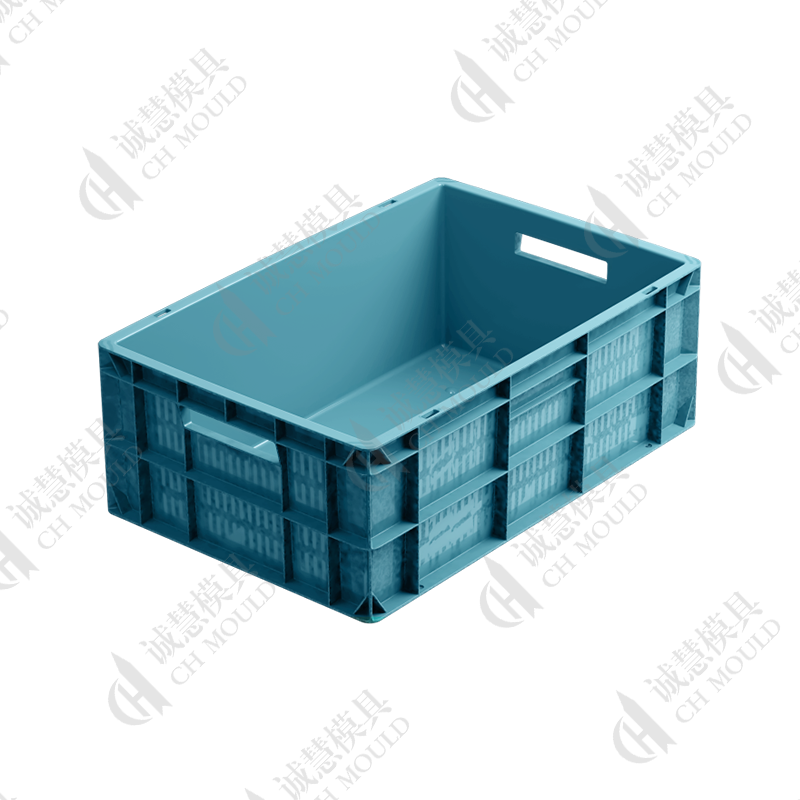
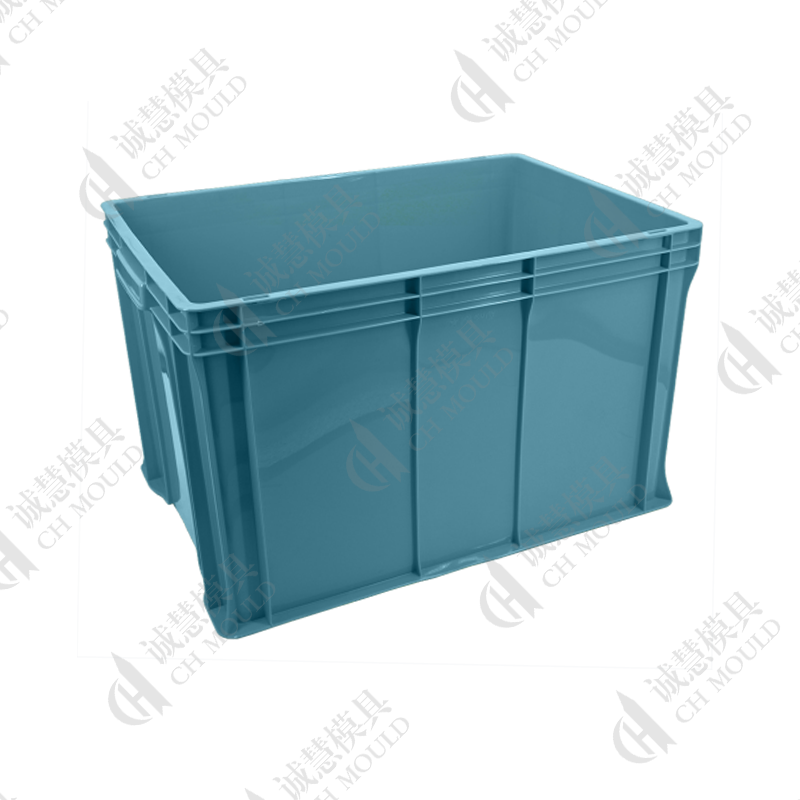
Turnover baskets are used in warehouses, retail distribution, agriculture, food handling, workshops, and manufacturing facilities. These products may be stacked, nested, transported, and repeatedly loaded and unloaded.
Industrial baskets usually require stronger corners, stable bases, reinforced rims, and predictable stacking behavior. The mold must maintain these dimensions consistently because small variations can affect the performance of a complete handling system.
8.4 Commercial and Institutional Baskets
Cleaning companies, hotels, hospitals, schools, retailers, and service businesses may use plastic baskets for organized transport and storage. In these environments, easy cleaning, durability, and consistent appearance are important.
Custom tooling enables the basket to be adapted to the workflow of the customer. This may include specific dimensions, identification areas, handles, open patterns, or compatibility with existing shelves and carts.
8.5 Agricultural and Food-Related Handling
Ventilated plastic baskets can be used for collecting, sorting, and transporting agricultural products. In such applications, the design should consider airflow, product protection, cleaning, load capacity, and the requirements of the selected resin.
Material compliance and application-specific regulations should be confirmed by the customer when baskets are intended for direct food contact or other regulated uses. Mold design is one part of the complete product compliance process.
9. Customization and OEM/ODM Support
Different markets rarely require exactly the same basket. Size, volume, handle style, color, wall pattern, stacking method, label area, and surface finish may vary according to the customer’s sales channel and end-user expectations.
Chenghui Mould provides customized mold design and manufacturing services covering concept development, drawing review, sample development, machining, assembly, mold trials, quality inspection, and after-sales support. This makes the company suitable for OEM customers that already have a product design and ODM customers that need assistance developing a product from an initial idea.
Customization may include the following areas:
Product dimensions and capacity can be adjusted to suit a shelf, cabinet, pallet, cart, or logistics system.
Handle geometry can be developed for lifting comfort, strength, automated handling, or nesting requirements.
Openings and grid patterns can be modified to improve ventilation, reduce weight, or create a specific appearance.
Ribs, feet, corners, and rims can be strengthened according to expected loads and usage conditions.
Surface texture can be selected to support appearance, grip, branding, or reduction of visible marks.
Identification areas can be incorporated for labels, logos, molded markings, barcodes, or customer-specific information.
Color and resin requirements can be reviewed with the injection molding plan to support the intended product result.
Customers should provide as much technical information as possible during the quotation and design stages. Complete information allows the mold maker to recommend a more accurate structure and estimate the project requirements more effectively.
10. Quality Management and Production Reliability
Quality management begins before machining. It includes the review of drawings, selection of manufacturing methods, control of component dimensions, monitoring of assembly, and evaluation of trial samples. Each stage influences the next one.
Precision is particularly important for mold components that must align repeatedly. Guide systems, inserts, sliders, ejector elements, cavity surfaces, and core surfaces must work together without excessive movement or interference. Correct fitting helps reduce flash and wear during production.
Reliability also depends on process discipline. Standardized procedures help ensure that similar projects are handled consistently. Inspection records, trial samples, and customer approvals provide useful references for future maintenance and repeat orders.
Chenghui Mould’s stated commitment to precision, integrity, and customer responsibility reflects the long-term nature of mold projects. A customer may use the mold for years, require replacement components, request design changes, or develop related products. Ongoing support is therefore an important part of the supplier relationship.
11. Maintenance Recommendations
Even a well-manufactured mold requires appropriate maintenance. After production, the mold should be cleaned to remove plastic residue, moisture, dust, and contaminants. Particular attention should be paid to parting surfaces, vents, ejector components, sliders, and cooling connections.
Moving components should be lubricated according to the mold manufacturer’s recommendations. Excessive or unsuitable lubricant can contaminate the product or collect dust, so maintenance materials should be selected carefully.
Cooling channels should be monitored for blockage, corrosion, scaling, or leakage. Poor cooling flow can gradually increase cycle time and create product variation. Regular checks help identify these issues before they become serious production problems.
Operators should also inspect the mold for flash, unusual noise, sticking, incomplete ejection, surface damage, and changes in product dimensions. These signs may indicate wear, misalignment, blocked vents, damaged components, or process changes.
When the mold is stored, exposed steel surfaces should be protected against corrosion. The mold should be closed or secured according to the supplier’s recommendations and kept in a clean, dry environment. Maintenance records should identify production hours, repairs, replaced components, and inspection results.
12. Purchasing Guidance for International Buyers
International buyers should evaluate a mold supplier based on more than the quoted price. Important questions include whether the manufacturer has experience with comparable products, whether it operates its own workshop, whether it can perform mold testing, and whether it provides technical support after delivery.
The customer should confirm the following information before placing an order:
The final product drawing and three-dimensional file, including all critical dimensions.
The selected plastic material, grade, additives, color requirements, and application conditions.
The intended injection molding machine, including platen size, injection capacity, clamping force, and available mold dimensions.
The target output, expected cycle time, mold life, and number of cavities required.
The required surface finish, texture, logo, marking, and appearance standard.
The packaging, shipping, documentation, spare parts, and acceptance procedure.
The warranty terms, maintenance support, modification policy, and communication process.
Clear technical communication reduces the risk of misunderstanding and helps the manufacturer select an appropriate tooling solution. It also makes it easier to compare quotations from different suppliers on a fair basis.
13. Why Choose Chenghui Mould for Basket Tooling
Zhejiang Chenghui Mould Co., Ltd. combines long-term industry experience with in-house manufacturing capability. Founded in 1994, the company has developed expertise in injection molds for daily necessities, storage products, furniture, turnover boxes, laundry baskets, buckets, storage racks, trash cans, and other household and industrial products.
The company’s experience across related product categories is valuable because many design principles overlap. Storage boxes, turnover containers, baskets, and household products all require attention to wall thickness, stacking, handles, ribs, ejection, cooling, and appearance. Knowledge gained from one product family can support the development of another.
Its 104 advanced processing machines provide a substantial production base for precision mold manufacturing. Professional injection molding machines support practical testing before delivery. An annual capacity of more than 1,500 mold sets indicates the ability to manage commercial production requirements across multiple customer projects.
The company also serves international markets in the Middle East, Europe, America, Africa, Southeast Asia, and other regions. Export experience can support communication concerning packaging, delivery coordination, documentation, and customer expectations in different markets.
Most importantly, Chenghui Mould provides a complete service path from concept and drawing review to machining, assembly, trial molding, inspection, and after-sales support. This integrated approach can reduce the coordination burden for customers that prefer to work with one experienced mold partner.
14. Q&A
Q1: What type of product is the CHENGHUI Plastic Basket Mold 010 designed to manufacture?
It is designed for injection molding plastic baskets and related open or ventilated storage products. Depending on the approved product design, it may be used for household baskets, laundry baskets, turnover baskets, storage baskets, and industrial handling containers.
Q2: Can the basket mold be customized?
Yes. The mold can be developed according to customer drawings, three-dimensional files, product concepts, dimensions, handle structures, opening patterns, surface finishes, material requirements, and production targets. OEM and ODM support is available.
Q3: Does Chenghui Mould manufacture the molds in its own workshop?
Yes. The company operates its own production workshop and uses advanced processing equipment for mold manufacturing. In-house coordination supports communication between design, machining, assembly, inspection, and testing teams.
Q4: How does mold testing benefit the customer?
Mold testing verifies how the complete tool performs under injection molding conditions. It can reveal filling issues, flash, air traps, cooling imbalance, warpage, ejection problems, dimensional variation, and other concerns before the mold is delivered or placed into regular production.
Q5: What information should a buyer provide for a quotation?
The buyer should provide product drawings or a product concept, dimensions, material, annual production target, injection machine information, cavity expectations, surface requirements, mold life, and delivery schedule. More complete information enables a more accurate technical proposal.
Q6: Is the mold suitable for household and industrial products?
Yes. The product category includes both household and industrial applications. The final structure should be customized according to the intended use, expected loads, cleaning conditions, stacking method, handling frequency, and resin requirements.
Q7: What advantages does an experienced mold manufacturer provide?
An experienced manufacturer can identify manufacturability issues earlier, recommend practical mold structures, coordinate precision processing, perform trial molding, and provide maintenance or modification support. This can reduce the risks associated with unstable production and inadequate tooling.
Q8: Can the mold support repeat production orders?
A properly designed and maintained injection mold is intended to support repeat production. The expected service life depends on the mold structure, materials, production conditions, resin, maintenance, and usage frequency. These requirements should be discussed during the quotation stage.
Q9: What markets does Chenghui Mould serve?
The company exports to the Middle East, Europe, America, Africa, Southeast Asia, and other regions. It provides mold manufacturing services for international wholesalers, distributors, injection molding companies, and product brands.
Q10: How can a buyer begin a basket mold project?
The buyer can begin by submitting product drawings or a concept together with the intended material, dimensions, output target, machine information, and delivery expectations. The technical team can then review the product and prepare a suitable mold proposal.
15. Conclusion
The CHENGHUI Plastic Basket Mold 010 is a practical tooling solution for manufacturers that need reliable, repeatable, and customizable plastic basket production. Its value lies not only in the final mold structure but also in the engineering and manufacturing process behind it.
Basket products require careful attention to strength, weight, openings, handles, stacking, cooling, ejection, surface quality, and dimensional stability. A professional mold supplier must address these factors before, during, and after machining. Chenghui Mould supports this process through more than 30 years of industry experience, an in-house workshop, 104 advanced processing machines, professional injection molding equipment for testing, and an annual production capacity of more than 1,500 mold sets.
For customers seeking OEM or ODM tooling, the company provides support from concept and drawing review through sample development, machining, assembly, mold trials, inspection, and after-sales service. This integrated capability can help wholesalers, distributors, and injection molding businesses reduce development risk and establish a dependable production foundation.
When selecting a plastic basket mold, buyers should evaluate total ownership value rather than focusing only on the initial quotation. Precision, trial validation, serviceability, production consistency, and technical support all influence the long-term cost and success of the project. With the right design and manufacturing partner, a plastic basket mold can support efficient mass production and a broad range of household, commercial, logistics, and industrial applications.
References
1. Injection Molding Handbook, general principles of polymer processing, mold design, cooling, filling, and ejection.
2. Plastics Engineering Fundamentals, guidance on thermoplastic product design, shrinkage, wall thickness, ribs, draft, and material behavior.
3. Design of Injection Molds, principles of parting-line selection, gating, venting, mold components, and maintenance.
4. Industrial Mold Manufacturing Practice, standard approaches to CNC machining, fitting, assembly, inspection, and trial molding.
5. Quality Management Principles for Tooling Production, methods for process control, product verification, traceability, and continuous improvement.
6. Manufacturer-provided company information for Zhejiang Chenghui Mould Co., Ltd., including company history, equipment capacity, product categories, services, export markets, and production capabilities.